
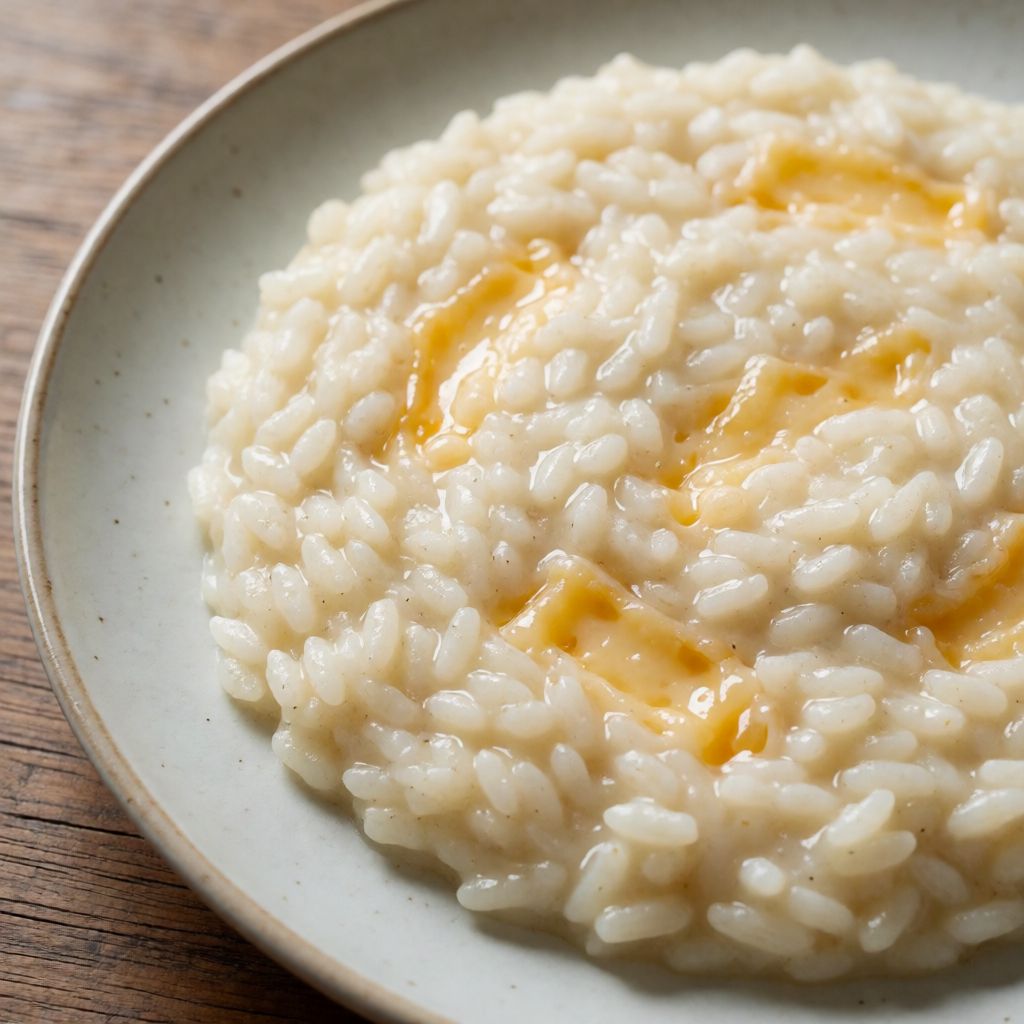
 AI photo
Pear, Taleggio and Walnut Risotto
A creamy risotto with Williams pear, Taleggio cheese and walnuts.
Labels are worked out automatically from the ingredients and can be wrong. Check the packaging if it matters to you.
Ingredients
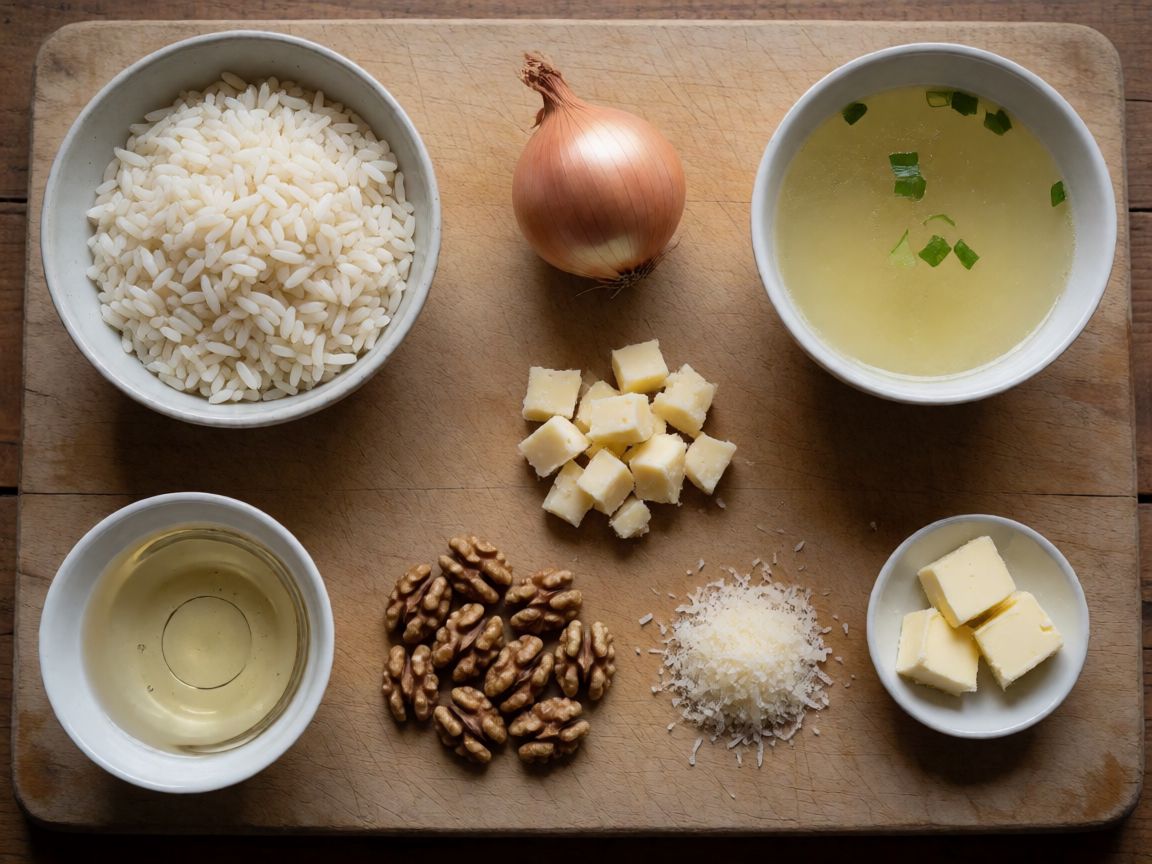
- 350 g Risotto rice
- 1 pcs Onion
- 2 tbsp Olive oil
- Vegetable stock as needed
- 80 g Taleggio
- 10 pcs Walnuts
- 120 ml White wine
- Parmesan to taste
- 20 g Butter
- 2 pcs Williams pear
- Salt to taste
- White pepper to taste











Steps
In a saucepan, fry the onion in olive oil until translucent.
5 minAdd the rice and toast, stirring, until the edges turn slightly translucent.
3 minPour in the white wine and let it evaporate completely.
2 minGradually add the vegetable stock, stirring constantly, and cook the risotto until done.
25 minAbout halfway through cooking, add the Williams pear, cut into small cubes.
1 minNear the end of cooking, season with salt, white pepper and the chopped walnuts.
2 minRemove from the heat and stir in the Taleggio and butter until creamy.
2 minGarnish with pear slices and chopped walnuts, serve sprinkled with Parmesan to taste.
Risotto is not a rice dish. It's a starch-management exercise — you're pulling sugars out of the rice grain by abrasion and heat, one ladle of liquid at a time, and the whole dish stands or falls on whether you understood that. Pear and Taleggio just give you something sweet and something stinking to argue with each other over that starch.
What decides it: the rice has to fry in fat before it ever meets liquid. That minute of toasting seals the outside of the grain just enough that it releases starch slowly instead of all at once — which is the difference between a risotto with a bite still in the centre and a pot of rice pudding. Skip it, and no amount of stirring later will save you.
The wine isn't for flavour, mainly. It's acid, and acid stops the rice going gluey too fast — same job vinegar does in a good stock. Let it actually evaporate, don't rush past it, or you'll taste raw alcohol sitting on top of the dish like a bad cologne.
Taleggio off the heat, stirred in at the end, is the whole trick. It's a washed-rind cheese — it melts fast and turns greasy if it sits over heat, so you add it after the pan comes off the burner, using the risotto's own warmth to pull it into a sauce. Some people think risotto needs constant violent stirring from start to finish — no, because what you're actually doing is controlled agitation to knock starch off the grains into the liquid, not whipping cream. Gentle and frequent beats frantic and constant.
On the rice: 350g for two people sounds generous until you remember risotto rice swells to roughly three times its dry volume and this is meant to be the whole meal, not a side to your Sunday roast. You want a short-grain variety that's high in amylopectin — Arborio is the one you'll find in any UK supermarket, Carnaroli if a deli near you stocks it and holds its shape slightly better under heat. Long-grain rice won't do this job; it hasn't got the starch architecture to release creaminess, it'll just go fluffy and separate, which is a different dish entirely.
The onion fried "until translucent" is doing a specific job: softening the cell walls so the sharp sulphur compounds mellow, not browning it. If it goes golden or further, you've picked up bitterness the sweetness of the pear then has to fight, and loses. Keep the heat low enough that you hear a gentle hiss, not a sizzle — that's your cue, not a clock.
Stock "as needed" is the honest phrase in this recipe, and the one most people get nervous about. There's no fixed quantity because the rice doesn't absorb liquid at a fixed rate — it depends on your pan's width, your hob's heat, the day's humidity on the rice itself. Keep it warm in a separate pot so you're not shocking the risotto cold each time, and add it a ladle at a time, letting each ladle nearly vanish before the next. Vegetable stock here, not chicken — a cheese and fruit risotto doesn't need the extra weight of meat stock competing with the Taleggio.
Williams pear, cubed and added halfway through cooking, needs to be ripe but still holding its shape — a hard pear won't release any sweetness into the rice, an overripe one will collapse to mush and you lose the contrast you're garnishing with later. If Williams isn't in your fruit bowl, any firm, sweet pear works the same way; the variety matters less than the ripeness.
Taleggio is a soft, washed-rind cheese from Lombardy with a strong smell and a mild, almost fruity taste underneath it — that gap between nose and tongue is exactly why it works with pear. If you can't get it, a young Fontina or a soft, ripe Brie-style cheese gets you closer than anything blue or hard. Parmesan at the end is seasoning, not substance — it's salt and umami on top, not the creamy base, so don't swap the Taleggio out for more Parmesan thinking it's the same job.
The walnuts do two things: bitterness and crunch, both of which this dish needs because everything else in it — rice, cheese, pear, butter — is soft and sweet-leaning. Toast them dry in a pan for a minute before chopping if you want that bitterness sharpened rather than raw; it's a small step the recipe doesn't mention but it's worth the pan going back on the heat for sixty seconds.
Patience is the actual ingredient list item missing from the card. Forty-five minutes of mostly standing at the hob, mostly not doing very much except watching and ladling, is not wasted time — it's the method. Rush the stock additions and you get rice that's cooked on the outside and chalky in the centre, no matter what the clock says.