
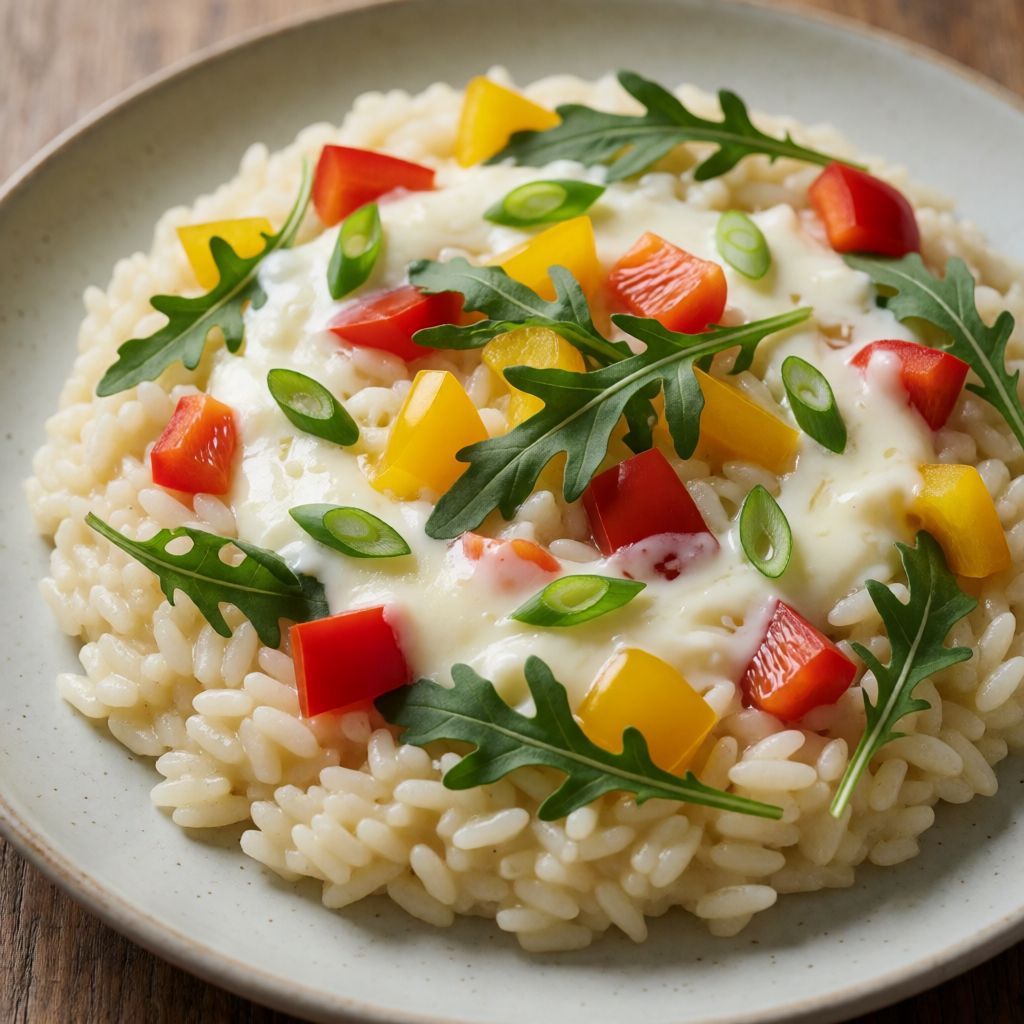
 AI photo
Risotto with Peppers, Rocket and Stracchino
A creamy risotto with roasted peppers, rocket and stracchino cheese.
Labels are worked out automatically from the ingredients and can be wrong. Check the packaging if it matters to you.
Ingredients
- 320 g Vialone Nano rice
- 1 pcs yellow bell pepper
- 1 pcs bell pepper
- 100 g stracchino cheese
- 60 g rocket
- 1 pcs spring onion
- 1 l vegetable stock
- 50 ml white wine
- olive oil to taste
- salt to taste







Steps
Wash and dry the peppers, brush them with oil, and place on a baking tray lined with baking paper.
Roast the peppers in an oven preheated to 200°C.
23 minTransfer the roasted peppers into a paper bag and let them cool slightly.
Peel off the skin, remove the stalk and some of the seeds and inner membranes.
Set aside the strained juice released inside the pepper, and cut the flesh into strips.
Place the peppers in a bowl, season with a little olive oil and half of the chopped rocket.
Sauté the rice with the thinly sliced spring onion and a little olive oil until translucent.
Pour in the white wine and let it evaporate.
Gradually add the vegetable stock, seasoning with salt to taste.
Cook the risotto.
17 minHalfway through cooking, add the chopped half of the peppers with the reserved pepper juice.
Add the remaining chopped rocket, stir in the stracchino and olive oil until creamy.
Serve the risotto with pepper strips and fresh rocket leaves.
This is a risotto built on a trick most people skip: you burn the skin off the peppers before they ever meet the rice. Roasting at 200°C isn't about cooking the pepper through — it's about getting the skin hot enough to blister and lift away from the flesh underneath while the flesh itself stays sweet rather than turning to mush. Skip that stage and simmer raw pepper straight into the rice instead, and you get crunch and a faint bitterness from the skin that no amount of stracchino will hide later.
What decides whether this works is timing two different things against each other: the pepper (roast, bag, peel, slice — all finished before the rice starts) and the rice itself, which wants constant, almost boring attention once the wine's gone in. Vialone Nano is the right rice here because it's starchier and rounder than Arborio, so it releases body into the stock without turning to porridge — if you can't find it, Carnaroli is the honest substitute, Arborio a lesser one that forgives less if you overcook it.
The stracchino at the end is doing the job cream normally does in a British kitchen — it's a soft, almost spreadable cow's cheese, and you stir it in off the heat so the fat emulsifies into the stock rather than splitting into oily beads. That's the real reason risotto gets stirred constantly near the end: not tradition for its own sake, but because agitation is what pulls starch out of the rice grains and turns stock into sauce. Stop stirring and you just have rice in broth.
The two peppers — one yellow, one red or green, doesn't matter which beyond colour — are chosen for sweetness, not heat. Bell peppers have almost none of the capsaicin that makes chillies sharp, so roasting concentrates sugar rather than fire. If your oven runs hot or cold against its dial, go by sight, not the clock: you want the skin properly blistered and starting to char in patches, not just warmed through. A domestic oven varies enough from the dial that the 23 minutes given is a floor, not a verdict — watch the skin, not the timer.
The juice that collects inside the pepper once it's peeled is not waste — it's concentrated pepper water, sugar and a little char flavour, and stirring it into the risotto halfway through cooking is what makes the dish taste of pepper rather than just looking like it has pepper in it. Throw that juice away and you've thrown away half the point of roasting in the first place.
Rocket is split in two for a reason: half goes in early, cooked into the rice where its sharpness mellows and backgrounds the sweetness of the pepper; half stays raw on top, so you still get that peppery, slightly bitter bite with every forkful. If rocket isn't to hand, baby spinach or watercress will do — anything with a bitter, leafy edge works, but iceberg or soft lettuce won't, because they have no bite to lose.
The spring onion is there for a mild base note, sautéed gently in oil until it goes translucent — that's the cue, not a stopwatch, and it tells you the onion has softened and lost its raw sting before the rice goes in. If spring onion isn't around, a small shallot or the white part of a leek does the same quiet job; a regular onion will work but brings more sharpness than this dish wants.
White wine's role is acid, not flavour as such — it deglazes the pan and brightens the rice before the stock drowns it, and you let it evaporate fully so you're left with its sourness, not its alcohol. No wine in the house, no drama: a splash of dry vermouth or a spoon of lemon juice in the first ladle of stock gets you most of the way there.
Stracchino is a young, unaged, very soft Italian cheese — think somewhere between cream cheese and a mild brie without the rind. It melts smoothly because it hasn't had time to develop the tight protein structure aged cheeses have. If you can't get it, a full-fat soft cheese like mascarpone cut with a little crumbled feta for sharpness, or simply a mild cream cheese, will behave similarly — don't reach for something hard like Cheddar, it won't melt into the rice, it'll just sit there in lumps.
And the stock: use something you'd actually drink as a thin soup, since the rice is going to taste mostly of whatever liquid you feed it. A bland stock cube dissolved in water gives you bland risotto — patience with a proper vegetable stock, even a simple one simmered from onion, celery and carrot trimmings while the peppers roast, pays you back at the table.