
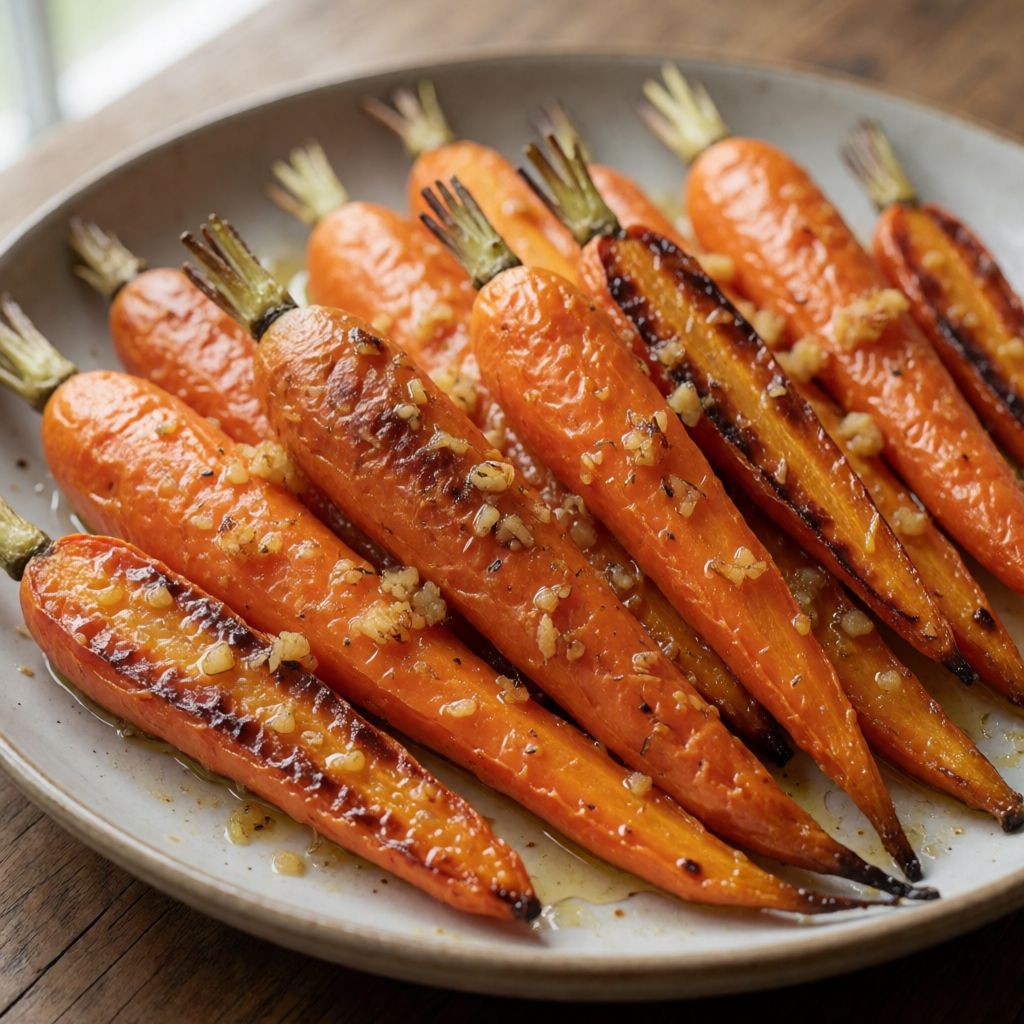
 AI photo
Oven-Roasted Carrots
Simple carrots roasted in the oven with garlic, chives and olive oil.
Labels are worked out automatically from the ingredients and can be wrong. Check the packaging if it matters to you.
Ingredients



Steps
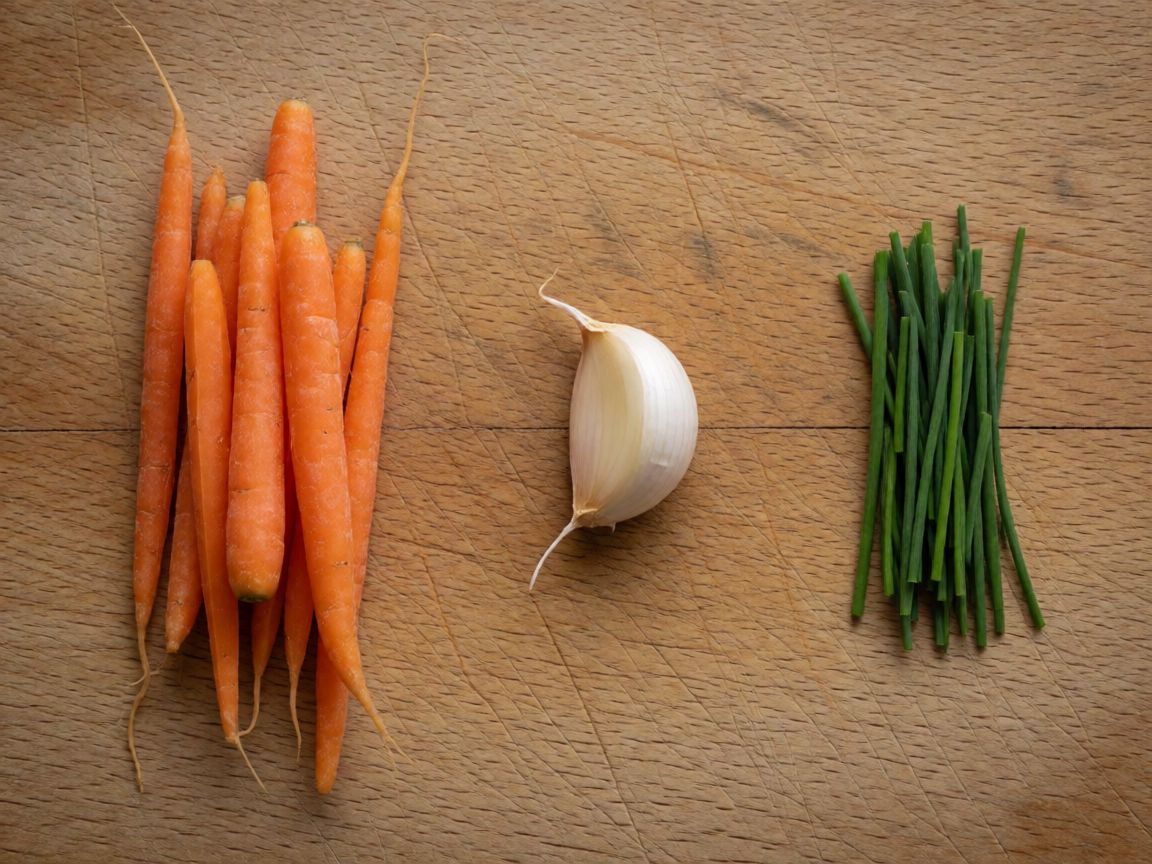
Wash and dry the carrots, trim the ends and peel thinly. Cut the carrots into 3-4 cm lengths, then into sticks at least 2 cm thick.
Line a baking tray with baking paper and brush it with oil. Arrange the carrots in a single layer, without overlapping the pieces.
Wash and finely chop the chives, then sprinkle them over the carrots. Add the whole peeled garlic clove, drizzle with oil and season with salt.
Place in an oven preheated to 200°C and roast for about 40 minutes, keeping an eye so the carrots don't burn, turning the pieces occasionally.
40 min
Carrots, cut thick and roasted dry, are not the boiled-and-glazed carrots that sit next to the Sunday joint. Boiling pulls flavour out into the water around the carrot; this method pushes in the opposite direction — moisture leaves as steam, the sugar stays behind on the cut face and turns brown. That's the whole mechanism in one sentence: evaporate, don't dilute.
What decides whether it works isn't the oven dial, it's the knife and the tray. Cut the sticks thinner than two centimetres and you lose one way — the outside scorches to bitter carbon before the inside has softened, because there's not enough carrot mass left to buffer the heat. Crowd the pieces on the tray, or let them touch, and you lose the other way — trapped steam has nowhere to go, so instead of roasting you're braising in the carrot's own juice, and it comes out pale and slack where it should be edged brown.
200°C is roughly where carrot sugar starts to caramelize before it races on to char — push much hotter in a small fan oven and you'll find black edges around a raw, pale middle. Forty minutes is where you start checking, not where you stop. The carrot is done when a thick piece bends over a fork instead of snapping, and the colour has gone from flat orange to patches of deep amber and brown at the edges. A timer won't tell you that. Your fork will.
Start with the carrot itself. You want a firm one with a tight, unblemished core — not a carrot that's gone bendy on the shelf, because that bend means it's already lost water you need for this job. A kilo of maincrop carrots is the right call here rather than the slim Chantenay type sold for whole-roasting; you need enough girth to get honest two-centimetre sticks, not splinters. If all you can find are the thin ones, halve them lengthwise instead of cutting across, so you keep the thickness.
The garlic goes in whole and peeled, not minced, and that's deliberate. A whole clove releases its oil slowly over forty minutes at 200°C and perfumes the fat around it; a chopped clove, with far more surface exposed, would be a cinder in the first quarter of the cooking time, and a burnt clove tastes of nothing but bitterness. One clove for a kilo of carrot is also a hint about the job it's doing — flavouring the oil, not flavouring the carrot directly.
Oil here just needs to do two things: carry heat to the carrot's surface, and not smoke before the carrot is anywhere near done. Olive oil manages that at 200°C and brings a flavour of its own that carrots, being fairly mild, don't argue with. If you'd rather the carrot led and the oil stayed invisible, use anything with no smell of its own and a reasonable heat tolerance — rapeseed is the obvious, cheap, everyday choice in a British kitchen, and it does the job without comment.
Chives are a finishing touch, not a flavour engine, and it's worth being honest about why. Delicate, soft herbs lose most of their aroma under forty minutes of dry heat — by the time the carrot's ready, the chive has mostly dried into green specks that look nice and smell of very little. That's fine; here they're decoration and a bit of colour, not seasoning. If you want actual chive flavour on the plate, keep some raw and scatter it on after the tray comes out.
Salt goes on before roasting, and it's not only about taste. Salt draws moisture to the carrot's surface; that moisture then evaporates faster, which means caramelization starts sooner rather than waiting for the carrot to dry out on its own. Skip the salt and you're not ruining the dish, you're just asking the oven to do more unassisted drying first.
On turning: do it, because a domestic oven, especially a fan one, heats unevenly — there's usually a hotter patch at the back or near the element — and the tray itself is hotter underneath than the air above it. Turning the pieces spreads that heat around instead of letting one side of each stick brown while the other stays pale. And if you're already running the oven hot for a Sunday roast, this is the moment to use that heat twice — the carrots can go in on a lower shelf while the joint rests, no extra ring, no extra washing-up beyond one tray. That's not frugality for its own sake; it's just not lighting an oven for one kilo of vegetables when it's already hot for something bigger.