
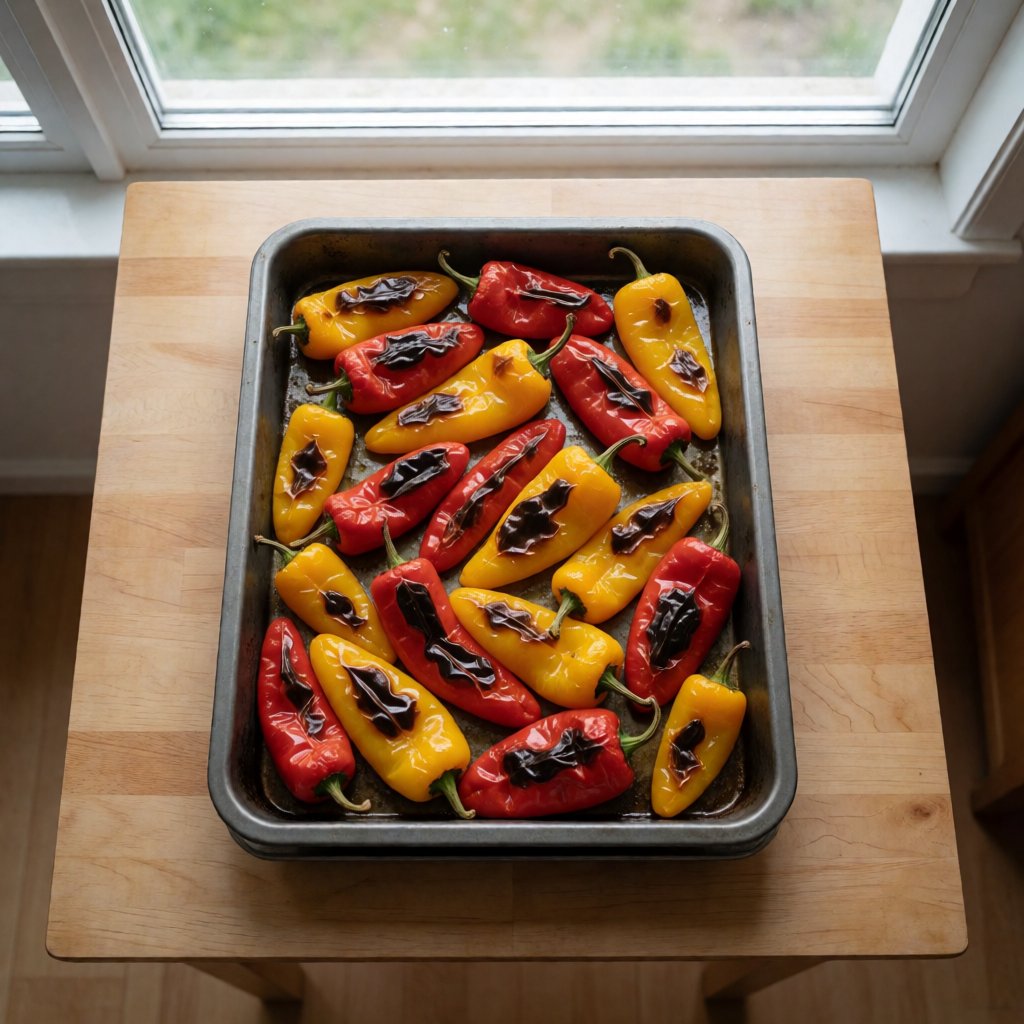
 AI photo
Roasted peppers for salad
A simple way to roast peppers, peel them while hot and dress with oil, garlic and vinegar for a tasty salad.
Labels are worked out automatically from the ingredients and can be wrong. Check the packaging if it matters to you.
Ingredients
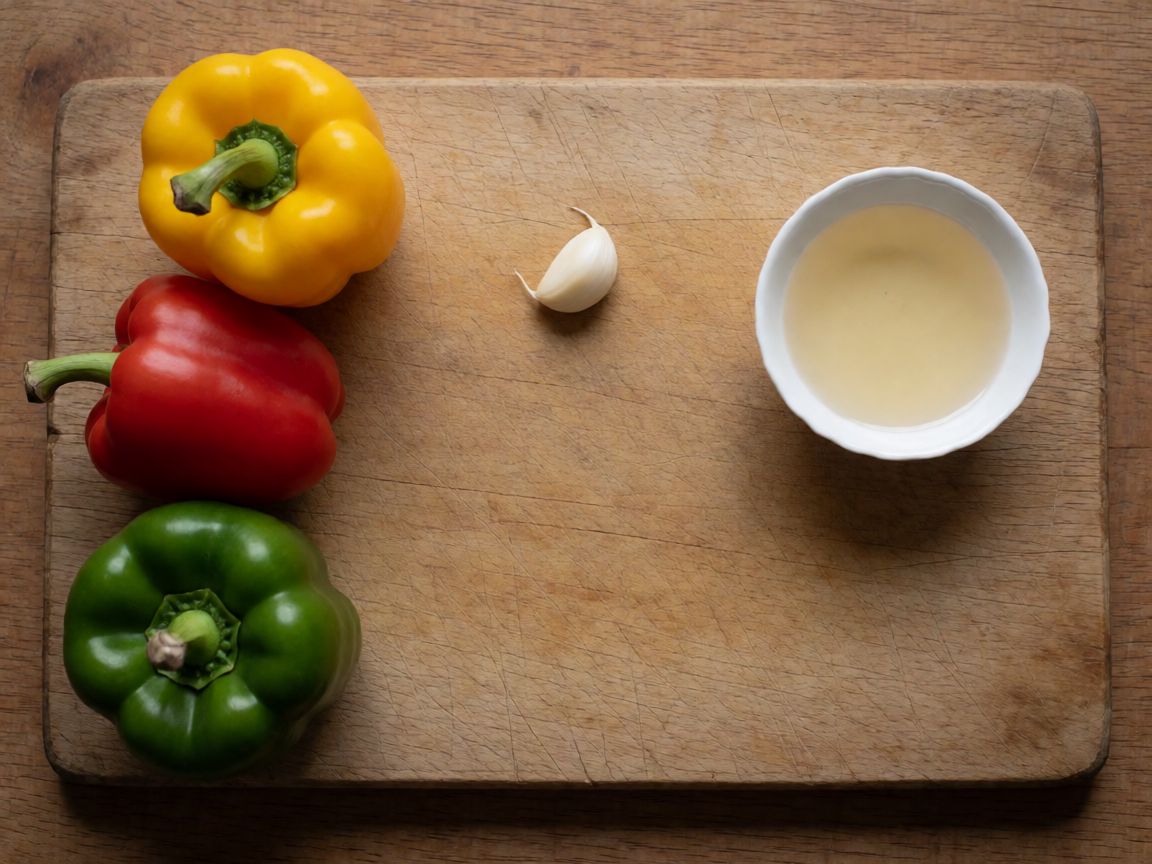
- 3 pcs Bell pepper
- 1 tbsp Sunflower oil
- 1 clove Garlic
- 1 tsp Vinegar
- 1 pinch Salt to taste



Steps
Brush the peppers with oil and place them whole on a baking tray.
Put the tray in the oven at 200°C and roast for 17 minutes.
17 minTurn the peppers over and roast for another 18 minutes.
18 minRemove the tray from the oven.
While still hot, put the peppers in a bag for 10 minutes, peel off the skin, then dress with oil, garlic and vinegar.
10 min
This is the Mediterranean trick for getting peppers soft, sweet and charred without a flame under them, and without turning them into mush. The whole pepper is its own pressure vessel: the skin is airtight, so once it gets hot enough to blister, steam builds up inside and cooks the flesh from within while the outside chars. You are not roasting a pepper so much as steaming it in its own jacket.
What decides whether it works is restraint at two points. First, let the skin actually blister and go patchy black before you think about pulling the tray — a pale, merely softened pepper hasn't built up that internal steam yet, and the flesh underneath will still taste raw and grassy. Second, don't peel it hot off the tray. Into a bag it goes, lid on the heat shut in with it, and you wait. That ten minutes isn't resting for the sake of resting — the trapped steam keeps condensing against the inside of the skin, working it loose from the flesh, so that when you finally touch it the skin slides off in sheets instead of fighting you shred by shred.
Turning the peppers halfway through is not fussiness either. Your oven has a hot side, and the tray itself is a heat sink — the underside facing the metal chars faster than the top facing the air. Turn it and you even that out, so you don't end up with one cheek burnt to carbon and the other still green and tight.
Pepper: use the thick-walled bell pepper, not the thin frying kind — thin walls collapse into rag before the inside has steamed through, and you'll be peeling ribbons, not sheets. Red or yellow peppers have more sugar than green, so they come out of the oven sweeter; green works, it's just a sharper, more vegetal result, which some people genuinely prefer with sharp dressing. Three peppers for two people is generous as a side salad — this is not a dish you stretch thin, because once it's peeled and dressed, a pepper weighs a lot less than it looks like it should.
Oil on the skin before roasting: this isn't for flavour, the oil barely survives the oven. It's there so the skin blisters evenly rather than drying patchily where it touches hot metal — a thin film of fat conducts heat better than bare skin sitting on a tray, and it stops the skin going leathery-dry in spots before it's had the chance to blister properly. Any neutral oil does this job — sunflower, rapeseed, groundnut. Olive oil works too, but it brings its own taste to a dish that doesn't need it yet; save the flavoured oil for the dressing stage, where it actually gets tasted.
The bag at the end: you don't need anything special. A sandwich bag, a bowl with a plate sat on top, even the same tray covered with foil — the mechanism is just trapped steam with nowhere to go, condensing back onto the skin and loosening it. People sometimes reach for a proper sealed container thinking it needs to be airtight like a pressure cooker — no, it just needs to hold the steam in contact with the skin for a few minutes. A loosely closed bag does the job as well as a vacuum seal would.
Garlic goes in raw, so its quality actually matters here — no graininess, no green sprout through the middle, which turns bitter and fights the sweetness of the roasted flesh. Crush it rather than slice it; you want it diffused through the dressing, not sitting in strips that one person gets a mouthful of and another doesn't.
Vinegar is the only acid doing any work against a pile of roasted sugar — without it the dish tastes like warm jam. A tablespoon's worth, but taste as you go, because peppers vary in how sweet they roasted out. No vinegar in the cupboard, lemon juice does the same job — any sharp, clean acid with nothing muddying it will do; just don't reach for something like balsamic, which brings its own sweetness and undoes the point.
Salt goes in at the dressing stage, not before roasting — salting raw pepper skin does nothing for it, since the skin is coming off anyway, and salting the flesh too early just draws out juice you want to keep. Add it once the peppers are peeled and the dressing's going in, and taste before you decide you're done — roasted pepper flesh carries salt differently once it's cooled, so what tastes right hot can go flat once the dish sits.
·