
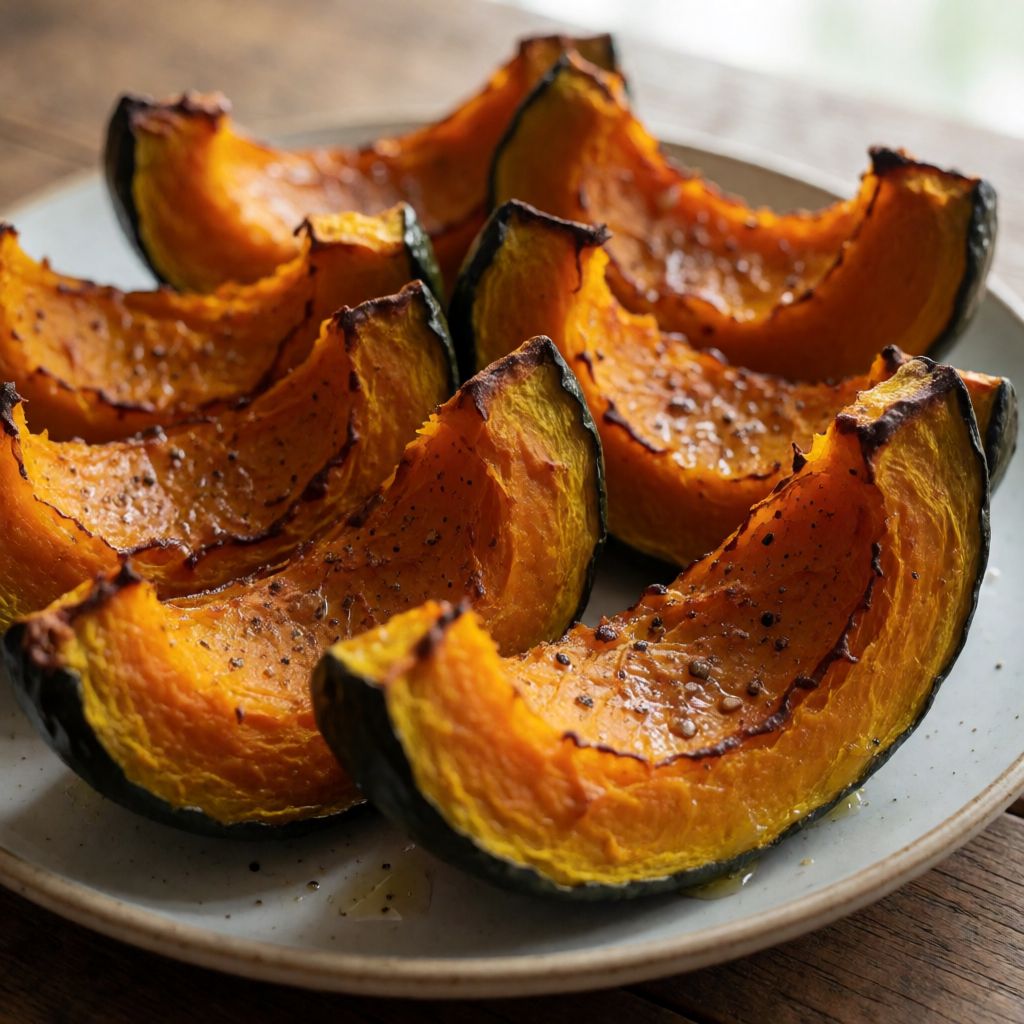
 AI photo
Baked Pumpkin
Sweet pumpkin wedges roasted with rosemary, olive oil, salt and pepper until tender and lightly caramelised.
Labels are worked out automatically from the ingredients and can be wrong. Check the packaging if it matters to you.
Ingredients
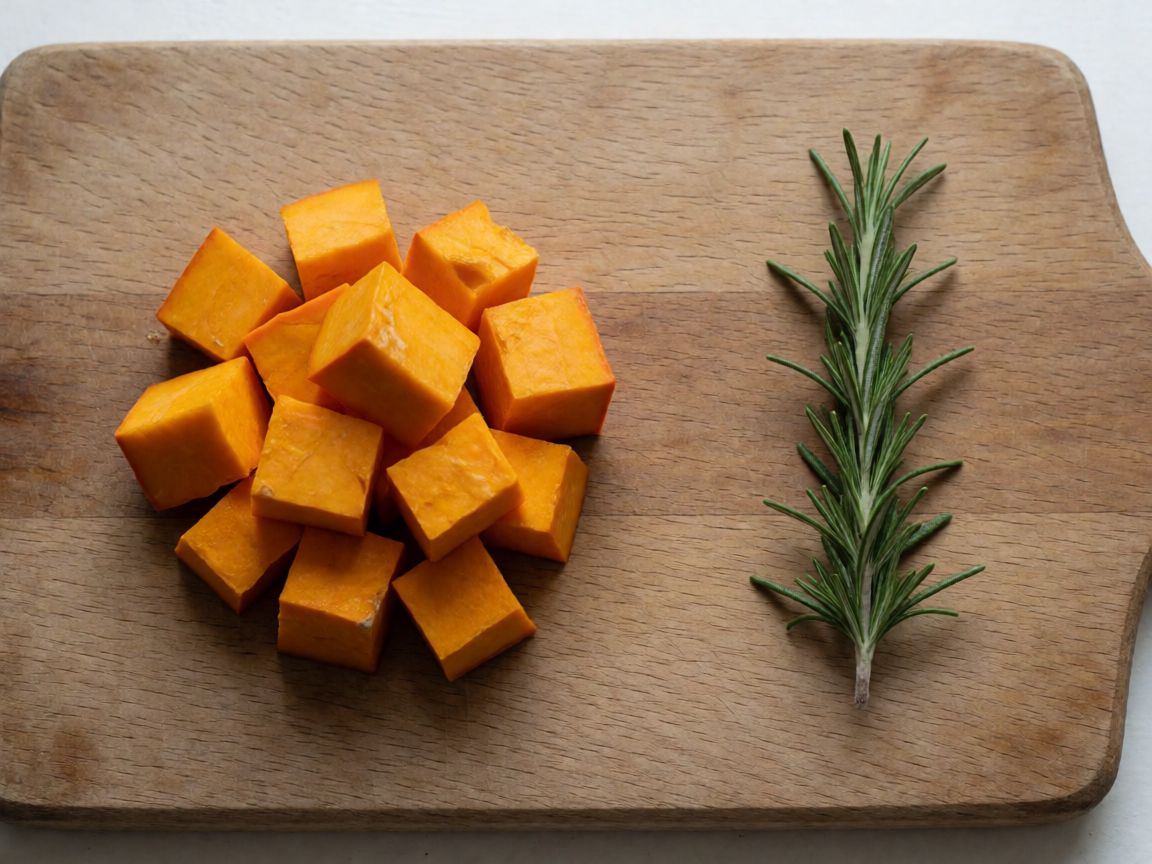
- 800 g Pumpkin
- 1 pcs Rosemary sprig
- Olive oil to taste
- Salt to taste
- Black pepper to taste





Steps
Wash the pumpkin thoroughly under running water, remove any dirt, dry it with a towel, cut off the stem and cut into four pieces.
Scoop out all the fibres and seeds from the pumpkin with a spoon.
Cut each piece into thin slices, peel off the skin and arrange on a baking tray lined with baking paper.
Season the pumpkin with salt and pepper, scatter over the rosemary needles and drizzle with olive oil.
Bake the pumpkin in the oven at 200°C for about 30 minutes.
30 minServe the dish while still warm.
This is not a stew and not a purée — it's a roast, plain and simple, the same logic as the parsnips and carrots that go round your Sunday joint. Dry heat, open tray, nothing holding moisture in. The pumpkin goes in wet with its own juice and oil, and comes out with a caramel edge and a soft, almost melting middle. That's the whole trick, and it's a trick of temperature, not of time.
200°C isn't a number you pick because it's "medium-high" — it's the point where the sugar at the cut surface of the pumpkin starts to brown and concentrate before the water inside it has had the chance to turn the whole piece to mush. Go cooler, and you get something soft and grey that tastes of nothing, because the pumpkin steamed in its own liquid instead of roasting. Go hotter without thinking about thickness, and you char the edge while the centre stays raw. So the oven does one job — brown — and the slice thickness does the other — cook through in the same stretch of time as the browning happens. That's why you cut thin: not for looks, for timing.
Some say pumpkin needs a long slow roast to "soften properly." No — because pumpkin flesh is soft to start with, nothing like a potato. Long and slow just gives the sugars more time to break down past caramel into mush, and you lose the edge you were roasting for in the first place. Doneness here isn't a clock, it's a knife tip: it should slide into the flesh without resistance, and the underside touching the tray should have gone the colour of light brown sugar, not pale, not black.
Pumpkin itself is the one ingredient worth choosing with care, because the big carving pumpkin sold around autumn is bred to be hollow and watery, not to eat — stringy flesh, thin walls, mostly water once you cook it. What you want for this is a dense-fleshed squash: deep orange right through, firm when you press a thumbnail into the raw cut, heavy for its size. Butternut squash from any supermarket does this job better than a Halloween pumpkin ever will, and it's what I'd reach for if the recipe's '800 g pumpkin' sends you to a shop with nothing but carving stock on the shelf.
The skin comes off after you've cut into wedges, not before, and that's not laziness — a quarter of pumpkin gives your hand something to hold onto while the peeler or knife works, whereas a whole round pumpkin just rolls. Cut the slices thin and roughly even, because uneven thickness means uneven finishing: the thin end will brown and the thick end will still be raw when you pull the tray.
Olive oil here is doing two jobs, not one. It carries the rosemary's flavour into the flesh, yes, but it also coats the cut surface so heat moves into the pumpkin by contact rather than through dry air alone — the difference between frying a little and merely baking in a draught. If you've no olive oil, any oil with no strong smell of its own will still do the heat-conducting job — sunflower, rapeseed, the kind already in your cupboard for the roast potatoes — you just lose the fruitiness olive oil adds on top.
Rosemary is resinous: its oils need heat to release any scent at all, which is why a sprig thrown in cold does almost nothing. Strip the needles and scatter them so they sit against oiled flesh rather than bare metal tray — the oil and the pumpkin's own moisture protect them from scorching into something bitter. No rosemary, no problem: thyme is built the same way, woody and oil-bearing, and works by the same logic.
Salt and pepper, as said, go on close to roasting, not in advance — and that's the one place patience works backwards here: for once, less waiting is the right call.
A lined tray is doing the work a proper roasting tin would do in a restaurant kitchen — stopping the sugars that caramelise from welding themselves to the metal. In a flat without a decent tin this is your patience saver: no tray to scrub after. Four people, 800 grams, is a generous side alongside a roast, not a meal on its own — treat it the way you'd treat the parsnips, there to round out the plate, not to carry it.