
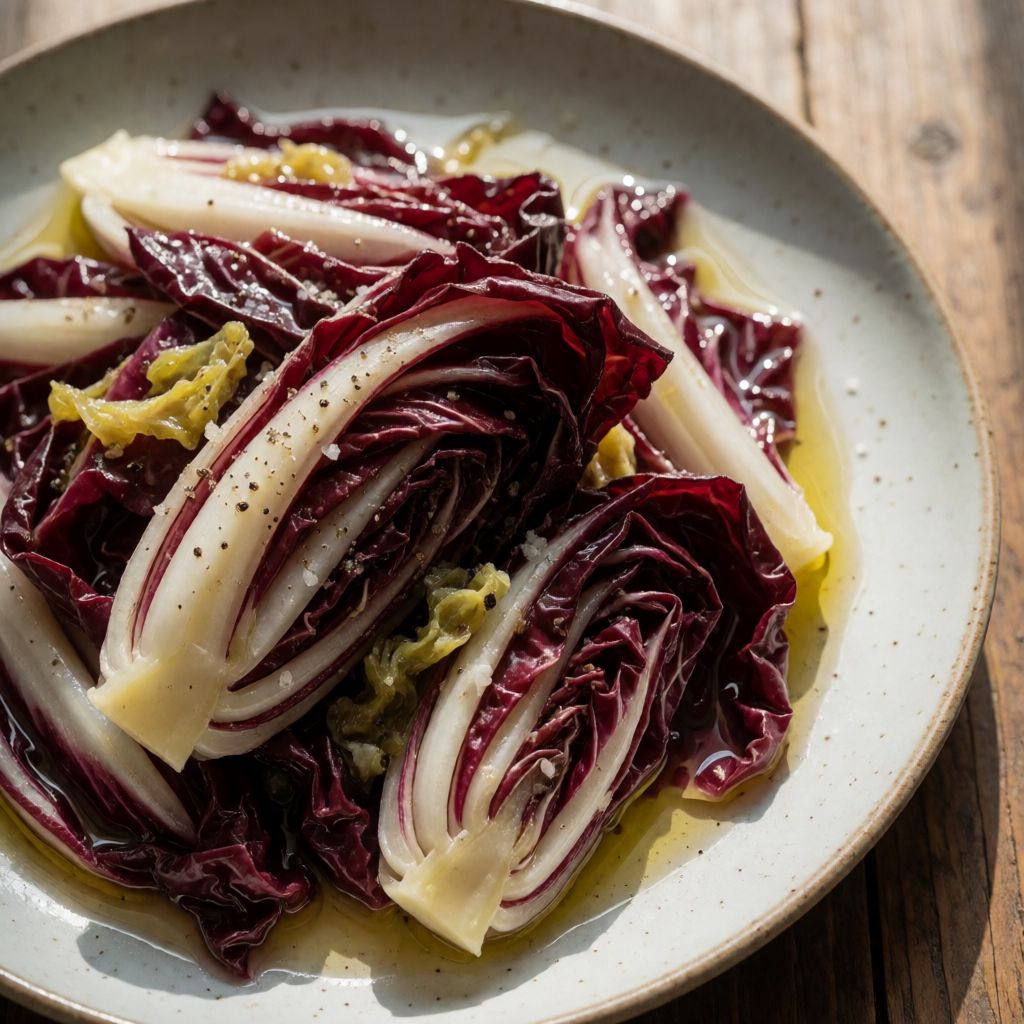
 AI photo
Oven-Roasted Treviso Radicchio
A simple side of Treviso radicchio, roasted in the oven with olive oil, salt and black pepper.
Labels are worked out automatically from the ingredients and can be wrong. Check the packaging if it matters to you.
Ingredients
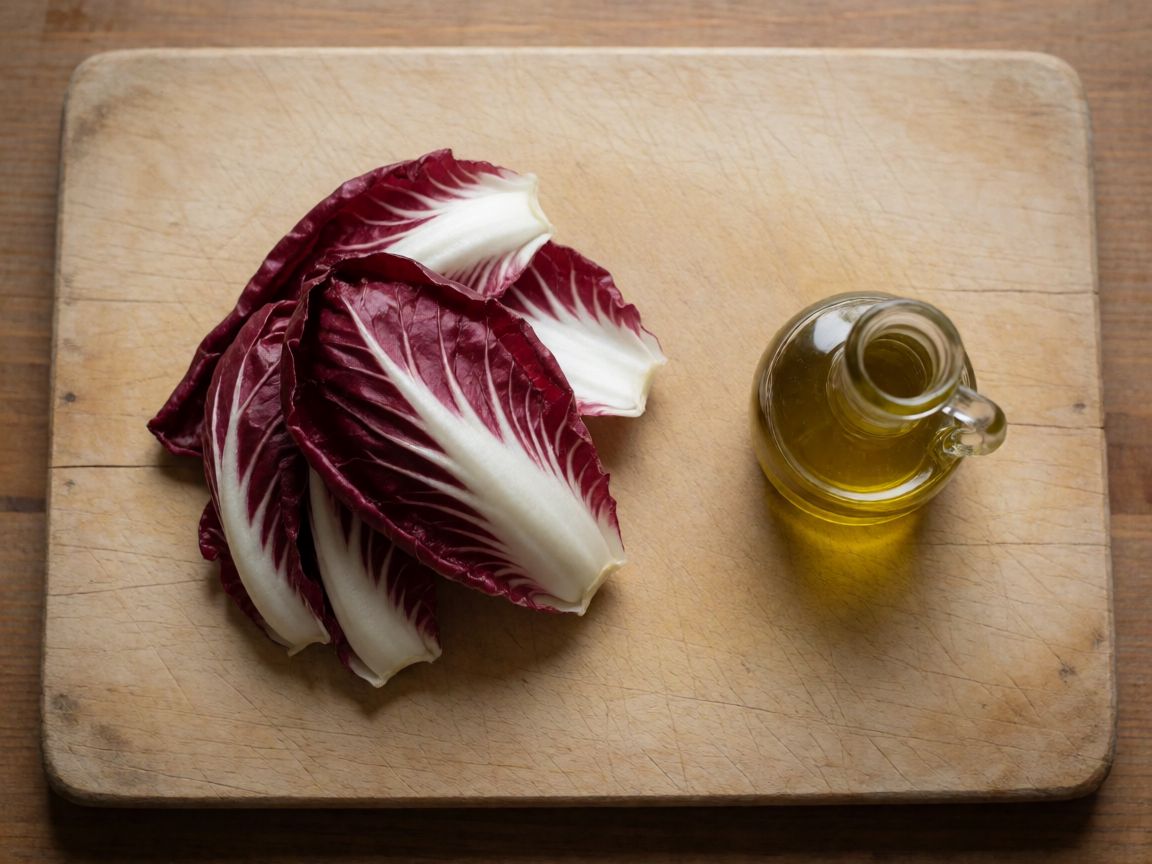
- 700-800 g Treviso radicchio
- 50 g Olive oil
- Salt
- Black pepper to taste




Steps
Thoroughly wash the radicchio under running water, trim it and dry with a paper towel.
Cut the cleaned radicchio lengthwise into four pieces and arrange on a baking tray lined with parchment paper.
Drizzle with olive oil and add a pinch of salt and black pepper.
Place the tray in an oven preheated to 180°C and roast, turning the radicchio occasionally.
15 minRemove from the oven, drizzle with a little more olive oil and serve hot.
This is a bitter leaf turned into a side dish by nothing more than oil, salt and dry heat — no sauce, no cheese, nothing to hide behind. What decides whether it works is not the oven timer but two things: how you cut the head, and whether you let the cut edges actually brown instead of just going soft.
Treviso radicchio is long, tight, almost like a fat cigar of leaves held together at the base by a core. Cut it lengthwise into quarters, straight through that core, and each wedge stays a wedge — leaves fanned open a little, attached at the root end, standing up on the tray instead of collapsing. Cut it the wrong way, crosswise or shredded, and you get loose curls that dry to paper before the inside is even warm. The core is what you're protecting: it's denser, holds water longer, and it's what keeps the heart of the wedge from turning leathery while the outer leaves catch colour.
Some say roasting "takes the bitterness out" of radicchio. No — it doesn't take it out, it gives it something to argue with. The sugars at the cut edges caramelise under dry heat, going from white to bronze to properly browned at the tips, and that sweetness sits against the bitterness instead of erasing it. That contrast is the whole point of the dish, not a problem to be solved.
So judge it by colour and give, not by the clock: the outer leaves should curl and bronze, the cut face should blister a little, and the base should yield when you press a knife into it rather than resist like a raw stalk. Fifteen minutes is where you start checking, not where you stop.
On ingredients, start with the radicchio itself. Treviso is the long, tapered kind — harder to find in an ordinary UK greengrocer than the round, tighter-headed Chioggia variety, which most supermarkets stock as plain "radicchio." Use it without worry. The criterion isn't the shape, it's whether the head has a firm core holding the leaves together at the base — if you can quarter it through that base and have the wedge stay intact, it'll roast the same way. Chioggia is more compact, so it cooks a touch faster and needs watching sooner rather than later.
The olive oil does two separate jobs, which is why it appears twice. Before roasting, it's a heat-transfer agent — a thin coat that helps the cut surfaces brown instead of scorching dry, and stops the leaf edges from turning to ash before the inside softens. For this job, any oil with no strong smell of its own will do; sunflower or a plain vegetable oil works fine, you're not tasting it yet. After roasting, the oil is there to be tasted — raw, cool, full of whatever aroma it has left after the bottle's been opened a few times. Here you do want a decent olive oil, because this is the only fat in the dish and it's doing all the flavour work at the end.
Salt goes on before the oven for a reason beyond seasoning: a light pinch on the cut surface draws a little moisture up, and that surface moisture is what helps the browning happen evenly rather than patchily. Pepper goes on raw and stays raw-ish — its aroma is volatile and roasting it for fifteen minutes just burns it off, so a final crack at the table does more than one added at the start.
Turning the wedges "occasionally" isn't ritual, it's correcting for how a domestic tray actually heats: the side touching the metal cooks by direct conduction and goes brown fast, while the top side only gets convected air and lags behind. Left alone, you get one burnt face and one pale, slightly steamed one. Turning levels that out — you're not aiming for all-over colour, just colour that isn't accidental.
There's a reason this dish exists at all, and it's not fashion. Treviso radicchio is a winter crop from the Veneto, grown and then "forced" — kept in the dark in cold water to sweeten and whiten the heart — precisely because in deep winter there was little else green to put on a plate, and a bitter leaf needed some trick to make it worth eating. Roasting it hot and a little hard, letting the edges char, is the kitchen version of that same old instinct: take something stubborn and make the fire argue it into something good.
700–800g — roughly two long Treviso heads, or two to three round ones — feeds four as a side, nothing more; this isn't a dish that stretches. And don't rush the fifteen minutes down to ten because the kitchen smells ready. The bitterness needs the full browning to be balanced, and a radicchio pulled pale is just a warm salad with regrets.