
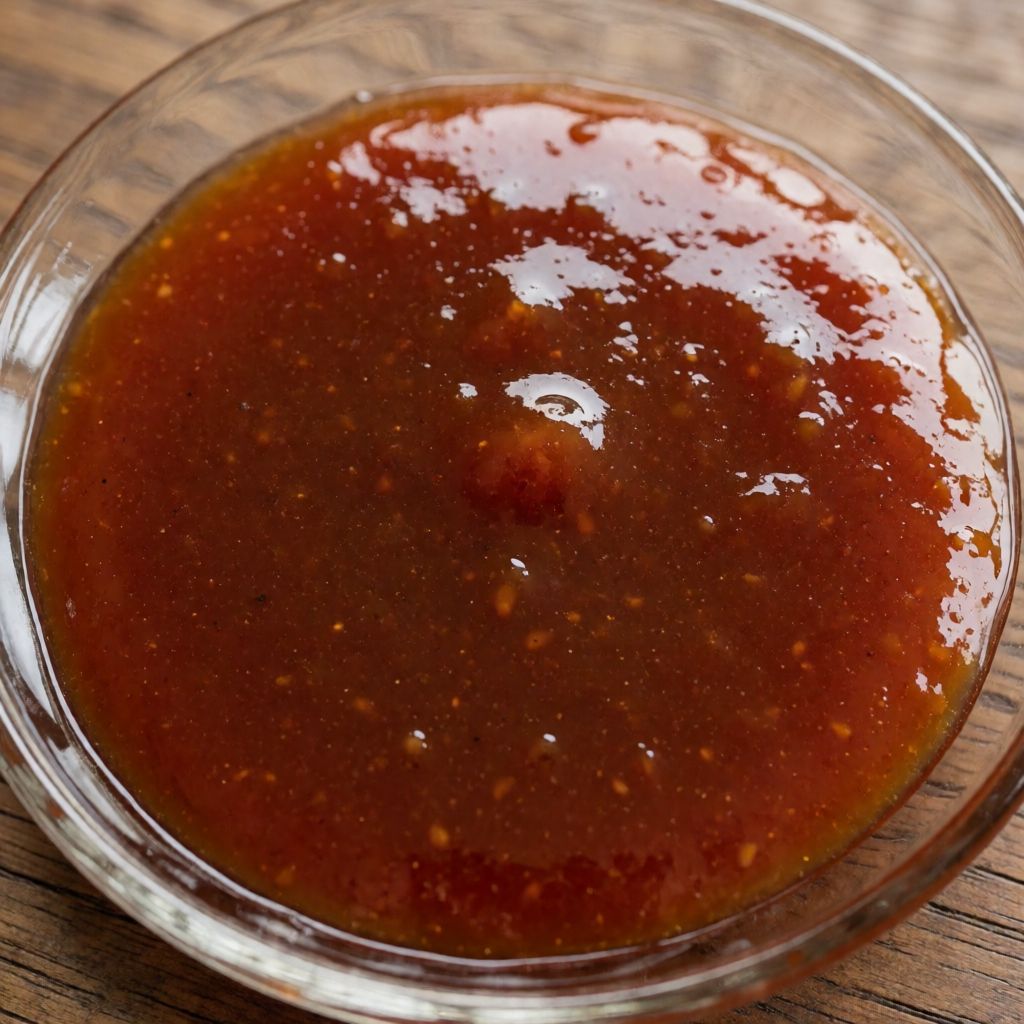
 AI photo
Rosehip Jam
A sweet preserve made from rosehips, apple and cranberries, brightened with orange and vanilla.
Labels are worked out automatically from the ingredients and can be wrong. Check the packaging if it matters to you.
Ingredients
- 1 pcs Vanilla pod
- 400 g Sugar
- 250 g Rosehips cleaned
- 250 g Apple diced
- 50 g Cranberries
- 1 pcs Orange zested and juiced






Steps
Split the vanilla pod lengthways and scrape out the seeds. Rub the seeds into a few tablespoons of the sugar.
3 minPut the cleaned rosehips, diced apple, cranberries, orange zest, orange juice, sugar, vanilla seeds and the empty vanilla pod into a saucepan and bring to the boil over medium-high heat.
5 minCover and simmer gently for 15 minutes, stirring a few times during cooking.
15 minIf you like, blend the jam with a stick blender for a smoother, creamier consistency.
2 minScald a few well-washed jars with boiling water to sterilise them.
3 minLadle the hot jam into the jars and seal tightly with the lids.
2 min
What was changed
Cranberries stands in for sea buckthorn here, as it's easier to find in UK shops and gives a similarly tart note.
This is not a pantry jam, the kind you seal for winter and forget. It's a small, bright batch — rosehip carries the show, apple gives it a backbone, orange and cranberry keep it from being flat and sweet. Think of it as a weekend thing: made on Sunday, spooned onto toast or into a crumble before the week eats it.
What decides whether it works is not the clock, it's two things you can check with your own hands. First, how clean the rosehips are — not just topped and tailed, but the seeds and the fine hairs around them scraped out. Those hairs are the same fibre once dried and sold as itching powder; leave a few in and the jam will scratch the back of your throat, not metaphorically. Second, whether the fruit has actually broken down into something that holds together when it cools — you test that by dragging a cold spoon through a dab on a saucer, not by watching a timer.
Some say rosehip is too tough and bitter to make proper jam, that it's only fit for syrup — the wartime kind British children were dosed with when oranges from Spain stopped arriving and someone worked out hedgerows were full of vitamin C for free. That's history, not a verdict on the fruit. Give rosehip pectin from apple, acid from orange, and enough sugar to pull its juice out, and it softens into something with real body — not syrup, jam.
The vanilla isn't decoration. Scrape the seeds and rub them into a few spoons of sugar before anything else happens — sugar is hygroscopic, it grabs onto the vanilla's oils and carries them evenly through the whole pot instead of leaving a few lucky spoonfuls with all the flavour and the rest with none. Drop the scraped-out pod in too; it still has plenty to give once it sits in hot syrup for fifteen minutes. Fish it out before jarring, or at most leave it as a marker that someone added vanilla, not as something to eat.
Sugar here is doing two jobs, not one: sweetening, yes, but also drawing the juice out of the apple and rosehip by osmosis, which is most of why you don't need to add water. Four hundred grams against six hundred of fruit is a working ratio for a short-life jam, not a preserving one — don't scale it down thinking you're saving sugar, you'll just get fruit that stews rather than sets.
Rosehips are the one ingredient with a real safety step, not a fussy one. Split, deseed, and get rid of the fine hairs clinging to the seeds — that's what "cleaned" means, and it's non-negotiable, not a chef's habit. If you're picking your own from a hedgerow after the first frost (the frost softens them and makes this less of a fight), budget real time for it; this is where patience is an ingredient, not a virtue. No fresh rosehips to hand — dried ones from a health shop work if you soak them first to bring back some give, or use a ready-made rosehip purée and skip the cleaning step entirely, since someone's already done it.
Apple is there for pectin and bulk, because rosehip flesh on its own is thin and stringy once cooked — it won't hold a set. Use something tart rather than something that eats sweet raw; a Bramley, if you can get one, brings both acid and pectin in the same bite. A sweeter eating apple will need the orange juice to do more work.
Cranberries add sharpness and a bit more pectin on top of the apple's — use them fresh or frozen, not dried, since dried ones have given up the juice that's actually doing the work. No cranberries, redcurrants do the same job if they're in season.
Orange zest gives scent, the juice gives acid — and acid is what lets pectin set at all, so it's not just there for brightness. No orange, a lemon covers the acid side, though you'll want to taste and ease back the sugar slightly since lemon is sharper. The stick blender at the end isn't essential, it just breaks up the rosehip skins that stay a little tough even after simmering — leave it out if you like some texture, use it if you want something closer to a spread than a chunky jam.