
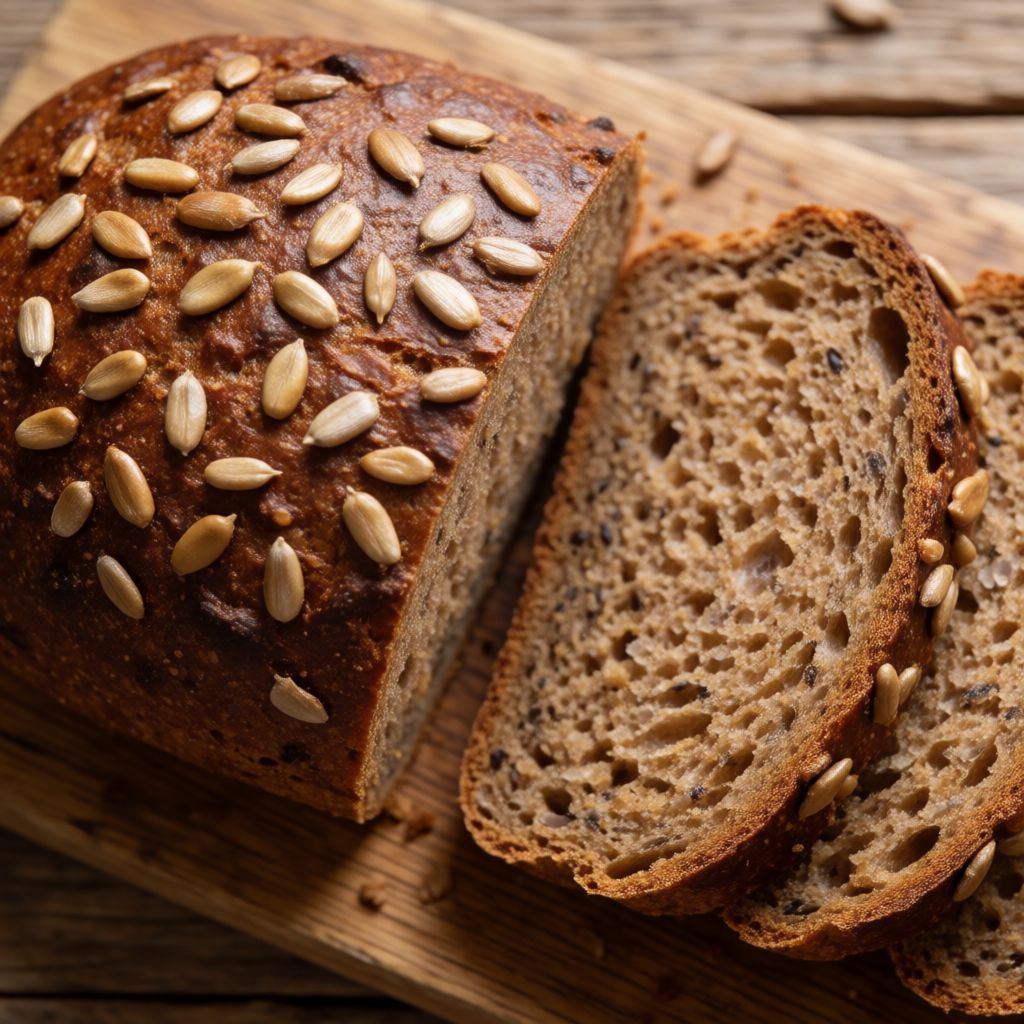
 AI photo
Rye Bread
A dense, malty rye bread leavened with both yeast and a sourdough starter, baked in a loaf tin.
Labels are worked out automatically from the ingredients and can be wrong. Check the packaging if it matters to you.
Ingredients
- 150 g Cracked Rye
- 50 g Sunflower Seeds
- 150 ml Water
- 10 g Yeast
- 50 ml Water
- 1 tbsp Honey
- 330 ml Beer pale malty beer
- 100 g Sourdough Starter ready to bake with
- 125 g Plain Flour
- 450 g Rye Flour
- 1½ tsp Salt
- 1 tbsp Butter for the tin
- 2 tbsp Butter melted, for brushing






Steps
Put the cracked rye and sunflower seeds in a bowl with boiling water and leave to soak for about 1 hour.
Dissolve the yeast in room-temperature water and add it to the bowl with the soaked grains, along with the honey and pale beer.
Add the plain flour, rye flour and salt, and knead in a dough mixer on low speed for about 20 minutes.
Grease a 2-litre rye bread tin with butter and tip the dough into it.
Wet your hands with cold water and smooth the dough, pressing it firmly into the tin.
Leave the dough to rise on the kitchen counter for 30 minutes, then put it in the fridge for 8-12 hours.
Take the dough out of the fridge and check the surface.
There should be 5-10 small holes on the surface of the rye dough - then it is ready to bake.
If there are no holes, leave the dough to rest a little longer on the counter before baking.
Brush the bread with melted butter and place it in a cold oven.
Set the temperature to 180°C (conventional top/bottom heat) and bake the bread for about 1 hour 20 minutes.
Check with a thermometer that the temperature inside the bread is 97-98°C.
Remove the bread from the tin and let the freshly baked rye bread cool completely on a wire rack.
This isn't a loaf you whip up on a whim. It's rye flour, sourdough starter, commercial yeast, beer and a long cold rest working together, because rye on its own is stubborn — it has almost no gluten, just starch and a gum called pentosan that turns gluey if you rush it. Wheat bread rises because gluten strands trap gas and stretch. Rye dough doesn't stretch like that. It sets, the way a thick porridge sets, and what makes it light rather than a brick is acid — from the starter and a little from the beer — which breaks down those starchy gums enough to let gas bubbles survive the bake.
That's why this recipe runs on two kinds of patience: an hour for the cracked rye and seeds to soften in boiling water (skip this and they stay crunchy and suck moisture out of the crumb later), and 8 to 12 hours in the fridge for the dough to slowly acidify and develop structure without racing out of control on the counter. Some say rye bread "doesn't need time to rise, it's flat anyway" — no, because the rise you're after isn't height, it's those small holes forming on the surface. That's the tell: 5 to 10 little craters mean the fermentation has gone far enough that gas is actually escaping through a structure that can hold most of it in. No holes, the dough hasn't finished its work — give it longer, don't just shove it in the oven because the clock says so.
Cracked rye and sunflower seeds aren't decoration, they're structure and moisture insurance. Dry grain dropped straight into dough steals water from the crumb as it slowly hydrates over the bake, leaving dry pockets. Soaking first means they arrive already plump, contributing chew without competing for water. If you can't get cracked rye, rolled oats or a coarse bulgur soaked the same way will do a similar job — the criterion is "a grain or seed that can absorb boiling water and go tender in an hour," not the specific grain.
The yeast and the sourdough starter are doing different jobs, not duplicating one. Yeast gives you reliable, fast gas production — insurance against a sluggish starter. The starter brings the acid that rye flour actually needs to behave; without enough acidity, the pentosans in rye flour swell and gum up, trapping gas unevenly and giving you that wet, tight band of crumb near the base that people wrongly blame on "underbaking." It's not underbaking, it's under-souring. If you've no starter going, you can lean harder on yeast and a splash more time, but expect a plainer, less complex crumb — the sour tang isn't optional flavour, it's the mechanism holding the loaf together.
The beer stands in for some of the water and brings two things: a little more acidity, and the malty sugars that feed fermentation and colour the crust as it caramelises. Pale and malty, not hoppy and bitter — hops bring bitterness with no upside here. No beer in the house, swap in water plus a spoon more honey; you'll lose some of the malt depth but the bread will still work, it's seasoning, not scaffolding.
Plain flour alongside the rye flour is the gluten top-up. Rye flour alone gives you almost nothing to trap gas with; the plain flour's gluten, even in this relatively small ratio, gives the dough just enough stretch to hold the structure the acid and seeds have built. Any oil with no smell of its own would do for greasing — a plain sunflower or a neutral vegetable oil — but the butter does double duty, a layer on the tin to stop sticking and release, and a brushed layer over the top crust before baking that helps it colour evenly and keeps the surface from drying out and cracking in the dry heat of a home oven.
Salt at a modest one and a half teaspoons controls the yeast's pace as much as it seasons — too little and fermentation runs wild and sour too fast; this is why you don't skip or eyeball it even though it looks like a small amount against 450g of rye flour.
On a UK counter, a cold night in the fridge means your "8 hours" might behave like someone else's "10" depending on how cold your fridge actually runs — which is exactly why step 8's hole-check matters more than the clock. And a word on the hob and oven you've actually got: a domestic oven loses heat fast every time you open the door, so resist peeking before you're near the end — check doneness with the thermometer once, not by opening the door every twenty minutes to look, or you'll stretch that 1 hour 20 out with heat you've let escape.