
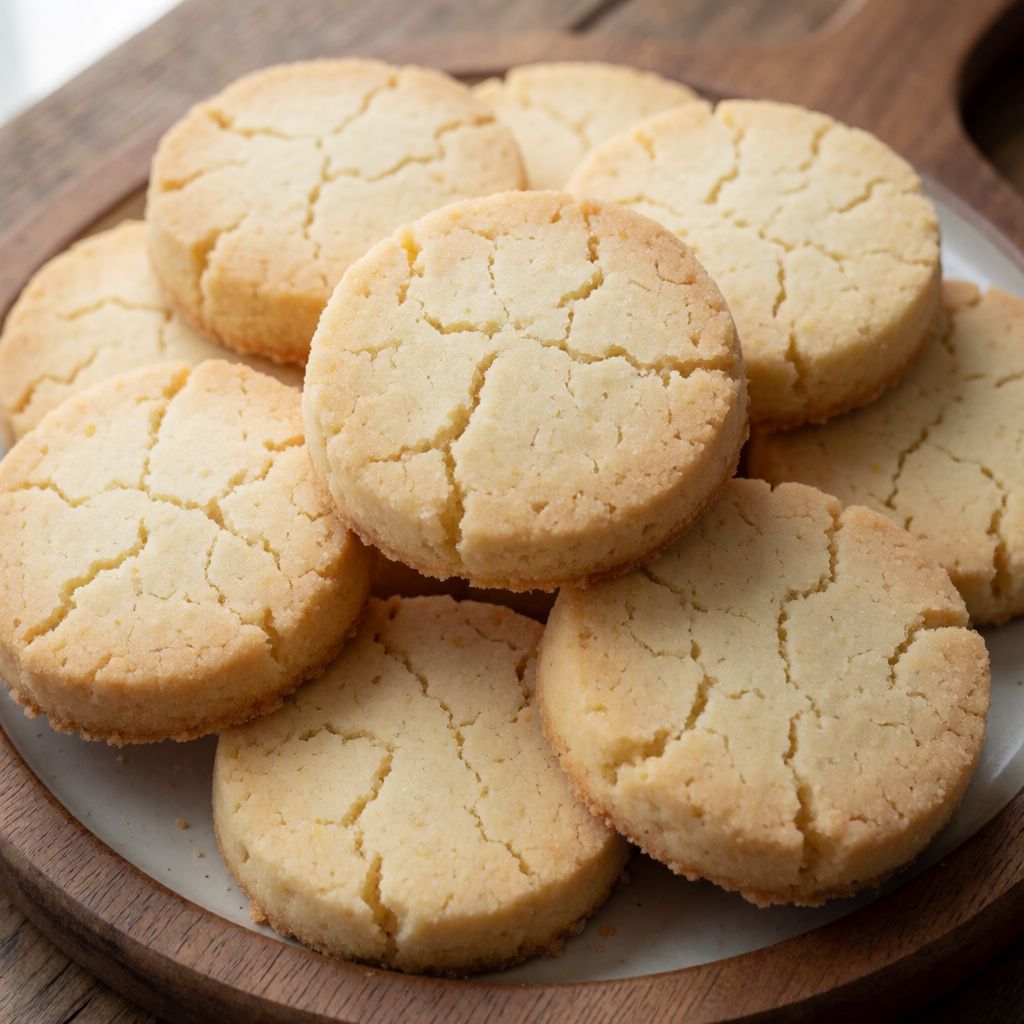
 AI photo
Sablé Pastry
A buttery French-style sablé pastry, crisp and lightly sweet, perfect for tarts and biscuits.
Labels are worked out automatically from the ingredients and can be wrong. Check the packaging if it matters to you.
Ingredients
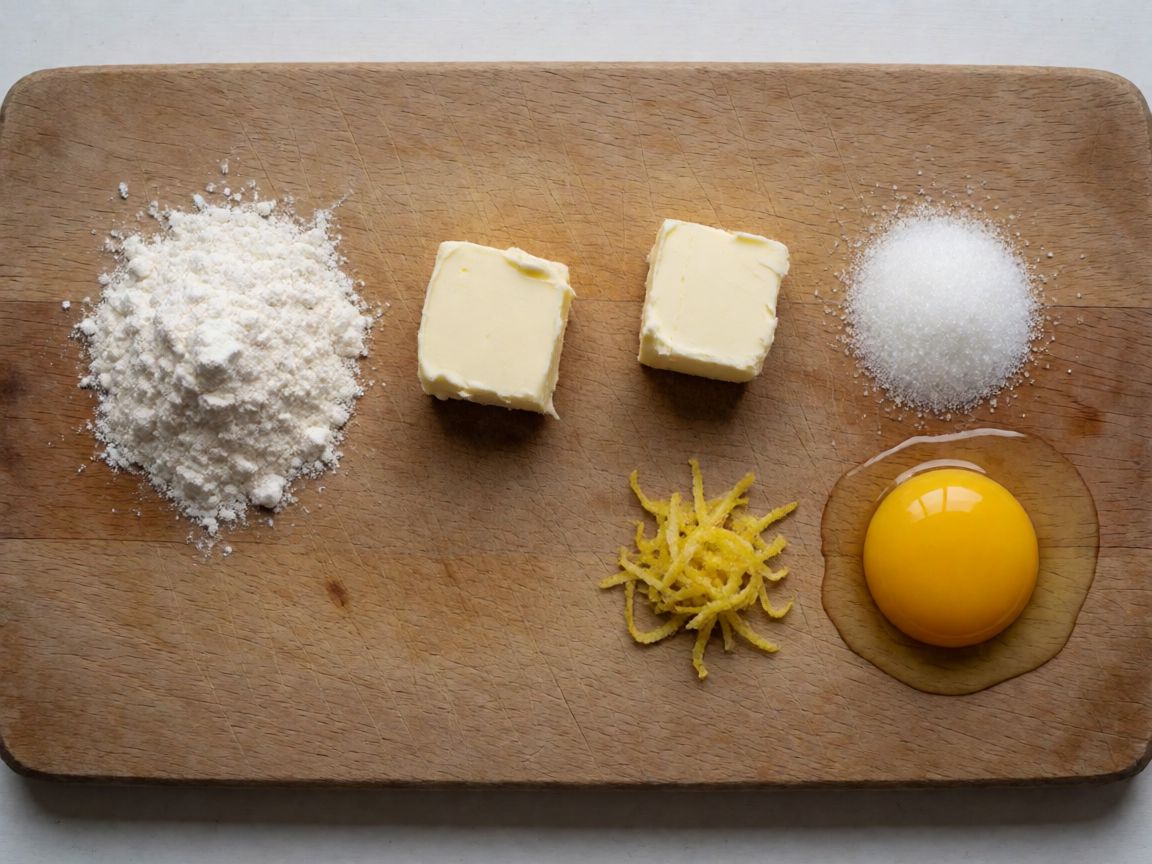
- 250 g Plain flour
- 140 g Butter cold
- 120 g Caster sugar
- 1 pcs Egg yolk
- 1 pinch Salt
- 1 pcs Lemon zest






Steps
Sift the flour into a large bowl or straight onto the worktop.
Add the cold butter, cut into cubes, and rub it into the flour with your fingers until it resembles fine breadcrumbs.
Quickly add the remaining ingredients — sugar, egg yolk, salt and lemon zest — and knead into a smooth, even dough.
Wrap the soft dough in cling film and chill in the refrigerator to rest for at least 1 hour.
60 minBake the pastry for 15–20 minutes, so it doesn't become too hard.
18 min
Sablé just means "sandy" in French, and that word is the whole brief: you are not making a chewy biscuit or a soft cake, you are making a crumb that falls apart on the tongue like fine sand. Whether that happens or not is decided in the first two minutes, before the sugar or the yolk ever go in — it is decided by how cold the butter is and how little you touch the dough once there is liquid in it.
Rubbing cold butter into flour with your fingertips coats each speck of flour in fat before any liquid arrives. Flour only turns tough and stretchy — gluten — when its protein meets water and gets worked. Coat the flour in fat first and you block that meeting almost everywhere; the breadcrumb stage is you literally watching the blocking happen. Some people assume all biscuit dough works like a Victoria sponge — cream soft butter with sugar, then fold in flour. No — because that method builds air and chew, and this one is built to avoid both. Here the butter has to be cold and hard, straight from the fridge, cut into cubes small enough that your warm fingers don't melt them before they've done their coating job.
Once the yolk, sugar, salt and zest go in, the clock is against you again — this is the "quickly" in the method, and it is not decoration. Every extra minute of kneading after there's liquid in the bowl is a minute gluten gets another chance to form where the fat didn't cover it, and that's exactly the minute that turns sandy into tough. Bring it together just to smoothness and stop.
The flour should be plain, nothing stronger. Plain flour has just enough protein to hold the dough together and not enough to fight you for it. Self-raising will puff the biscuit and blur the crumb with air pockets you don't want; strong bread flour will out-muscle the butter's coating and give you something closer to a tough little scone. If plain flour isn't in the cupboard, it's the one ingredient here with no honest substitute worth making — don't reach for anything stronger.
Butter is the one ingredient this dough is built around, so buy one with a flavour worth tasting — unsalted, so you control the pinch of salt yourself, and genuinely cold, not "cool." A block about the size of a deck of cards is roughly your 140 g. Margarine or a soft baking spread will not do here: their fat is too soft at fridge temperature, it smears into the flour instead of coating discrete crumbs, and smeared fat gives you gluten contact in exactly the places you were trying to block. If sandiness is the point, soft fat defeats the whole method.
Caster sugar dissolves into the egg yolk and butter far more readily than granulated, because the crystals are smaller and don't need as much mixing to disappear — which matters, since mixing is the thing you're rationing. It also quietly helps the cause of tenderness: sugar competes with flour for the little moisture there is, so it's one more thing starving gluten of the water it needs. If all you have is granulated, a quick spin in a food processor gets you close enough.
The egg yolk, on its own, is doing a precise job: fat and binding, with almost none of the water a whole egg would bring in the white. Use a whole egg instead and you're adding back exactly the liquid this method is designed to minimise — the dough will still work, but it will be a touch less sandy, more like a standard biscuit. The pinch of salt isn't there to be tasted as salt; it's there so the sweetness doesn't sit flat and cloying on its own, the same small adjustment you'd make to a custard.
Lemon zest is the fragrance, and it earns its place by cutting through all that butter rather than adding more richness on top. Orange zest does the same job if that's what's in the fruit bowl; a few drops of vanilla if there's no citrus at all, though it changes the character from bright to warm. None of these need to dominate — a fine grating off one lemon for this amount of dough is plenty, more and you taste pith, not fragrance.
No special kit is needed for any of this — no kazan, no stand mixer, just a bowl, cold hands, and a baking sheet lined with paper so nothing sticks and nothing scorches on contact with hot metal. English kitchens already know the rubbing-in motion from scones and shortcrust, so trust the breadcrumb texture you're aiming for; it's the same hand-feel, just with sugar and yolk to follow. And treat the hour's rest as non-negotiable — patience here isn't a virtue, it's an ingredient, and skipping it shows up on the tray, not on the clock.