
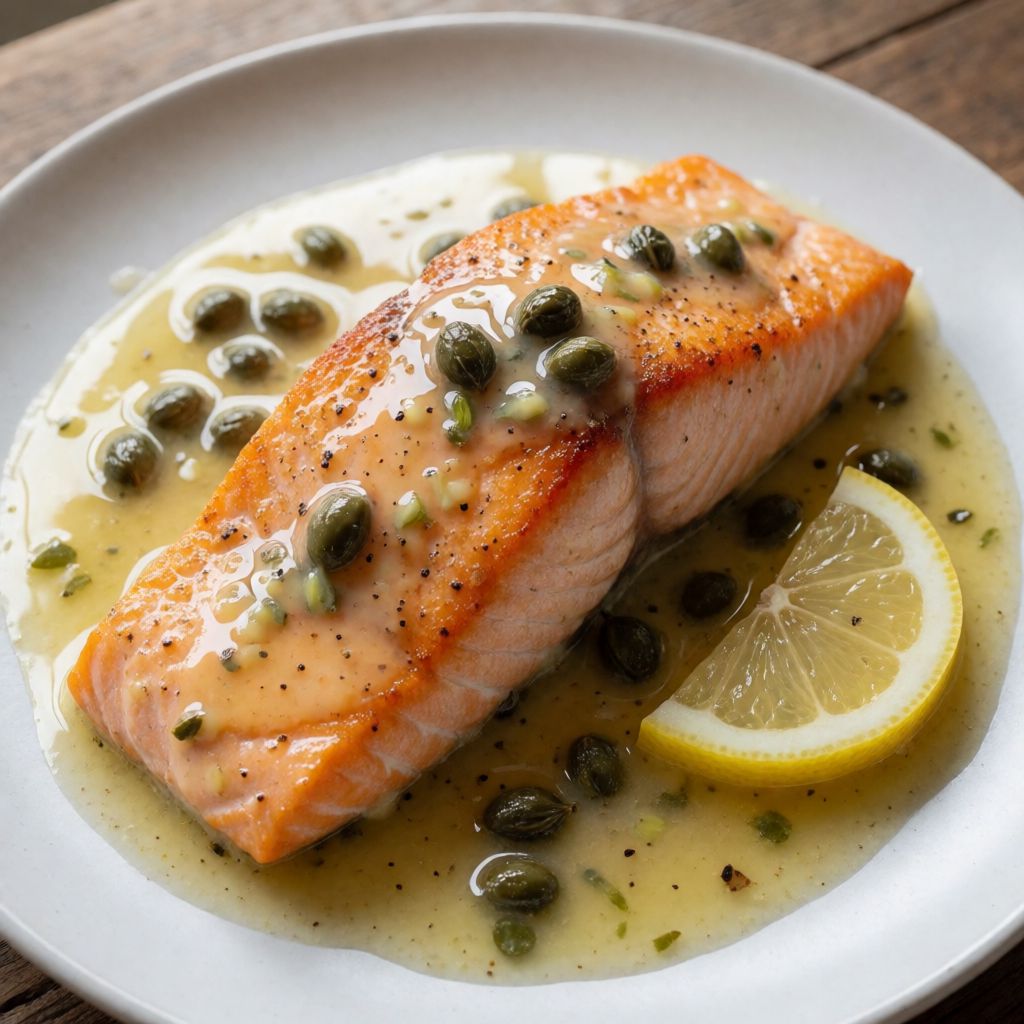
 AI photo
Salmon with Lemon and Caper Sauce
A simple baked salmon with a creamy lemon and caper sauce, tossed with pasta and fresh parsley.
Labels are worked out automatically from the ingredients and can be wrong. Check the packaging if it matters to you.
Ingredients
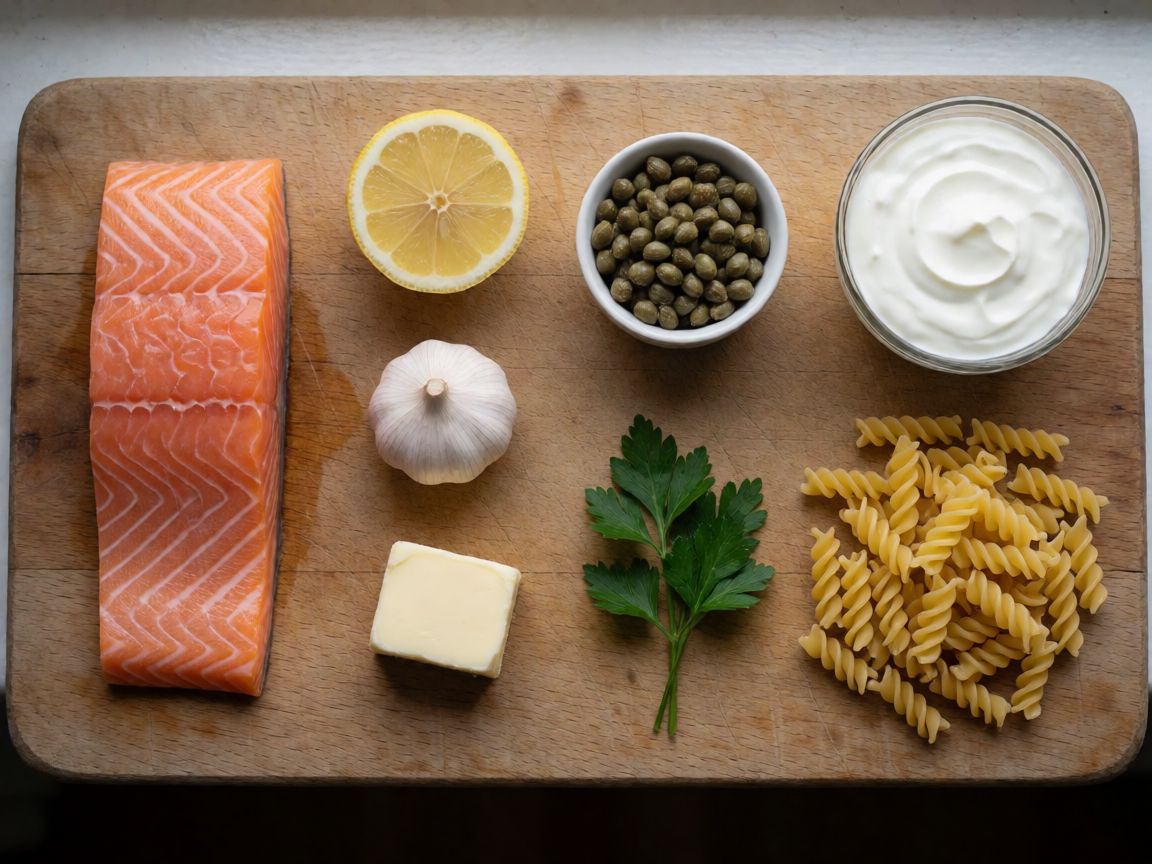
- 300 g Salmon
- 2 clove Garlic finely chopped
- 1 pcs Lemon organic, juice and finely grated zest
- Salt
- Black pepper freshly ground
- 4 tbsp Capers roughly chopped and whole
- 200 ml Greek yogurt 10%
- 1 tbsp Butter
- 400 g Pasta
- 1 bunch Parsley leaves, finely chopped










Steps
Place the salmon pieces in a baking dish lined with parchment paper.
Sprinkle with salt, pepper, lemon zest and finely chopped garlic.
Bake in a preheated fan oven at 175°C for 16–18 minutes.
17 minFor the sauce, melt the butter in a saucepan over medium heat, add the garlic and cook, stirring, until fragrant.
Reduce the heat to low and stir in the lemon juice, capers, lemon zest, salt and freshly ground pepper.
Let the sauce sit until the salmon is ready and the pasta is cooked al dente.
Increase the heat under the garlic, lemon and caper pan to medium and stir in the Greek yogurt.
Stir constantly while the pan is on the heat.
The sauce must not boil or become too hot, or it will split.
The sauce should become smooth and warm.
Toss the pasta with a few spoonfuls of the lemon-caper sauce.
Plate up, arrange the salmon and sauce, add freshly ground pepper and sprinkle with finely chopped parsley before serving.
This isn't really a fish recipe with pasta on the side — it's a lesson in what yogurt can and can't survive. The salmon bakes on its own, quietly, under salt and zest. The whole drama happens in the saucepan, where you're trying to turn Greek yogurt into a sauce without it curdling into something that looks like a failed science project. That's the mechanism the whole dish hangs on: fat, acid and heat, kept just short of a fight.
Some say yogurt "doesn't work" in hot sauces, full stop — no, because the problem isn't yogurt, it's temperature control on a protein-based dairy that has no cream's fat cushion to protect it. Cream can take a simmer because its fat coats the proteins and keeps them from clumping together when they denature. Yogurt, especially a lean 10%, has far less of that buffer. Push it past a gentle warm and the proteins seize, squeeze out water, and you get sauce that looks grainy and sad instead of silky. So you build in protection before the yogurt ever meets heat: butter first, to coat things in fat, and a low flame when the yogurt goes in — never a boil, just a shimmer of warmth.
The salmon side is almost deliberately boring, and that's the point. Zest and garlic on top, dry heat underneath, nothing to manage except not forgetting it's in there. The fish bends toward opaque and firm instead of staying translucent and raw at the centre — that's your cue, not the clock. Sixteen minutes is a floor, not a verdict; a thicker piece from the tail end of the fillet will sit in the oven longer than a thin one and no timer knows that but you.
Salmon: buy it thick enough that it doesn't dry out in the time it takes to cook through — a thin tail piece will overcook before the middle even catches up. Farmed Scottish salmon is the easy, available choice in most UK supermarkets and works fine here; wild if you want more flavour and a firmer bite, but it's leaner and forgives mistakes less. No salmon, no problem — any oily fish that holds together when baked, trout being the obvious stand-in, does the same job: dry heat, a little fat of its own, done.
Garlic goes in twice, and for different reasons. In the oven with the salmon, it mellows slowly under moderate heat and perfumes the fish without burning. In the sauce, it hits melted butter first and needs watching — garlic turns bitter fast once it goes past fragrant into brown, so "stirring until fragrant" is the real instruction, not a vague decoration. If it starts smelling sharp and toasty rather than sweet, you've gone too far; pull it off the heat immediately.
Lemon does double duty as juice and zest, and they're not interchangeable despite looking like the same fruit. Zest carries the aromatic oils — bright, perfumed, doesn't add acidity — and goes onto the raw salmon and into the sauce for scent. Juice is the acid, and acid is part of what makes yogurt nervous around heat; too much too fast, added carelessly, can tip the sauce toward splitting on its own even at a gentle simmer, which is why it goes in early, off the main heat, to settle before the yogurt arrives. Buy organic or unwaxed lemons if you're zesting — the wax coating on standard supermarket lemons is there for shelf life, not for your sauce, and it doesn't rinse off cleanly.
Capers are the seasoning backbone here, standing in for the salt a sauce this rich would otherwise beg for. They're preserved in brine or salt, so taste before you add more seasoning — you can easily end up doubling up on salt without meaning to. Roughly chopping some and leaving some whole gives you both a background brininess through the sauce and the occasional sharp little burst when you bite into a whole one. No capers in the cupboard — green olives, finely chopped, get you most of the same salty, savoury lift, though you lose the sharp vinegar note capers carry.
Yogurt: stick with a 10% Greek yogurt, not fat-free. That fat percentage isn't a diet compromise, it's structural — it's what helps the proteins stay emulsified instead of curdling the moment they meet heat, the same logic as the butter underneath it. Full-fat yogurt would work even better if you have it; 0% will split faster and give you less margin for error, so if that's what's in the fridge, keep the heat even lower and stir harder.
Butter at the start of the sauce isn't just flavour — it's the fat layer that coats everything before the yogurt goes in, cushioning the proteins the way cream's own fat would in a classic sauce. Use any fat with no strong taste of its own if you're avoiding dairy — a neutral oil will carry the garlic fine, though you'll lose the rounded, slightly nutty backdrop butter gives the whole sauce.
Pasta is the one thing on the plate with a genuinely fixed window — al dente, bite left in it, not a target you can wander back to once you've drained it. This is where a lot of home cooks lose the plate: everything else can wait a beat, pasta can't. Put it on last, time it against the sauce, and if the salmon's running late, that's fine — fish holds its heat under foil far better than drained pasta holds its bite in a colander.
Four people, one salmon fillet cut down, one pan of sauce, and the patience to leave the yogurt alone on low heat rather than rushing it to a boil to "get it over with" — that rushing is the single most common way this dish goes wrong, and it costs you nothing but a minute or two of standing by the hob watching, which is time well spent.