
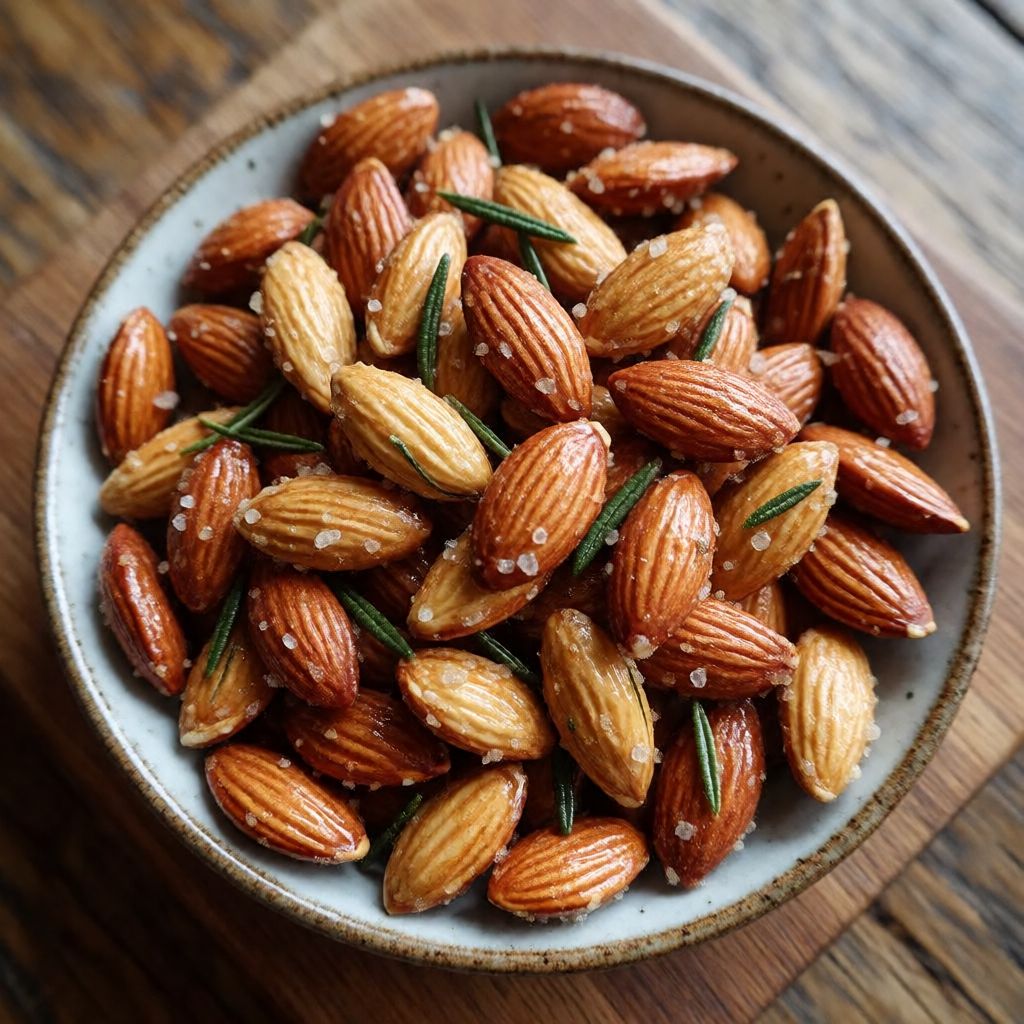
 AI photo
Salted Almonds with Rosemary
Oven-roasted almonds seasoned with salt and fresh rosemary, perfect as a quick antipasto.
Labels are worked out automatically from the ingredients and can be wrong. Check the packaging if it matters to you.
Ingredients



Steps
Thoroughly rinse the almonds.
Dissolve the salt in the water and stir in the almonds.
Spread the almonds together with the water on a baking tray lined with parchment paper and bake in a fan oven at 150°C for 15 minutes.
15 minLet the almonds cool right on the tray.
Sprinkle the almonds with the finely chopped rosemary and serve once cooled.
This recipe makes about 200 ml of almonds.
This is the simplest thing you can put in a bowl next to a glass of wine: almonds, baked until dry and faintly toasted, salted not from a shaker but from a bath, finished with rosemary that only goes on once the heat has backed off. No frying, no oil, almost no actual cooking skill involved — which is exactly why the two steps that are there matter so much.
The whole trick is in step two: dissolving the salt in water before it ever touches the almond. Some say — just toss raw almonds with salt and a splash of oil, why bother dissolving anything? No, because dry salt has nothing to hold onto on an almond's thin, dry skin. It sits on top, slides off in the bowl, and you end up with three salty nuts and a hundred and forty-seven naked ones. A brine wets the whole surface evenly; when the water leaves in the oven, the salt it was carrying stays behind as a fine, clinging film instead of loose grains at the bottom of the tray.
Almonds: use them raw, skin on — that papery brown skin is what the brine actually grips. Blanched, skinless almonds are slicker and the salt film sits less happily on them, so if that's what you have, expect to need a touch more salt in the water to get the same bite. Any other oily, raw nut will take to this method in principle — cashews, hazelnuts, even peanuts — but they carry more fat than almonds and scorch sooner, so if you swap, lean toward the shorter end of the drying time and check by nose and eye, not the printed minutes.
Salt: fine salt dissolves completely in 50 ml of water, which is what you want — a brine, not a slurry with grit still in it. Coarse sea salt will leave some undissolved crystals; that's not a failure, it just means a less even coating with the occasional bigger crunch of salt, which some people actively prefer. Avoid iodised table salt if you can — the iodine leaves a faint metallic note that a plain nut can't hide behind.
Water: it has one job, to be the vehicle for the salt, so tap water is fine. Fifty millilitres for 150 g of almonds is a thin coating, not a soak — don't be tempted to add more thinking it'll season them harder; it just means more evaporating to do and more time before they're dry.
Rosemary: fresh, finely chopped, added cold onto warm nuts. Fresh rosemary releases its oil when it's bruised by the knife and then warmed slightly — which is exactly what happens when it lands on almonds still carrying heat from the tray. Dried rosemary is inert by comparison; it needs fat or moisture and some heat to wake up, so if fresh isn't to hand, warm the dried leaves briefly in a dry pan and crush them before using, rather than sprinkling them on as they are.
A word on the tray and the paper: this isn't decoration. The parchment stops the brine pooling and the almonds effectively simmering in their own puddle instead of drying evenly — in a domestic fan oven, which doesn't move air as aggressively as a commercial one, that pooling is the main reason a batch comes out patchy, some nuts dry and some still damp in the middle. If you don't have parchment, a thin film of the brine spread wide on a bare metal tray does almost the same job; just don't crowd them.
This kind of snack — nuts preserved and flavoured with salt, served to go with drink rather than as a meal — is bar economics as old as wine itself: salty food makes people thirstier and keeps them at the table a bit longer, and nuts, unlike bread, don't go stale by the next round. The serving size on paper says one person, but 150 g of almonds is a substantial handful on its own; in practice this is a bowl for the table when people come round for a drink before the Sunday roast, not a solitary snack.