
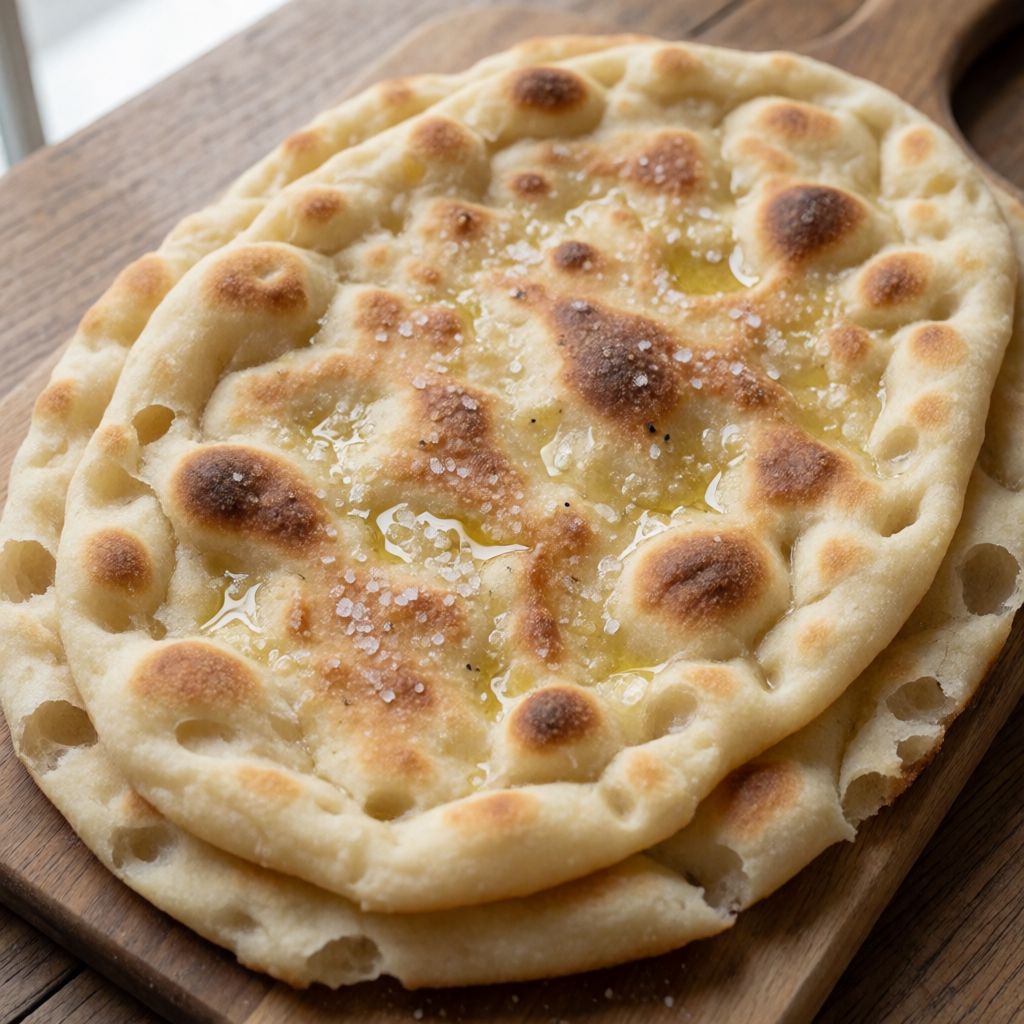
 AI photo
Schiacciata
A simple Italian flatbread, dimpled with fingers and brushed with an olive oil and water emulsion before baking.
Labels are worked out automatically from the ingredients and can be wrong. Check the packaging if it matters to you.
Ingredients
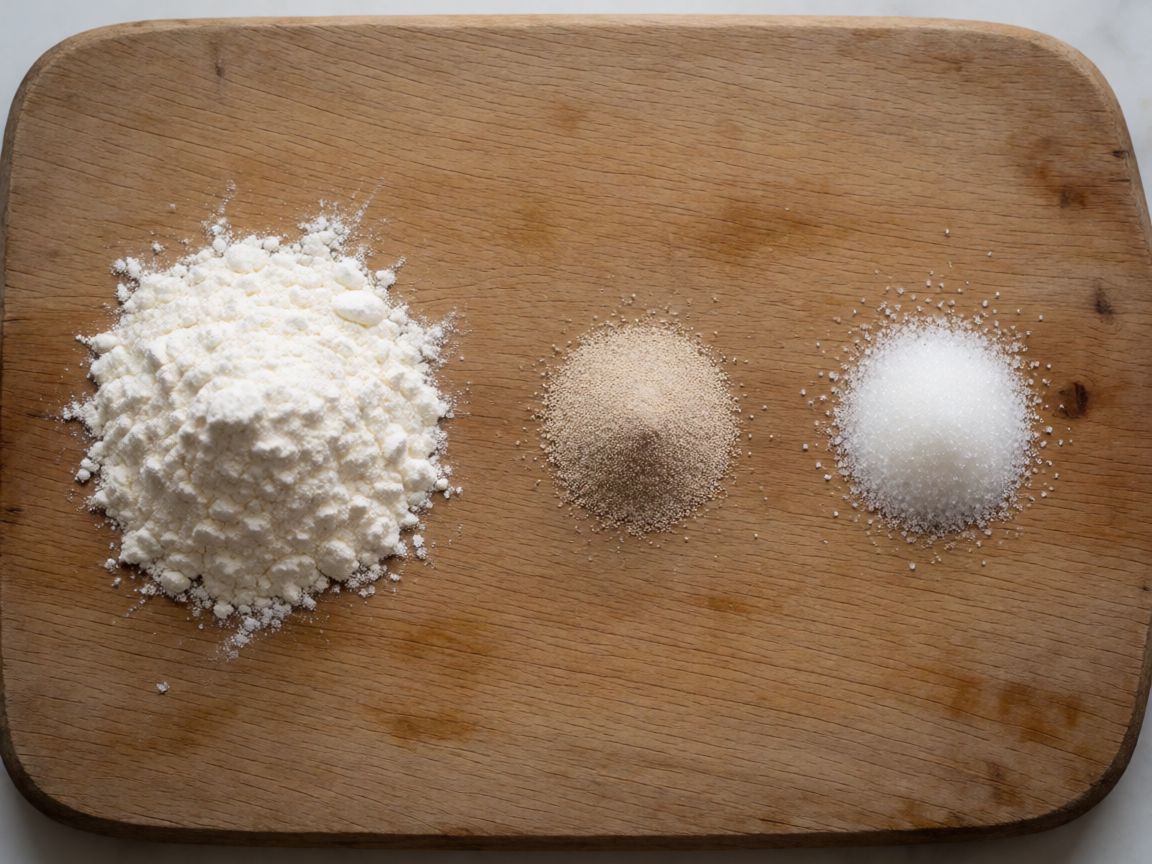
- 400 g Strong white flour
- 2 g Dried yeast or 6 g fresh yeast
- 200 g Water
- 1 tsp Caster sugar
- 1 tsp Salt
- 2 tbsp Olive oil
- 40 g Olive oil
- 40 g Water
- 1 pinch Salt coarse, to taste





Steps
Into the bowl of a stand mixer, tip the strong white flour, add the yeast, half the water, the sugar and the salt.
Increase the mixer speed, gradually adding the rest of the water and the olive oil, and knead until the dough comes together into a ball.
Transfer the dough to a bowl greased with oil, cover with a tea towel and leave to rise at room temperature.
Shape the dough, pinching it underneath, place it on a greased 30x40 cm baking tray and cover with a bowl.
Leave the dough to rest at room temperature.
60 minStretch the dough with your fingers from both sides until it covers the whole tray.
Mix the olive oil and water into an emulsion and spread it over the surface of the dough with a brush.
Press with your fingers to make dimples, then sprinkle with coarse salt to taste.
Bake at 200°C, turning the tray often for even baking.
25 min
Schiacciata — the word means "squashed" — is Tuscany's answer to focaccia, and really it's the same idea wearing a different hat: a wet, slack dough stretched thin and dimpled, so what you get is more crust than crumb, more oil and salt than bread. What decides whether it works is how you treat that slackness. Resist the urge to firm it up with extra flour. The wetness is what gives you the open, blistered texture instead of something dense and scone-like.
The whole thing turns on two risings and one act of violence — the stretching. First rise builds the gluten structure and gas that will later go into holes; second rest, under a bowl rather than a towel, lets the shaped dough relax so it doesn't fight you when you pull it to the edges of the tray. Some say you should roll schiacciata with a pin. No — a pin pushes the air out exactly where you need it: a rolled schiacciata bakes flat and leathery, a finger-stretched one keeps pockets that puff and crisp.
The dimpling isn't decoration. Pressing your fingers in breaks the surface tension so the oil-and-water emulsion you brush on actually sinks into the dough instead of sitting on top and frying it. Those finger-craters also become little pools that catch salt and oil and go dark and crisp at the edges while the rest stays pale — that contrast is most of the pleasure of eating it.
Flour first. "Strong white flour" means high protein — the kind sold for bread, not cake or plain flour — because this dough needs gluten strong enough to hold gas through two rises and still stretch thin without tearing into holes you didn't intend. If you only have plain flour, you can get away with it, but the dough will be slacker and the crumb tighter; add a spoon less water to compensate.
Yeast is yeast — 2 g dried does the same job as 6 g fresh, just slower to wake up, which is why you give it water and sugar straight away rather than starve it on dry flour. Sugar here isn't for sweetness; it's yeast food, a head start. Salt goes in opposite the yeast in the mixing order for a reason you've probably heard mangled into superstition: salt in direct, prolonged contact with raw yeast can slow it down by drawing water out of the cells. In a quick stand-mixer knead it barely matters, but old habits like "water first, then flour round the edges, salt and yeast on opposite sides" come from bakers who learned the hard way, by hand, over hours — not from magic.
Two separate measures of olive oil are doing two different jobs. The 2 tbsp kneaded into the dough gets between the gluten strands and makes the crumb tender rather than chewy — it's shortening, in the literal sense. The 40 g olive oil whisked with 40 g water into an emulsion at the end is a glaze and a frying medium at once: brushed on top, the water flashes off in the oven and the oil left behind fries the surface of the dough into that blistered, faintly crisp skin. Use any oil with no smell of its own if you want a neutral base, but olive oil here is doing flavour work too, so don't swap it for something flavourless unless you have no choice — a light vegetable oil will give you the crisping with none of the character.
Water quantity and the mixer speed together decide the dough's whole personality: start low so the flour doesn't fly everywhere, then raise speed once it's loosely combined, because strong flour needs real mechanical work — more than a wooden spoon gives you — to develop enough gluten to be stretchable rather than merely stirrable.
The first rise is time plus warmth plus patience, in that order of honesty. There's no useful thermometer number for "room temperature" in a British kitchen in January versus August — what you're watching for is the dough roughly doubling and feeling pillowy, not a clock. Patience is the real ingredient in this step; rushing it with a hot radiator just makes the yeast work fast and sloppy, giving you a dough that's puffed but weak-structured, prone to collapsing when you stretch it later.
One domestic note: a stand mixer dough hook does the kneading your forearms would otherwise do, and that's fine — nothing sacred is lost by using the machine. What you can't skip is the covering between rises; a tea towel for the bulk rise lets the dough breathe a little while keeping a draught off it, while the bowl over the shaped dough for the second rest creates a closer, moister little tent so the surface doesn't dry and skin over — a dried skin is what makes a schiacciata crack instead of blister when you finally stretch and bake it.