
 AI photo
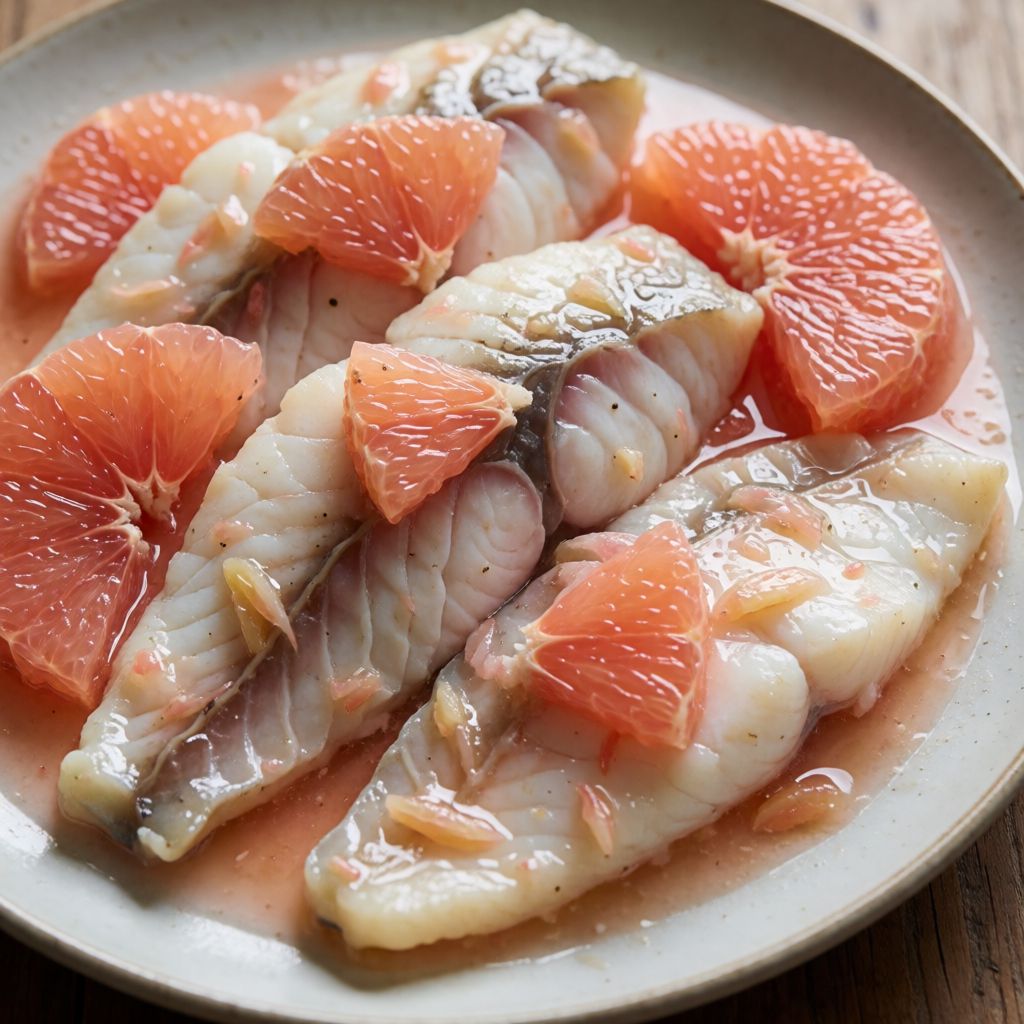
Sea Bream Fillets in Pink Grapefruit Marinade
Sea bream fillets marinated in pink grapefruit juice and brandy, then pan-seared and served with marjoram.
Labels are worked out automatically from the ingredients and can be wrong. Check the packaging if it matters to you.
Ingredients
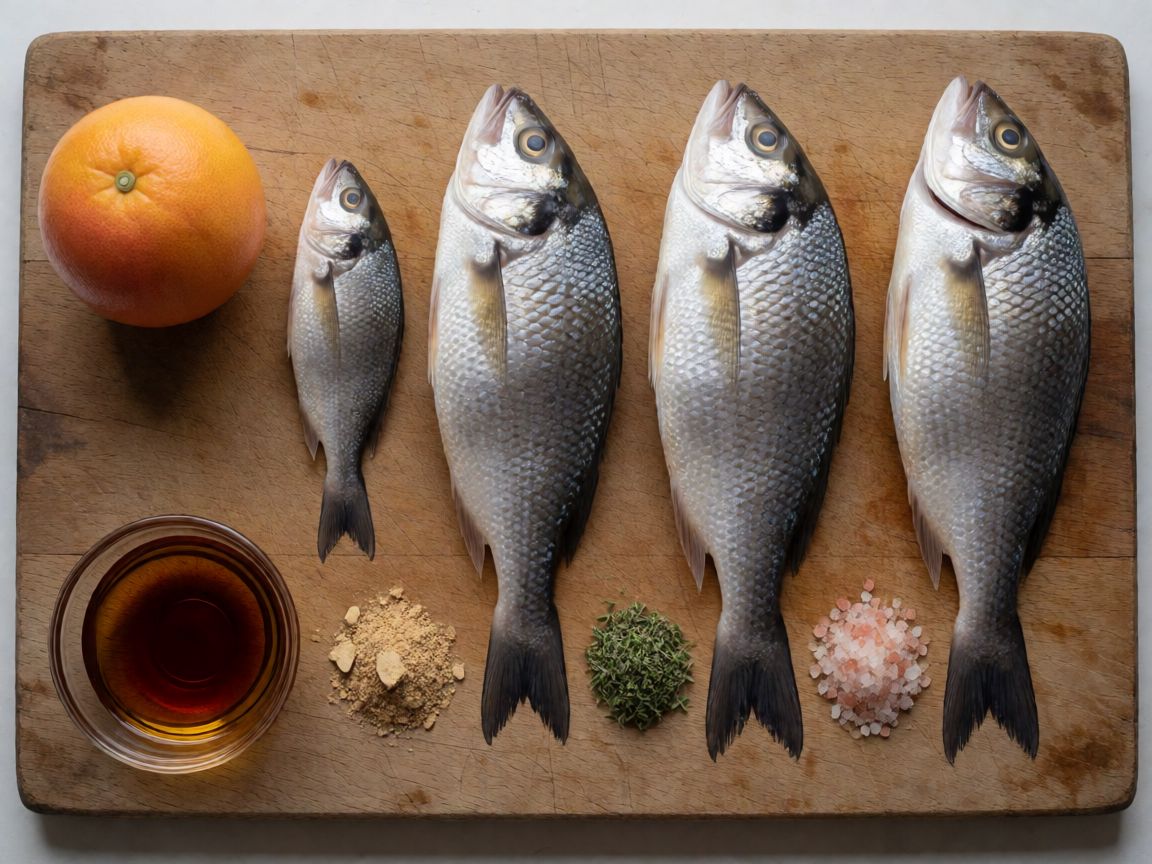
- 4 pcs Sea bream fillet
- 1 pcs Pink grapefruit
- Ground ginger to taste
- White pepper to taste
- 250 ml Brandy
- Marjoram to taste
- Himalayan pink salt to taste
- 2 tbsp Olive oil








Steps
In a bowl, combine the grapefruit juice, brandy, pink salt to taste and freshly ground white pepper.
Place the sea bream fillets in a baking dish, pour over the marinade and leave to marinate in the refrigerator.
30 minHeat the olive oil in a frying pan, add the sea bream fillets, baste with the marinade and cook over a gentle heat. Doneness: 63°C at the thickest part.
Serve with the sauce, sprinkled with marjoram.
This is a fillet of sea bream, briefly steeped in a citrus-and-brandy bath, then cooked gently in a pan while that same liquid is spooned back over it. The "marinade" never really leaves the dish — it starts as a soak, becomes a basting liquid, and ends up on the plate as sauce. That's the whole shape of the recipe: one liquid doing three jobs.
What decides whether it works is timing at both ends, and for opposite reasons. Thirty minutes in the grapefruit-brandy mix is a ceiling, not a suggestion. Citric acid denatures protein the same way heat does, just slower and from the outside in — leave the fillet in there "to let the flavours develop," the way you might with a lamb marinade, and you'll find the outer layer has gone opaque and slightly chalky before the pan ever touches it. Fish has no collagen to soften over time the way meat does; there's nothing patience buys you here past half an hour, only damage.
At the other end, the risk is the opposite: too much heat, for too long. Some say cook fish until it flakes apart on its own — no, because by the time it flakes without resistance, you've already overshot. Sea bream carries almost no fat to cushion a few extra minutes the way a well-marbled Sunday joint does, so the gap between "glassy and giving in the centre" and "dry right through" is narrow. A probe reading 63°C at the thickest point is the honest way to know; failing that, press there with a finger and look for the give of a ripe peach, not the springback of raw flesh.
Sea bream fillet is the frame everything else hangs on, and it's worth choosing with care precisely because the cook is short — there's no long braise to forgive a bad piece of fish. Look for flesh that's firm and springs back when pressed, with no sour or ammonia smell. If sea bream isn't on the slab that day, any lean, firm, mild white fish fillet of similar thickness works the same way — sea bass, snapper, even cod — the criterion is a fillet with little fat and a tight structure that holds together in a pan, not any particular species.
Pink grapefruit is chosen over the white or ruby kind for a reason beyond colour: it carries more natural sugar alongside its acid, so the marinade doesn't read as purely sour. The acid is doing the denaturing work described above; the sugar is softening that edge so the fish doesn't taste "pickled." If pink grapefruit isn't to hand, a regular grapefruit with a small pinch of sugar stirred in gets you to roughly the same balance — the test is taste it before the fish goes in, it should be tart but not sharp.
Brandy isn't there to get anyone drunk, and you don't need the good stuff — you're not drinking it, you're using its alcohol to carry fat-soluble aromatics into the fish and then letting most of that alcohol cook off in the pan during basting, leaving the flavour behind without the raw bite. It's the same logic that once made brandy a kitchen standby in houses that could afford little else of it: cheap, shelf-stable, flammable in a useful way. A dry white vermouth or a splash of white wine with a teaspoon of any spirit will do if there's no brandy open.
Himalayan pink salt earns no special credit here beyond being salt — the pink colour is iron oxide, and it seasons exactly as any other salt does. Use it because you have it, or use plain fine salt without iodine added, which can taste faintly metallic against delicate fish; that's the actual reason to avoid iodised table salt, not tradition for its own sake.
Ground ginger and white pepper sit in the background, warming the citrus rather than competing with it — white pepper specifically because it has less raw heat and a more rounded, slightly fermented note than black, which would stick out against pale fish and pale sauce. Fresh grated ginger can replace the ground, but use less of it; fresh is sharper and wetter, and you don't want extra liquid thinning your basting sauce.
Marjoram, added only at the end, is the one note meant to stay raw and green against everything else that's been acidic, boozy, and warm. It's a cousin of oregano but gentler — if you only have oregano, use less of it, since it will shout where marjoram would have just spoken. And the olive oil in the pan is there partly for its own flavour, partly to stop the fillet catching on bare metal — if you want the citrus and brandy to speak without any competing taste, a light, neutral oil will do that job instead, but then you lose a little of the Mediterranean thread the dish is pulling on.