
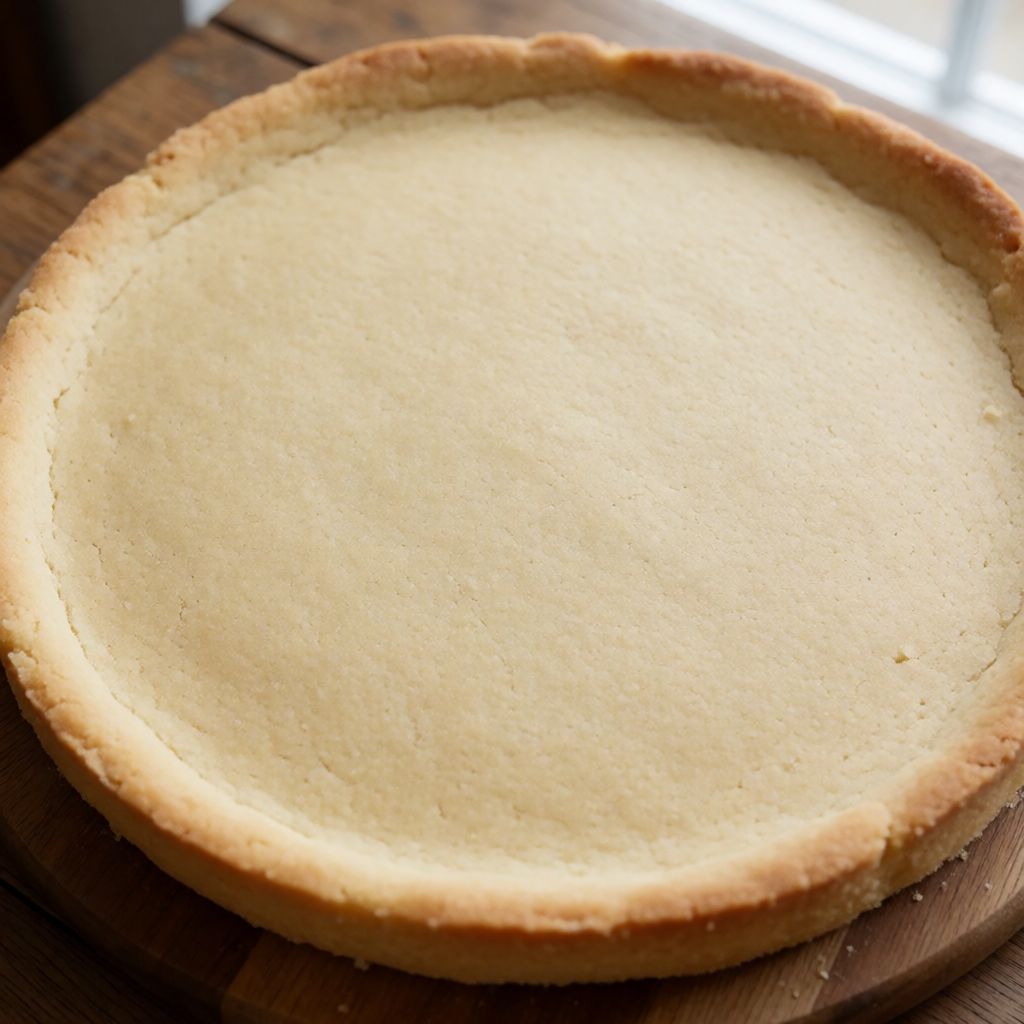
 AI photo
The Perfect Shortcrust Pastry: A Simple Recipe and Tips to Get It Right
A simple shortcrust pastry recipe with tips to avoid common mistakes.
Labels are worked out automatically from the ingredients and can be wrong. Check the packaging if it matters to you.
Ingredients
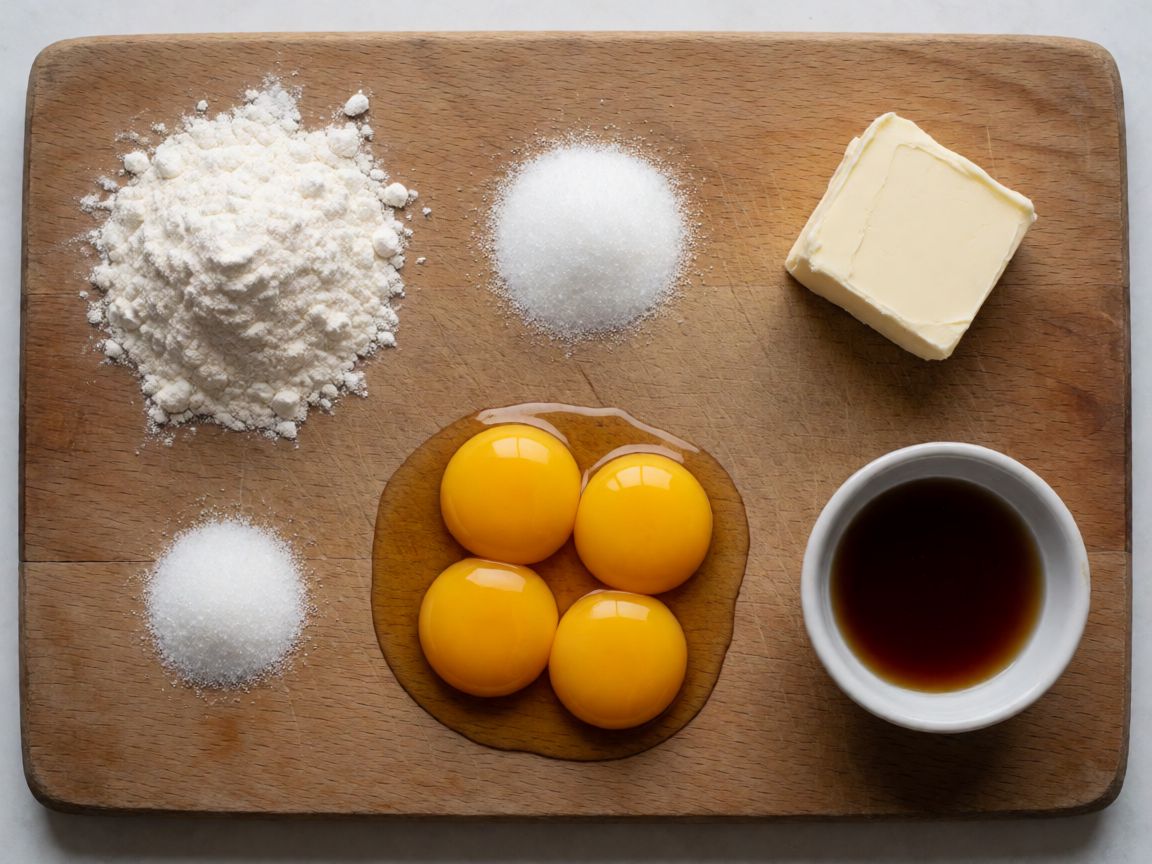
- 300 g Plain flour
- 150 g Caster sugar
- 180 g Butter cold
- 4 pcs Egg yolk
- 1 tsp Vanilla extract or lemon zest
- 1 pinch Salt






Steps
On a work surface, pile the flour into a mound with a well in the centre, then place the cold butter and sugar inside.
Add the egg yolks, vanilla extract (or lemon zest) and a pinch of salt.
Work the mixture first with your fingertips, then with your hands, until all the ingredients come together.
Make sure you have a compact, smooth, non-sticky block of dough.
Wrap the dough in cling film and place it in the fridge for about 1 hour.
60 minIf the dough is too firm to roll out, let it sit at room temperature for 5-10 minutes.
10 minRoll out the dough with a minimum of flour on the surface, or between two sheets of baking paper.
Alternatively, put the flour with the cold butter into a mixer and pulse in short bursts.
Add the sugar, lemon zest and egg yolks, and mix until the texture is even but crumbly.
Transfer to a work surface and quickly knead by hand for a few minutes, then shape into a block.
Wrap in cling film and let it rest in the fridge for at least 1 hour.
60 minBefore baking, place the tray in the fridge for a few minutes to firm up.
5 min
This is pasta frolla, the Italian cousin of shortcrust — the dough under a crostata, under jam tarts, under biscuits that snap rather than bend. What decides whether it works is a single word: gluten. You want as little of it as possible, developed as little as possible, which sounds backwards for anyone taught that kneading bread is a virtue. Here kneading is the enemy.
Flour plus water makes elastic strands of gluten when you work it — that's what gives bread its chew. This dough has almost no water in it at all; the moisture comes from egg yolks, and the fat comes from cold butter that coats the flour before any liquid can reach it and start that gluten forming. Coat the flour in fat first, and you get short, sandy crumbs instead of stretchy dough — hence "shortcrust." Warm the butter, or overwork the dough, and you build gluten anyway, and the biscuit base goes tough and chewy instead of crumbling under a fork.
Some say you can't make good pastry without a food processor. No — the French housewives who made this for two centuries had marble slabs and cold hands, not Kenwoods. The machine is a shortcut that keeps your palms (which are warm) away from the butter (which must not be). Either route works; the point of both is speed and cold, not the gadget.
Four servings here really means one 24 cm tart base, or a tray of 20-odd small biscuits — scale by the tin you own, not by headcount.
Flour: plain, not strong bread flour and not self-raising. Strong flour has more protein, meaning more potential gluten — precisely what you're trying to avoid building here. Self-raising adds lift you don't need; this isn't meant to puff, it's meant to hold its shape and shatter cleanly.
Butter: cold, meaning straight from the fridge, cubed just before use, not softened on the counter "to make it easier." Easier for you is worse for the dough — soft butter blends into the flour as a smear rather than staying as discrete fatty pockets, and those pockets are what keep the gluten strands short and separated. In a British kitchen with a warmish house in summer, this is the step people skip without noticing: if your hands are sweating, the butter is already losing. If you're using the processor method, this matters even more, since the blade generates its own friction heat.
Caster sugar: fine sugar dissolves into the egg yolk and butter smoothly; granulated leaves a slightly grainy bite and doesn't integrate as cleanly into a dough this dry. If all you have is granulated, a few seconds in a blender gets you there — don't buy icing sugar specially, it's too fine and can make the dough slacker than you want.
Egg yolk, not whole egg: yolk brings fat and richness with very little water; the white is mostly water and would push the dough toward gluten development and toward a tougher, more elastic result. Four yolks for 300 g flour is a lot of richness for a British eye used to leaner pastry — that's deliberate; this isn't a savoury shortcrust for a quiche, it's a sweet base meant to taste like a biscuit.
Vanilla or lemon zest: this is flavour, not structure, so use whichever you have an opinion about — vanilla for a rounder, warmer crumb, zest for something sharper under jam or custard. Don't use both unless you want a specific fight between them; the recipe offers either, not and.
The one-hour rest in the fridge isn't decoration, it's the ingredient called patience doing its job twice over: the butter re-hardens after your hands warmed it, and the flour finishes absorbing the yolk's moisture evenly, so the dough rolls without tearing or sticking. Skip it and you'll fight a dough that's greasy under the rolling pin and cracks instead of folding. If it comes out of the fridge too hard to roll — likely, in a cold British kitchen — give it the 5–10 minutes on the counter the recipe allows; that's softening the butter back toward workable, not warming the dough through.
Rolling with "a minimum of flour," or between two sheets of baking paper, is there to stop you accidentally adding raw flour and its gluten back in at the last moment, right when you can't fix it anymore. The baking paper trick also saves you scraping a sticky mess off a worktop you don't have spare, which matters more in a flat kitchen than a bakery.
No mixer, no marble slab — an ordinary bowl and your fingertips do the first stage fine; just work quickly and keep touching the butter as little as your fingertips allow, using your fingertips rather than your palms, since palms run warmer. A food processor only buys you speed, which is really buying you cold — the faster you're done, the less time the butter has to soften under your hands or the machine's friction.