
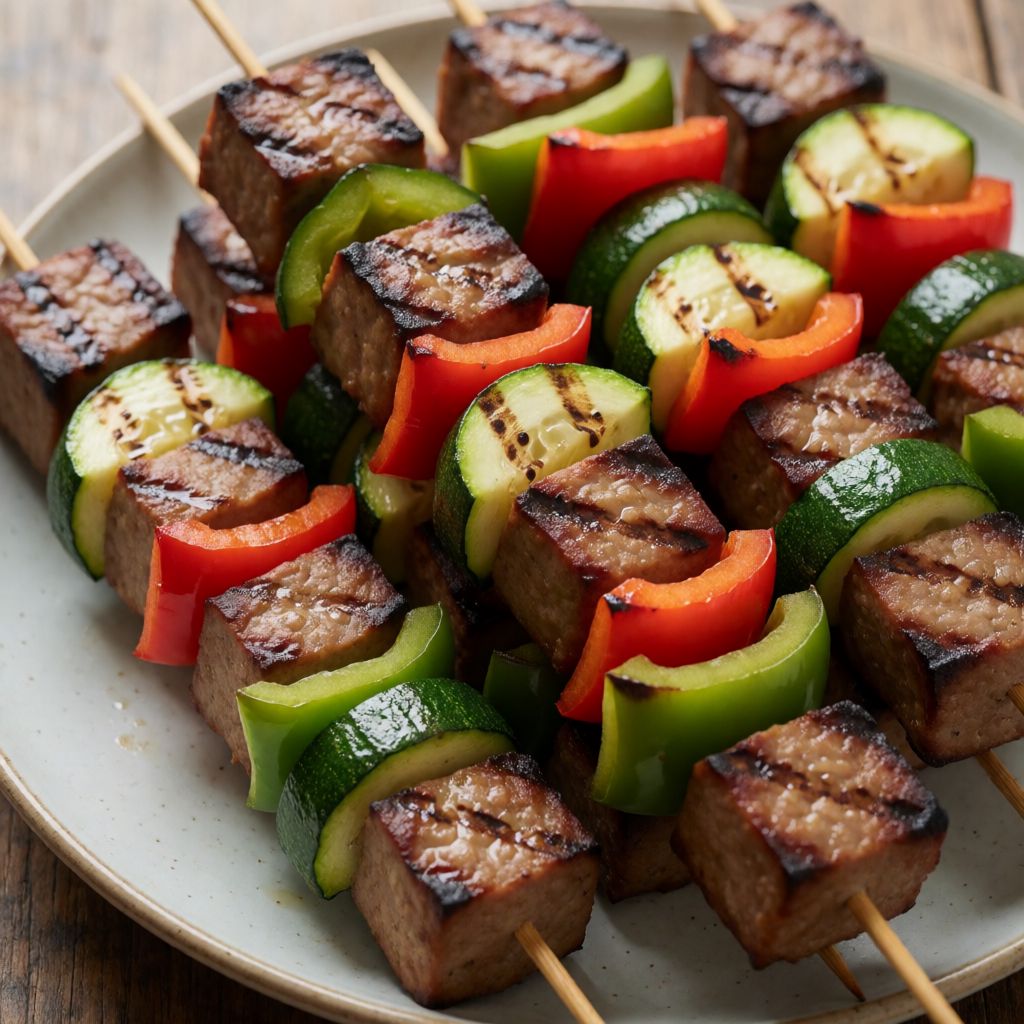
 AI photo
Seitan Skewers
Grilled seitan skewers with courgette and peppers, a simple vegetarian antipasto.
Labels are worked out automatically from the ingredients and can be wrong. Check the packaging if it matters to you.
Ingredients




Steps
Cut the vegetables and seitan into cubes.
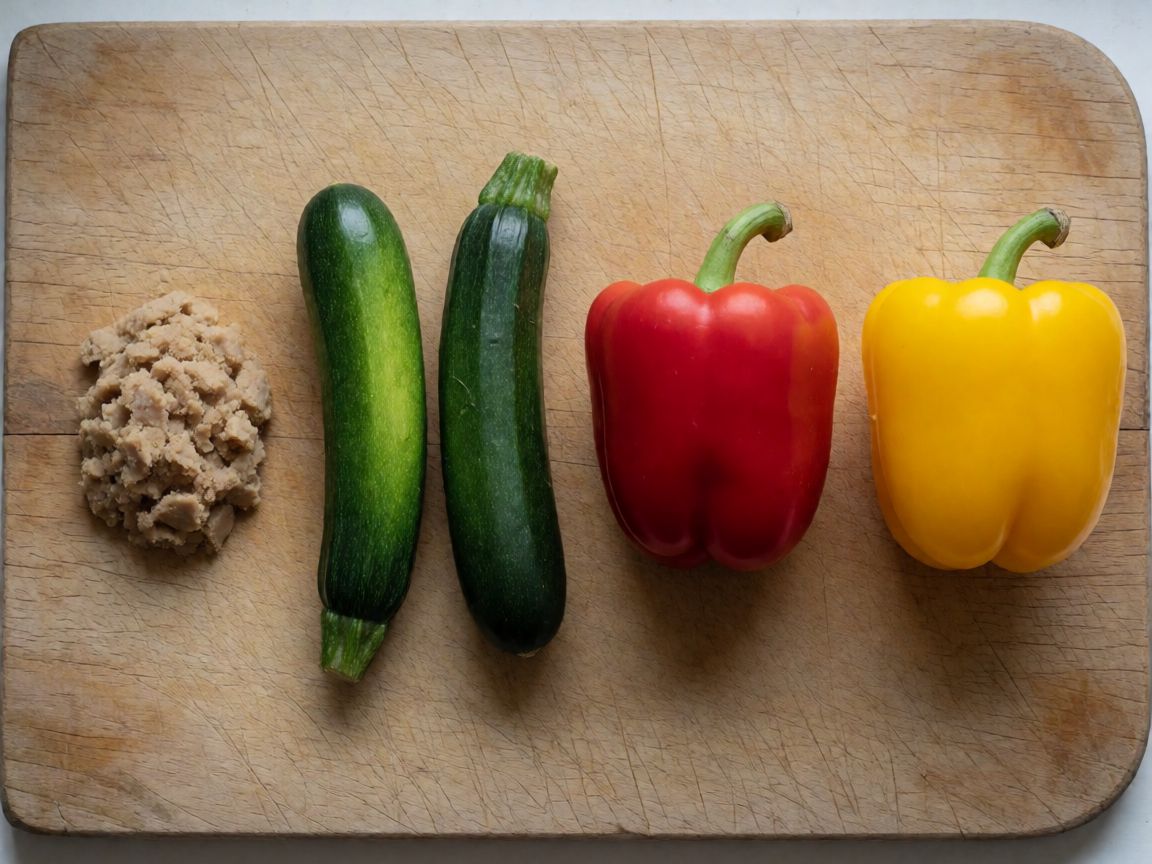
Thread wooden skewers, alternating pieces of seitan, courgette, yellow pepper and red pepper for a mix of flavours.
Cook the skewers on a grill or in a non-stick pan, basting with olive oil.
Keep an eye on the vegetables so they stay slightly crisp and don't overcook.
Season with salt to taste and add aromatic herbs.
This is antipasti, not a main course — eight or so skewers of cubed seitan and two peppers and courgette, meant to go fast over high heat and come to the table still warm from it, not to be mistaken for a Sunday roast's slow business. Four people, a plate each, bread on the side if you like.
What decides whether this works is one fact people forget because they're thinking of meat: seitan has no fat and no connective tissue inside it to baste itself with. A lamb skewer bastes itself as it cooks — its own fat melts and runs over the meat. Seitan can't do that. It is wheat gluten, washed out of dough and already cooked through in the making, so what you're doing on the skewer isn't cooking it in the sense of turning something raw into something safe — it's giving it colour and heat and, crucially, fat from the outside, because it has none of its own. Some say seitan on a skewer should behave like meat, go tender, release juice — no, because there's no juice in it to release. Baste it or it dries out and goes rubbery, and that rubberiness is the real defect here, not undercooking.
Seitan itself: buy a firm block, not the soft pre-marinated kind sold swimming in sauce — that one's already seasoned for a different dish and will fight your oil and salt. Firm seitan holds a cube shape on the skewer; soft seitan falls apart the first time you turn it. If you can't find seitan at all, firm tofu pressed dry under a weight for twenty minutes, or thick aubergine cubes salted and patted dry, will take heat and oil the same honest way — the criterion is a protein or vegetable dense enough to hold a cube and not collapse into mush on contact with a hot pan.
Courgette: pick one on the smaller side, skin tight and glossy, no soft spots. A big old courgette has grown watery and seedy in the middle, and that extra water is exactly what makes it steam instead of colour when it hits the pan — you end up with pale, soggy cubes instead of ones with a bit of char. The peppers, red and yellow: ripeness here isn't about colour alone but about give — a slight softness under the thumb means more sugar, which means better charring at the edges rather than just scorching. Green peppers are younger, more bitter, and less forgiving on a quick skewer — not wrong, just a different dish.
Olive oil, "to taste," really means: enough to coat every cut face so nothing sits dry over direct heat. The criterion for the oil itself is simple — any oil with no strong smell of its own will carry the heat without arguing with the vegetables; a plain or light olive oil does that and happens to be what's usually in the cupboard. Save a good extra virgin, if you have one, for a last drizzle once the skewers are off the heat — at full pan temperature its aroma just burns off and you've wasted the interesting part of it.
Salt: hold it until the end, after cooking, not before. Salt pulls water out of vegetables by osmosis — put it on courgette and pepper before they go in the pan and you've started that water moving to the surface, which means they steam in their own liquid instead of catching colour and a bit of char. Salt at the end seasons without sabotaging the one thing you were trying to achieve by using high heat in the first place.
Herbs, "aromatic herbs" as the recipe says without naming them — the sensible choice is something dry and sturdy that survives heat without turning bitter and black: oregano, thyme, a little rosemary chopped fine. A tender fresh herb like basil or parsley goes on only after the skewers are off the heat, scattered at the last second, because direct heat turns their delicate oils straight to ash.
Wooden skewers: soaking them in water first is often sold as the fix for burning, and it does slow the char a little, but the real problem on a domestic hob is shorter and more practical — a wooden skewer sitting directly over a hot ridged pan for the few minutes this needs rarely burns through, it just blackens at the exposed tip, which is cosmetic, not dangerous. Don't let that worry distract you from the part that actually matters: watching the vegetables, not the stick. And give the whole thing the one ingredient that's free — patience to let each face of the skewer sit still long enough to brown before you turn it, instead of rolling it every twenty seconds out of nerves. Browning needs contact time undisturbed; fidgeting is what keeps food pale.