
 AI photo
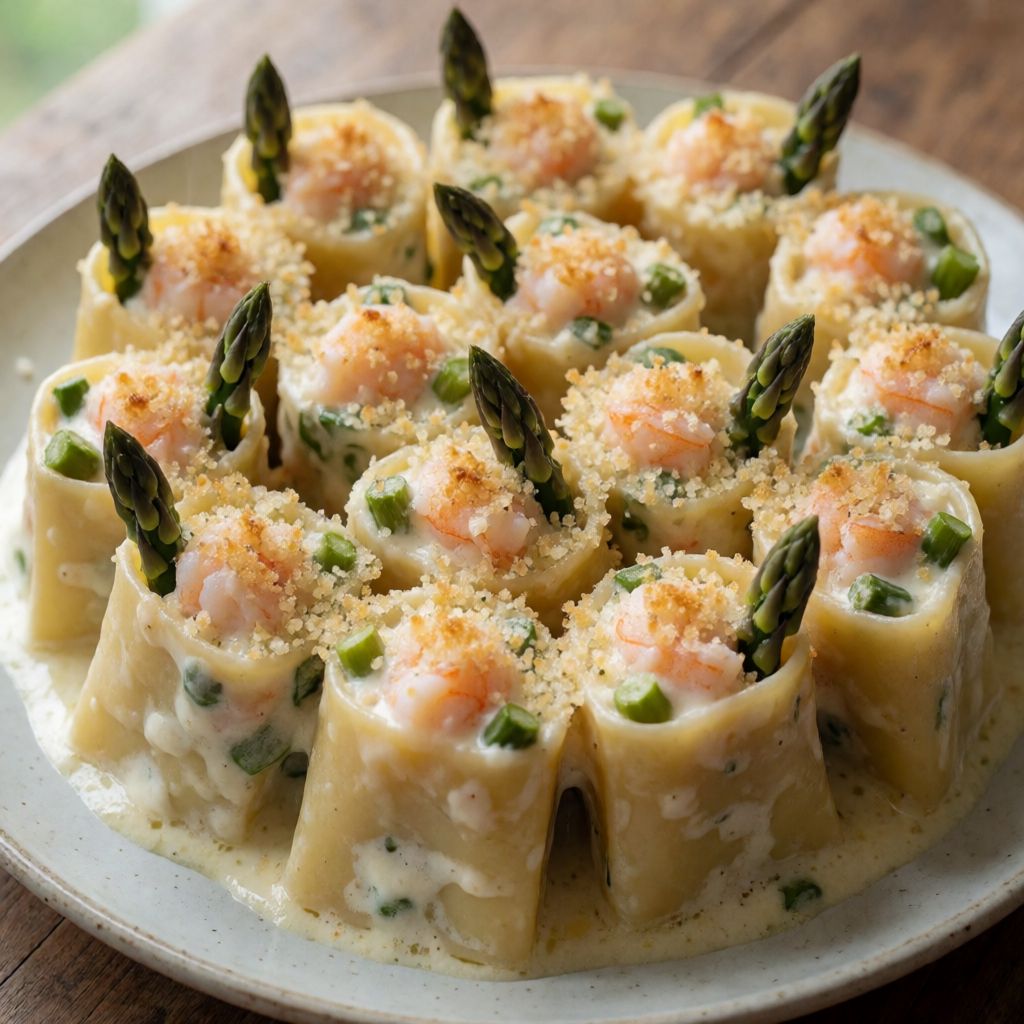
Stuffed Paccheri with Asparagus and Prawns
Paccheri stuffed with asparagus and prawns, baked with a creamy béchamel sauce until golden.
Labels are worked out automatically from the ingredients and can be wrong. Check the packaging if it matters to you.
Ingredients
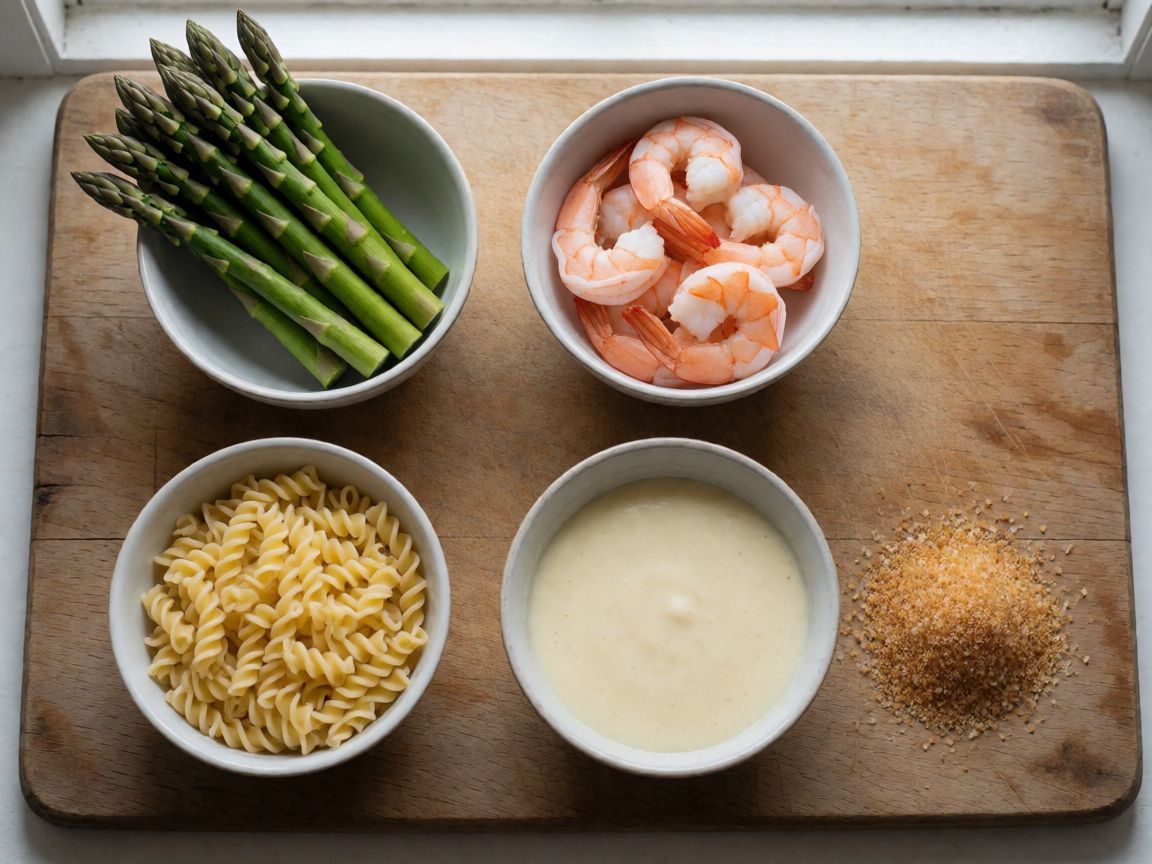
- 300 g Asparagus
- 200 g Prawns
- 360 g Paccheri
- Béchamel sauce
- Breadcrumbs dried
- Salt
- Black pepper
- Olive oil








Steps
Boil the paccheri for 5-6 minutes.
6 minPrepare the filling: dice the prawns and asparagus, setting the asparagus tips aside separately.
In a pan with hot olive oil, fry the prawns and asparagus over fairly high heat until the prawns change colour. Doneness: 63°C at the thickest point.
Add salt and black pepper to taste, transfer to a bowl, add a couple of tablespoons of béchamel sauce and mix.
Drain the paccheri al dente and leave to cool for a few minutes.
Spoon a little béchamel sauce into the bottom of aluminium moulds, then place three paccheri per mould.
Fill the paccheri with the prepared filling using a piping bag.
Add a little more béchamel sauce, garnish with the asparagus tips, sprinkle with breadcrumbs and drizzle with olive oil.
Bake at 180-190°C until the paccheri are golden brown on top.
Transfer to a plate and serve.
Paccheri are the wide pasta tubes — think of them as the biggest, blankest canvas in the dried-pasta drawer, exactly why they get stuffed rather than sauced and tossed. This dish is really three separate techniques stacked in a mould: pasta cooked short of done, a seafood-and-vegetable filling cooked fast and hot, and a béchamel binding the lot so it doesn't fall apart or dry out in the oven. What decides whether it works isn't any single step — it's whether you respect that each of those three things is cooked to a different point before they ever meet.
The prawns are the part people get wrong, because "fry until pink" is a colour cue standing in for a temperature nobody checks. Prawns go from translucent to opaque around 60°C and turn rubbery well before 70°C, so the 63°C marker in this recipe isn't fussiness — it's the actual window where the flesh is set but still holds water. Fairly high heat matters here too: a timid pan sweats the prawns instead of searing them, and sweated prawns release liquid into the filling, which later turns your béchamel thin and your paccheri soggy from the inside.
Asparagus tips are held back and added raw-ish, almost as garnish, because they cook in seconds and would turn to mush in the time the stalk dice need to soften — that's why only the stalks get fried with the prawns and the tips come back at the béchamel stage, closer to the oven, keeping their snap and colour.
Paccheri themselves: buy them for the width of the tube, not the brand. Any large smooth pasta tube that stands upright on its own works — cannelloni tubes are the obvious stand-in if paccheri aren't on the shelf, though they're thinner-walled and will need a shorter first boil to stay sturdy. Boiling them to 6 minutes rather than full packet time (usually 10-12) isn't about undercooking for the sake of it — it's giving them a second cook in the oven, so "al dente" here really means "half done, on purpose." Some say you should boil pasta for a bake fully, so it's "ready" — no, because it then overcooks a second time under heat and sauce, and a paccheri that's gone soft twice collapses the moment you try to stuff or lift it.
Prawns: raw, shell-off, any size you can dice into roughly pea-sized pieces without them disappearing into paste. Frozen raw prawns, properly thawed and patted dry, are fine and often more reliable than "fresh" supermarket ones that have already sat a few days — wet prawns straight from a bag will spit and steam rather than sear, which is the other reason to get that pan properly hot first.
Asparagus: go for stalks that bend before they snap when you flex them gently — the ones that snap clean in half are often older and stringier at the base, which is exactly the woody bit you don't want diced into a filling meant to be soft. British asparagus has a short season around late spring; outside it, imported spears work, just trim more off the base, where the tough, dry end tends to run longer.
Béchamel: this is doing three jobs at once — moistening the filling so it isn't dry prawn-and-veg crumble, lining the mould so the first paccheri you place doesn't catch and tear, and gluing the top crumb so the breadcrumbs don't just sit loose and scatter. If you're making your own, keep it on the thinner side of pourable; a stiff béchamel won't spoon into a piping bag or settle into the gaps between stuffed tubes, and it'll sit as a paste rather than binding anything.
Breadcrumbs — dried, not fresh — because dried crumbs have had the moisture driven out already, so in the oven they toast and crisp instead of steaming into a soft, pale cap. Panko works if that's what's in the cupboard; it's just a coarser dried crumb and will brown slightly faster, so watch it rather than trust a clock.
Olive oil: pick one with no strong flavour of its own for the frying step, since you don't want it fighting the prawns — a mild, everyday olive oil or any neutral vegetable oil does the job there. The drizzle right before baking is different: that's where a better, more aromatic olive oil earns its place, because it's finishing, not cooking, and you'll actually taste it.
On timing: the "60 minutes" cook time is the whole arc — boiling the pasta, searing the filling, assembling four moulds by hand with a piping bag, and baking. Rushing the assembly is where people lose time back, because piping filling into a tube that's slightly too soft tears it, and then you're re-boiling more paccheri instead of saving five minutes. Let the boiled pasta sit those few cooling minutes the recipe asks for — hot, floppy tubes are harder to fill cleanly than ones that have firmed slightly as they cool. That's patience doing actual work, not politeness.
For the oven: 180-190°C is a working range because what you're watching for is the crumb topping turning golden-brown, not a timer. Ovens vary enough between flats that "20 minutes" from one kitchen means nothing in another — go by colour and by the béchamel visibly bubbling at the edges of the mould, which tells you the inside has come up to heat too, not just the surface.