
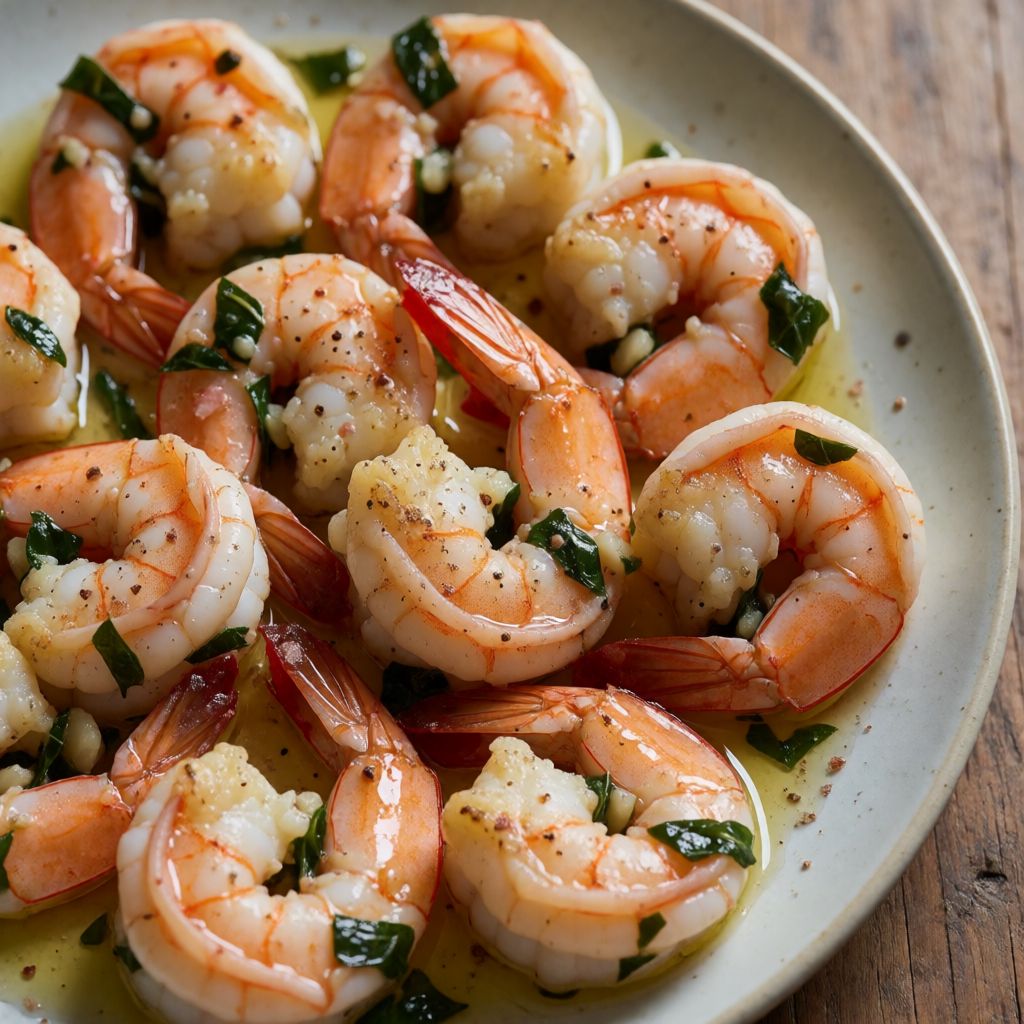
 AI photo
Prawns with Marjoram
A quick pan-seared prawn dish, flambéed in white wine and finished with fresh marjoram.
Labels are worked out automatically from the ingredients and can be wrong. Check the packaging if it matters to you.
Ingredients
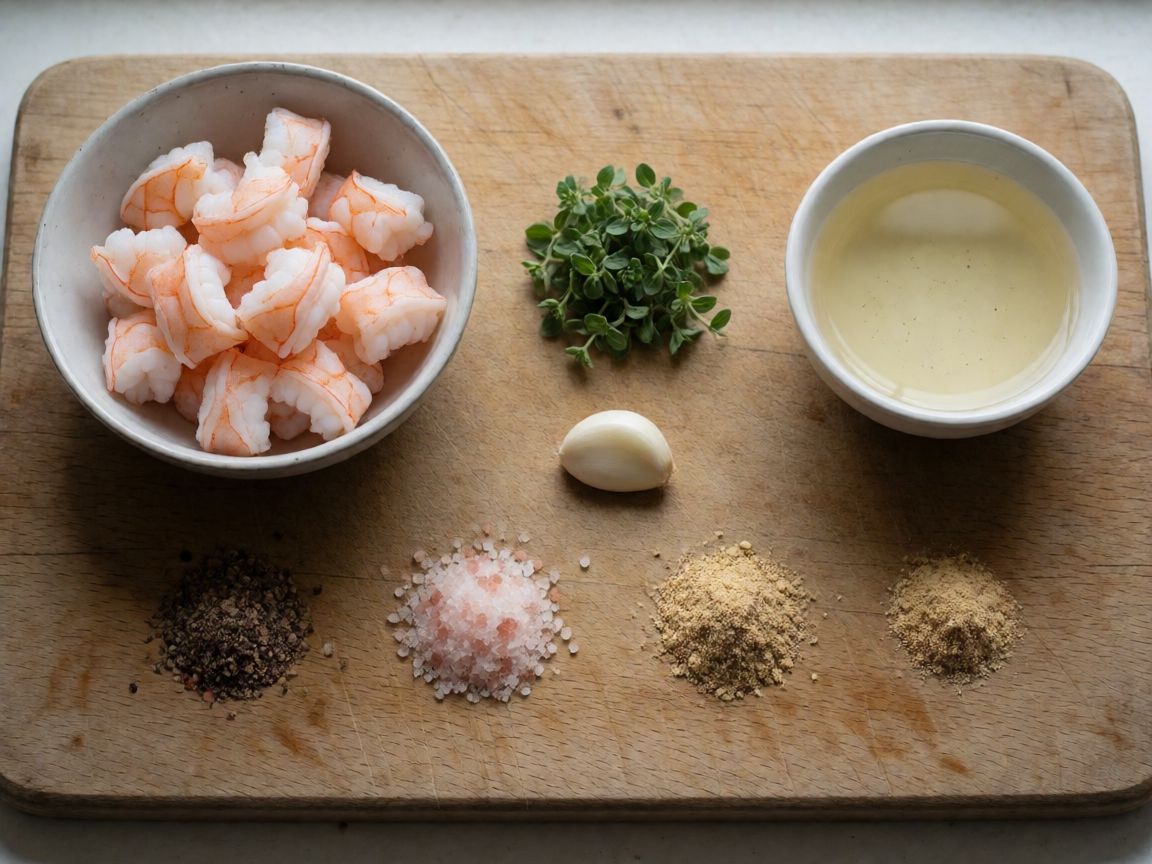
- 800 g Tiger prawn tails
- Marjoram to taste
- Olive oil to taste
- 1 clove Garlic
- Himalayan pink salt to taste
- Mixed peppercorns to taste
- Ground ginger a pinch, to taste
- 250 ml White wine








Steps
Heat 3 tbsp of olive oil in a pan and fry the garlic until golden, then remove it.
3 minAdd the prawns and fry until golden brown, then pour in the white wine and flambé. Doneness: 63°C at the thickest point.
5 minReduce the heat, season with Himalayan pink salt, add the mixed peppercorns and a pinch of ground ginger.
5 minOnce the sauce has reduced slightly, sprinkle generously with marjoram and serve.
7 min
This is a five-minute fry dressed up to look like more effort than it took: tiger prawns coloured fast in garlic oil, hit with wine and a flame, then finished with marjoram's sweet, resiny note. It's the English seaside's "scampi" wearing an Italian jacket — garlic, olive oil, white wine are all borrowed from the Mediterranean trade routes that also gave us marjoram itself, a herb that likes heat and dry soil, not British drizzle, which is why you'll mostly meet it dried here, and that's fine.
What decides whether this works has nothing to do with marjoram and everything to do with what happens before the prawns even touch the oil. If they're wet — and shop or frozen tiger prawns usually are, defrosted and sitting in their own liquid — they won't fry, they'll steam. Steamed prawn is grey, flabby, and leaks its flavour into the pan instead of keeping it. Pat them properly dry. That's the whole secret of step two, and nobody tells you because it happens off the page, before "step one."
The garlic is pulled out once it's gold for the same reason you'd pull a teabag before it stews: past that point it stops seasoning the oil and starts turning bitter and acrid, and bitter garlic sits on top of everything else and won't let you taste the marjoram at all.
On the prawns themselves: buy them raw, shell off the tail if you can get it, because pre-cooked prawns have nothing left to give the pan — they're already at their ceiling, and all you can do from there is ruin them. Size matters more than the recipe lets on: tiger prawns run big, which buys you a few extra seconds of margin in the pan before they're over, and that margin is exactly what makes this dish forgiving for a weeknight rather than a precision exercise.
The olive oil is doing two jobs — carrying the garlic's flavour and giving the dish its own faint bitterness and grassiness, which a neutral oil won't do. If you don't have it, any mild oil will fry the prawns just as well, but you lose that background note; it's not a disaster, just a different, flatter dish. Don't reach for your best cold-pressed bottle here — its character gets lost at frying heat anyway, save it for dressing something raw.
The wine needs to be dry. A sweet or oaky white brings sugar and vanilla notes that fight shellfish instead of lifting it; a cheap, sharp, forgettable dry white is actually the right tool, not a compromise. No wine in the house — a splash of dry vermouth does a passable job, or failing that, a squeeze of lemon with a little water, though you'll get the acidity without the depth wine's own sugars give the reduced sauce.
Himalayan pink salt is, chemically, salt with a trace of iron oxide that gives it the colour and does nothing for the taste you'll notice in a hot pan — buy it if you like the look of it on the table, but any salt without added iodine (which can taste metallic on delicate seafood) does the identical job here. The ground ginger is a background warmth, not a bright hit — it's there to round off the dish, not announce itself. If you only have fresh root, a tiny grated pinch will do, but it'll taste sharper and more immediate than the mellow ground version, so go lighter than you think.
Marjoram goes in last, off or near-off the heat, because its aroma is carried by oils that cook off fast — hold it in the pan too long over heat and you've paid for a herb and tasted nothing. If you've only got oregano, marjoram's rougher, more pungent cousin, use it, but use less than the recipe says for marjoram — it shouts where marjoram murmurs.
And on patience, since five minutes a side doesn't look like it needs any: it does. The urge with a hot pan and good prawns is to keep moving them, turning, checking, fiddling — leave them still long enough to actually colour, resist poking, and trust the clock's lower bound over your nerves. The whole dish takes less time to cook than to read this paragraph; the discipline is in not rushing the few seconds you do have.