
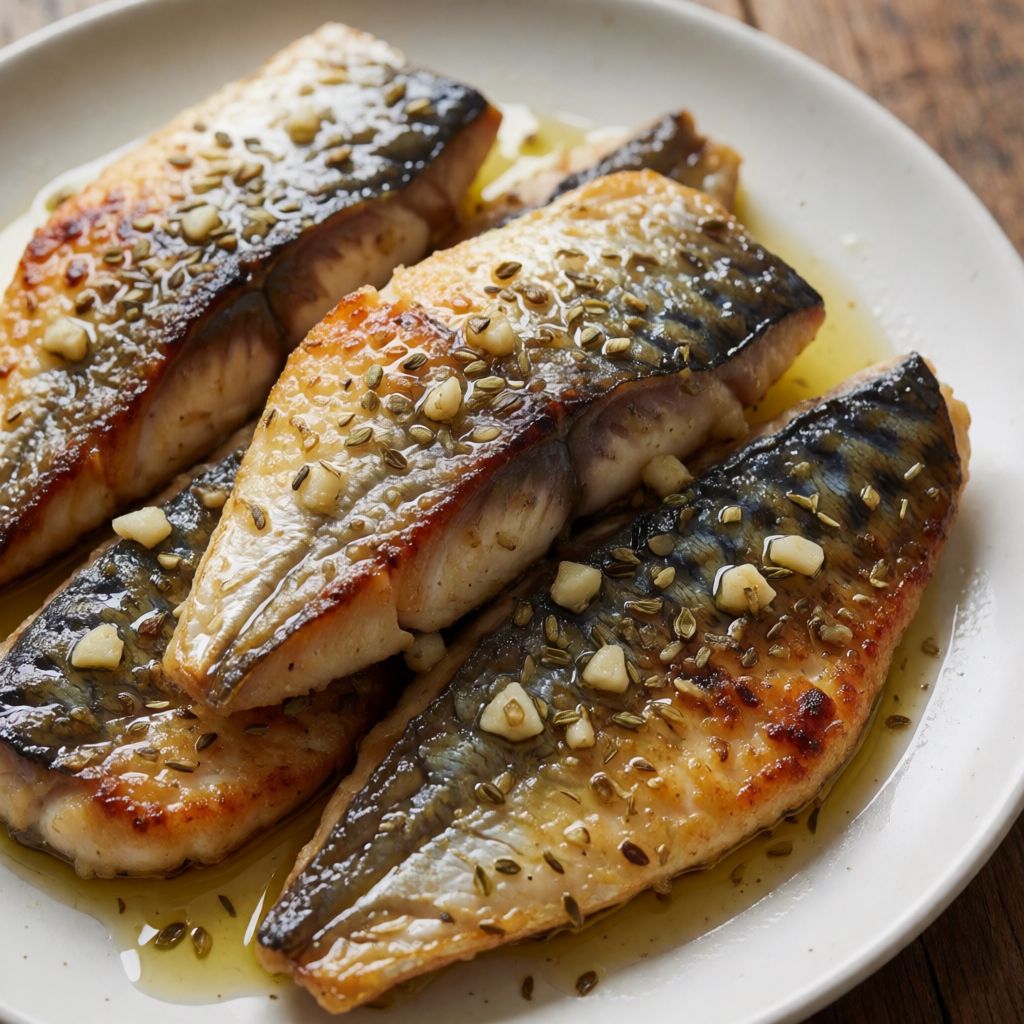
 AI photo
Sicilian-style Mackerel
Pan-fried mackerel marinated in a garlicky oregano and vinegar dressing, a Sicilian classic.
Labels are worked out automatically from the ingredients and can be wrong. Check the packaging if it matters to you.
Ingredients
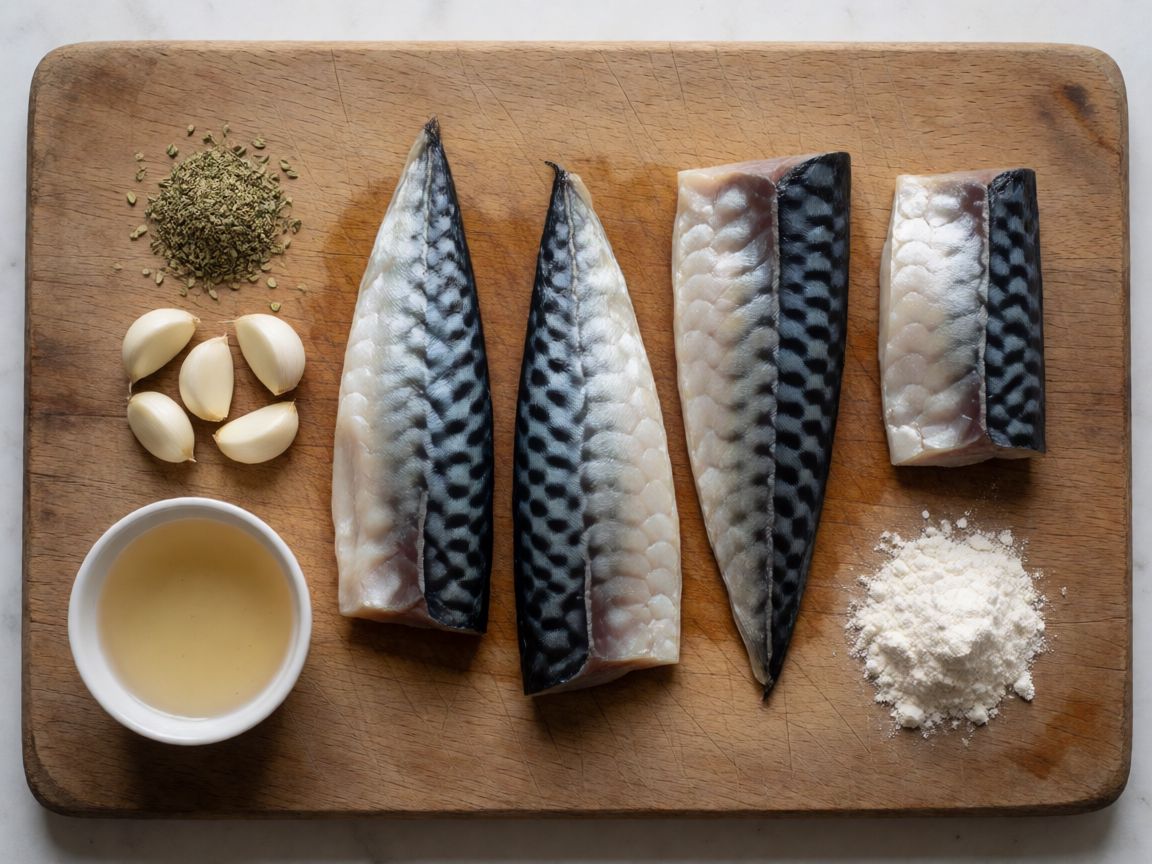







Steps
Make two shallow cuts along each side of every fish and sprinkle with coarse salt. Leave for an hour.
60 minRinse the mackerel, coat in plain flour and fry until the skin is golden and crisp. Ready when the thickest part reaches 63°C inside.
10 minCrush the garlic cloves in a mortar with a pinch of salt. Add the oregano, then the vinegar and olive oil little by little, mixing well.
Lift the fish out of the oil and pat dry on kitchen paper.
Arrange the mackerel on a deep plate and spoon the sauce over the top.
Cover with cling film and place in the fridge.
Leave to marinate for 1–2 days before serving.
This isn't really a fried fish dish — it's a preserved one wearing a frying pan as a disguise. In Sicily and all along the old trade coasts, oily fish like mackerel and sardines were salted, fried, then dropped into vinegar and oil and left to sit for days. That's scapece — the word itself borrowed from the Arabic sikbaj, fish or meat kept in a sour bath. No ice, no fridge, a boat that brings in more fish than the village can eat today. Vinegar and oil together starve out the air and drop the pH low enough that spoilage organisms struggle. The frying pan here is step one of a preservation method, not the main event.
What decides whether it works has nothing to do with how golden the skin goes. First: the hour of salting before anything touches oil. Mackerel flesh is soft and full of water — salt it dry and it stays wet in the pan, steams instead of frying, and the skin goes rubbery rather than crisp. Salt it an hour ahead and you draw water out, firm the flesh, and season it from inside rather than just on the surface.
Some say the vinegar "cooks" the fish, the way citrus does in a ceviche — no, because by the time the sauce goes anywhere near it the fish is already fully fried and resting at 63°C-plus in the middle. The vinegar here isn't cooking anything; it's seasoning and, historically, preserving. That distinction matters because it tells you the fish must be properly done before it meets the sauce — there's no raw centre for the acid to finish off later.
Mackerel is the right fish for this for a reason beyond availability: it's oily. That fat carries flavour and stands up to a sharp vinegar bath without tasting thin or sour on its own — a lean white fish would just taste of vinegar. Sardines or herring are the traditional stand-ins for exactly this reason; anything delicate and lean isn't going to survive two days in an acid marinade with its character intact.
The flour coating is doing one job only: giving the surface something to crisp and something slightly rough for the marinade to cling to later. A thin, even dusting — tap off the excess — not a batter. Too thick and you get a doughy layer that goes gluey once it's wet with vinegar for two days; too thin and there's nothing for the sauce to catch on.
Garlic crushed with salt in a mortar, not minced with a knife — the salt acts as grit, breaking the cloves down to a paste and releasing the sharp compounds a knife-cut clove keeps mostly locked inside the cell walls. That paste is what disperses evenly through the oil and vinegar instead of sitting in raw, biting chunks that nobody wants to find later. The oregano is there for its own dried, slightly bitter edge — a pinch, because it's meant to be a note, not the melody.
For the vinegar: any vinegar with real sourness and no sweetness fighting it will do — wine vinegar is classic because it's what Sicilian kitchens had to hand, but a decent cider vinegar works. Lemon juice is not a like-for-like swap here; it's softer in acid and won't hold the fish the same way over two days. For the frying oil, you want something with no character of its own, so the fish's own flavour and the olive oil in the dressing do the talking — a neutral sunflower or vegetable oil for the pan, and save the extra virgin for the sauce itself, where its flavour actually gets tasted raw.
In a UK kitchen the fridge is doing a job the old fishing villages solved with salt, acid, and a cool larder — refrigerate it properly rather than leaving it out the way the original method once allowed, because modern expectations of food safety and a Sicilian cottage three generations ago are not the same thing. Treat the one-to-two-day wait the way you'd treat a stew you make on Saturday for Sunday — the extra day is not laziness, it's the ingredient doing its work while you're not watching. Check it by nose and look rather than the clock: the raw bite should have gone out of the garlic, the edges of the fish should look slightly paler and translucent from the acid, and the flesh should flake clean but still hold its shape under a fork. That's when it's actually ready, and the one or two days on the label is only where the clock starts counting, not where it stops.