
 AI photo
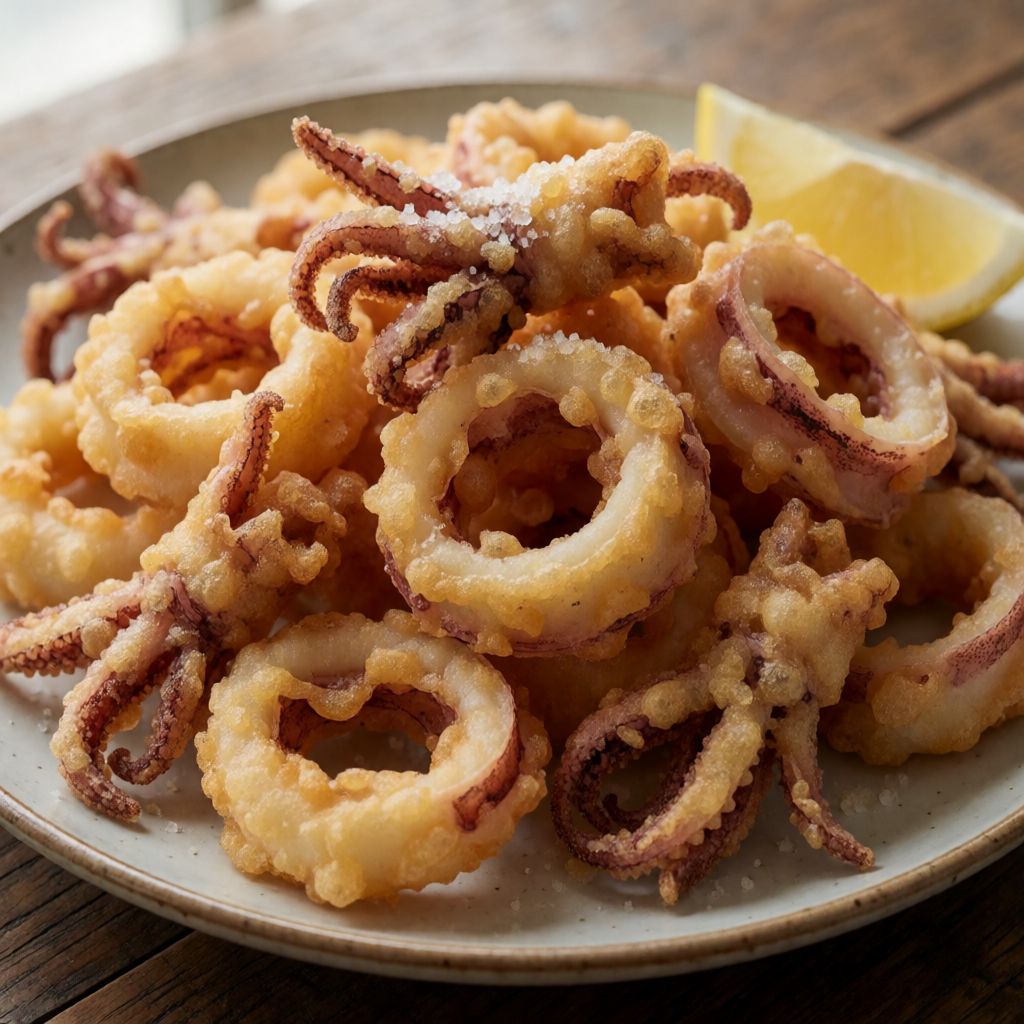
Fried Squid
Crispy fried squid rings, coated in flour and served hot with lemon.
Labels are worked out automatically from the ingredients and can be wrong. Check the packaging if it matters to you.
Ingredients
- 500 g Squid
- Plain Flour for dusting
- Sunflower Oil for frying
- Salt to taste




Steps
Clean the squid: rinse, cut off the head and tentacles, remove the eyes, beak and skin, rinse under water, then pat dry with a towel.
Cut the squid into rings about 1 cm thick.
Toss the rings in plain flour until evenly coated.
Heat the oil in a saucepan until hot and shimmering.
Add the squid rings and fry until golden brown.
Lift the squid out with a slotted spoon and drain on paper towels.
Season with salt and serve hot with lemon.
What was changed
Durum flour has been replaced with Plain Flour, the plain flour British kitchens normally use for coating fried squid.
Squid frying is a race, not a cook. The animal is almost pure muscle protein, built to snap shut fast when it swims — which means almost no collagen, the stuff that in beef or lamb needs an hour of gentle heat to melt into softness. Squid has none of that to melt. So the whole job here isn't to tenderise it — it's already tender, straight out of the sea — the job is to get a hot crust on it before the heat has time to squeeze the water out of those fibres and turn them into an eraser.
That's why everything about this dish is quick and thin: rings a centimetre thick, a light dusting of flour, oil hot enough that the flour seizes into a crust in seconds. The moment the squid goes rubbery, you've lost — not because you did something wrong with a spice or a sauce, but because the oil was lukewarm, or the pan was crowded, or you walked away for a minute too long, and in that minute the proteins finished contracting and threw out all the juice they're made of.
Some people swear squid needs a long simmer first to make it soft — braise it, stew it, then fry it. No. That's a rule borrowed from meat with connective tissue, and squid doesn't have the tissue that rule is written for. Simmer squid and you tenderise it the way you'd tenderise a rubber band by leaving it in the sun — it just gets tougher the longer it sits in heat, any heat. The only real lever you have is time, and here you want as little of it as you can get away with.
Squid: fresh sounds better on a label, but it isn't always better in the pan. Freezing bursts some of the muscle fibres with ice crystals, which does a small part of the tenderising work for you before it ever reaches your kitchen — which is why a thawed squid from the freezer cabinet can fry up more reliably forgiving than a fresh one that snaps back hard. If you're buying fresh, look for flesh that's firm and faintly translucent, not milky and slack — slack means it's been sitting too long and will shed water into your oil the moment it's in, which brings you back to the main enemy of this whole dish: water. The cleaning matters for the same reason — the thin purple-grey skin left on will curl and toughen in the heat, giving you chewy bits in an otherwise tender ring, so get it off.
Flour is not a batter. British kitchens have a strong instinct toward batter — fish and chips trains you to expect a thick, crisp shell — but that's a different mechanism built for a different problem, keeping a flaky white fish moist inside a fryer for several minutes. Squid doesn't need protecting for minutes, it needs sealing for seconds, so a light, even dusting is enough: just enough flour to crisp and colour, not so much that it falls off in clumps or steals so much time to brown that the squid inside overcooks waiting for the outside to catch up. Shake off the excess before it goes in — a heavy clumpy coat is also how you cool your oil down fast, since cold wet flour hitting hot oil drops the temperature exactly when you can least afford it.
Oil: anything with no flavour of its own and a smoke point comfortable above a light shimmer — sunflower works, so does plain vegetable or rapeseed oil, the kind already sitting in most UK kitchen cupboards. Olive oil has its own taste and a lower smoke threshold, and here you don't want either — the oil's only job is heat transfer, it shouldn't compete with the squid or burn before the squid's done. You don't need a deep-fat fryer or a kazan for this; a wide saucepan with oil a couple of centimetres deep, enough to properly surround each ring, does the job on a normal domestic hob. Test it the old way: drop in one ring first — if it sizzles hard and starts colouring within moments, the oil's ready; if it just sits there going pale and greasy, it's not hot enough yet and everything that follows will stew rather than fry.
The real defect to watch for isn't burning, it's crowding. Tip in too many rings at once and the oil temperature collapses — now the squid is sitting in cooling oil releasing water, which is precisely the slow, wet, lukewarm cooking that turns it rubbery. Fry in batches small enough that the oil keeps bubbling hard around every ring, and let it come back up to temperature between batches. That's the patience this dish asks for — not long patience, short repeated patience, done four or five times rather than once.
Salt goes on after, on the paper towel or straight on the plate, never into the flour or onto the raw rings beforehand. Salt pulls water out of flesh by osmosis — exactly the water you've spent this whole dish trying to keep locked in. Season early and you're doing the oil's enemy's work for it before you've even started cooking. Lemon at the end isn't decoration — its acidity cuts the oil's richness on the tongue, which matters more here than with most fried things, since there's no sauce, no batter crunch, nothing else on the plate to balance it against.