
 AI photo
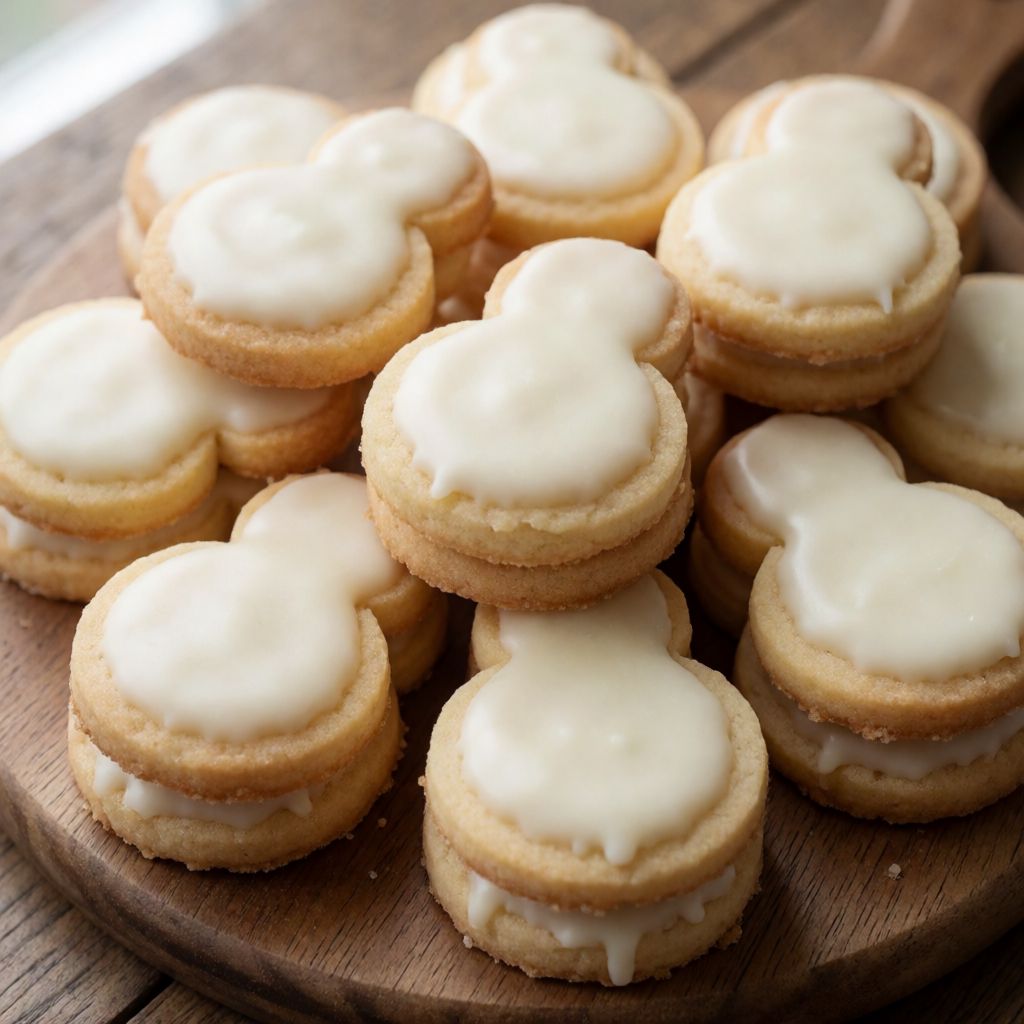
Snowman Biscuits
Buttery shortcrust biscuits shaped like little snowmen, filled with white chocolate and decorated to taste.
Labels are worked out automatically from the ingredients and can be wrong. Check the packaging if it matters to you.
Ingredients
- 250 g Plain flour
- 3 pcs Egg yolk
- 80 g Caster sugar
- 150 g Butter cut into cubes
- 1 pinch Salt
- 100 g White chocolate
- Dark chocolate to taste
- Food colouring to taste
- White chocolate to taste






Steps
Sift the flour onto a work surface into a mound, make a well in the centre and add the egg yolks, caster sugar and butter. Knead into a smooth, even ball.
Wrap the dough in cling film and chill in the fridge.
30 minRoll out the dough with a rolling pin to about 3 mm thick. Cut out round shapes with a biscuit cutter, in an even number.
In the shapes meant for the top half, cut out two smaller round holes to form the snowman's silhouette.
Arrange the shapes on a baking tray lined with parchment paper and chill in the fridge.
15 minBake in an oven preheated to 170°C, then let cool completely.
18 minFill the bases with melted white chocolate, cover with the top half and leave to set.
Decorate with dark chocolate using a toothpick, drawing eyes, buttons and arms. Colour some melted white chocolate for the carrot nose.
Decorate the biscuits to your own taste.
This is pâte sablée pretending to be a children's craft project — a snowman cut from shortbread, glued together with melted white chocolate, and decorated like a stained-glass window with a toothpick. The dough itself is ordinary French biscuit dough, the kind that holds its edges and doesn't spread into a puddle in the oven. What decides whether it works isn't the shape at all — it's whether the dough stays cold and whether you cut two biscuits that actually match.
The mechanism is simple: egg yolks and butter give richness and a short, sandy crumb; sugar gives sweetness and a touch of spread; flour holds the structure. No raising agent, no egg white — because this isn't trying to rise or puff, it's trying to hold a crisp cut edge, including two small round windows cut into every other biscuit. That's the one place this recipe is unforgiving: if the dough is warm and soft, those little cut-out holes drag and tear instead of releasing clean, and your snowman's face comes out as a smear.
Some say shortbread dough should be worked like bread, kneaded hard to "develop" it — no, because that's exactly backwards here. The fraisage-style mound-and-well method (flour on the counter, yolks and sugar and butter worked in with fingertips, not fists) is there to coat the flour in fat quickly and stop too much gluten forming. Overwork it and you get biscuits that are tough rather than short — "short" meaning literally shorter gluten strands, which is why butter-heavy doughs like this are called that.
Flour: plain, not strong bread flour and not self-raising — you want structure without chew or lift. 250g sifted matters less for aeration here and more so the flour folds into the butter without lumps when you work the well.
Egg yolks, three of them, no white: yolks bring fat and colour and bind the dough; whites would bring moisture and a bit of chewy elasticity you don't want in a biscuit meant to snap cleanly, not bend. If a yolk breaks weirdly or you're short one, a small splash of cream can stand in for the fat and moisture, but the colour and richness will be paler.
Butter, cubed and presumably cold when it goes into the well: cubing is about surface area, letting it work into the flour quickly with your fingertips before it turns greasy and the dough becomes an oily mess rather than a crumbly one. Any fat that is solid at room temperature and has no strong smell of its own would technically work — a plain block margarine, say — but you lose the flavour that's half the reason to bake shortbread at all.
Caster sugar rather than granulated: finer crystals dissolve into the fat and yolk mixture without leaving a grainy bite, and they don't drag moisture out of the dough the way coarse sugar can. Icing sugar would make the dough almost too fine and cakey; caster sits in the middle, which is why it's the standard choice here.
White chocolate does double duty — as the "glue" that holds the two biscuit halves together, and tinted with food colouring as the carrot nose. Melted chocolate sets like a thin layer of glass as it cools, which is exactly the join you want: firm enough to hold the top half upright, not so thick it oozes out the side of the snowman's neck. Use a chocolate that's actually white cocoa butter based, not a cheap "white confectionery coating" with a lot of vegetable fat substituted in — it melts less cleanly and sets duller.
Dark chocolate for the toothpick decoration: melted just enough to be fluid but still viscous, because a toothpick dipped in chocolate that's too thin won't hold a line — it'll run before it sets, and your snowman's buttons turn into drips. This is the same reason icing pens exist; a toothpick is the kitchen's cheapest substitute for one.
On equipment: a kazan has nothing to do with this one — it's a British Sunday-afternoon oven job, and a domestic oven at 170°C is a fan oven's actual air temperature or a conventional one closer to the dial setting, worth checking your own oven runs true rather than trusting the knob blindly, since shortbread this thin scorches at the edges faster than it looks like it should. Doneness isn't a timer sound: look for the edges turning the colour of pale, dry sand — not gold, not brown — because once the whole biscuit colours, the butter inside has already started to separate and the texture turns from short to brittle-crumbly in a way that falls apart when you try to glue the halves.
And patience is the real ingredient twice over here — once while the dough chills and you're not allowed to rush it onto the rolling pin, and again while the baked halves cool completely before you touch them with chocolate, because warm biscuit plus melted chocolate just means a slump, not a snowman.