
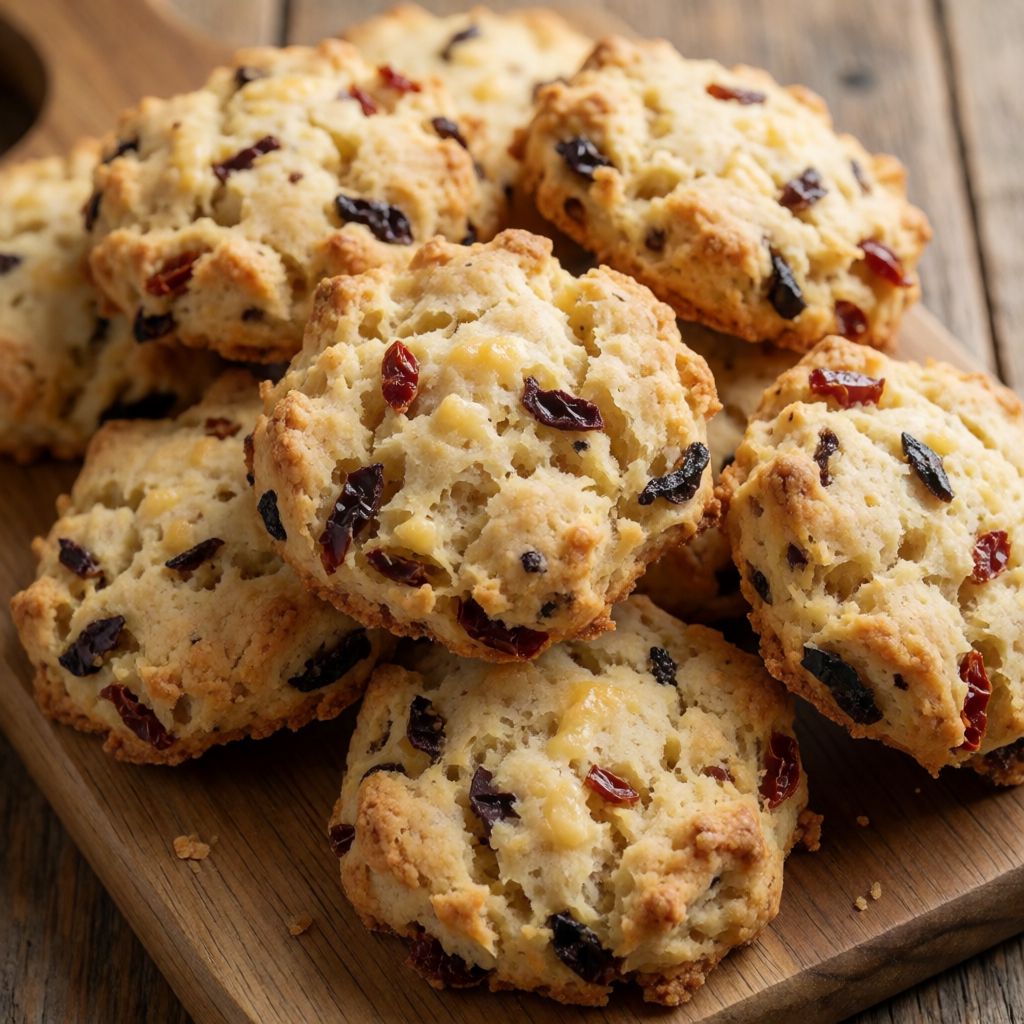
 AI photo
Savoury Biscuits with Sun-Dried Tomatoes and Olives
A savoury biscuit dough mixed with green olives, sun-dried tomatoes and Parmesan — a nice bite for any table.
Labels are worked out automatically from the ingredients and can be wrong. Check the packaging if it matters to you.
Ingredients
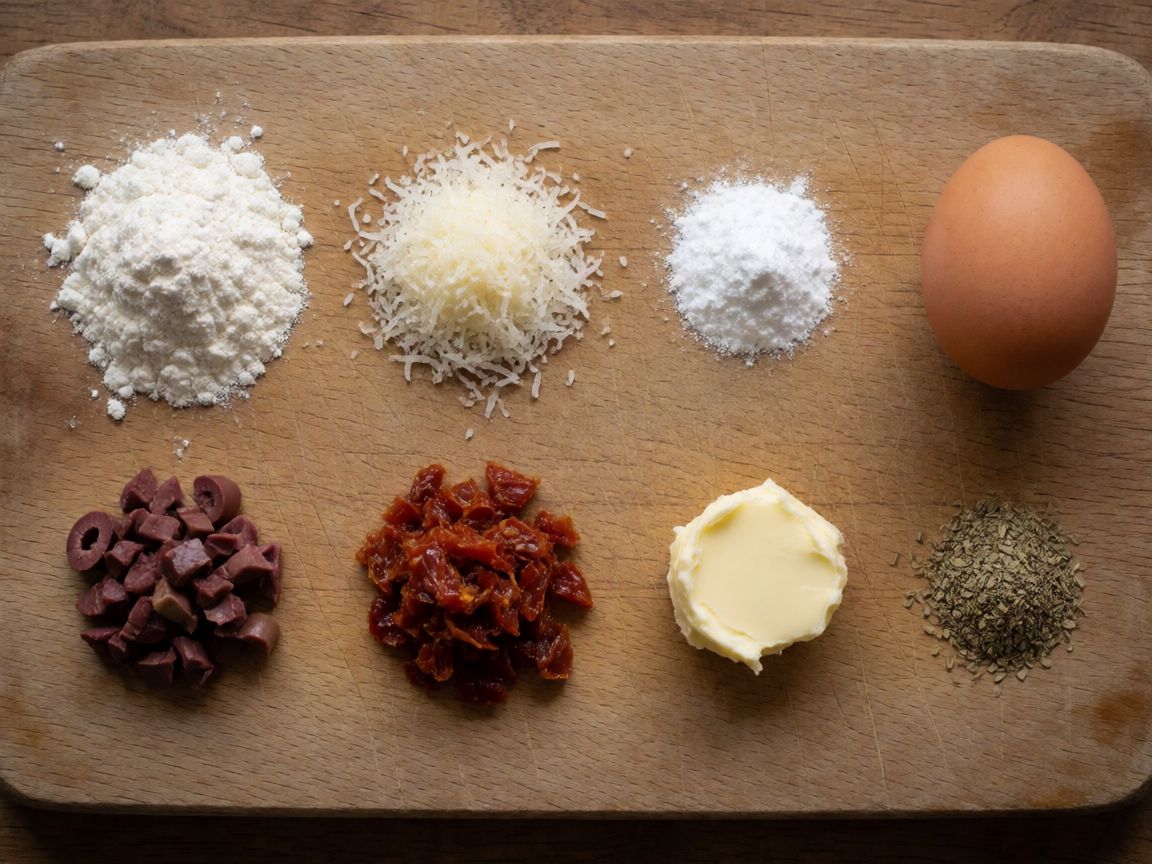
- 225 g Plain flour
- 50 g Parmesan
- 8 g Baking powder
- 40 g Green olives, pitted chopped into small pieces
- 90 g Sun-dried tomatoes drained of oil and finely chopped
- 1 pcs Egg
- 80 g Butter softened
- Salt to taste
- Black pepper to taste
- Oregano to taste
- Olive oil for frying











Steps
In a large bowl, combine the flour, baking powder and Parmesan, add the salt, black pepper and oregano, and mix.
Add the chopped pitted green olives and the sun-dried tomatoes, previously drained of oil and finely chopped, and mix.
Add the egg and the softened butter, and knead the dough by hand until it comes together.
Shape the dough into a ball, wrap it in cling film and put it in the fridge.
Shape the biscuits: take small portions, roll into balls, then flatten them into round, flat discs.
Place the biscuits on a baking tray lined with parchment paper and bake in an oven preheated to 180°C.
12 minLet the biscuits cool a little before serving.
Think of this as shortbread that went savoury and got nosy neighbours — Parmesan, olive, sun-dried tomato all pushing their own flavour into a dough that's really just flour, fat, baking powder and an egg holding hands. It's a biscuit in the British sense, not the American one: crisp through, not a scone, not fluffy. Eight people, one plate, gone before the tea's cooled.
What decides whether it works is fat and moisture, nothing more mysterious. Butter coats flour particles and blocks them from forming long gluten strands — that's why you knead "until it comes together" and not a second longer. Overwork this dough chasing smoothness and you'll get something closer to bread, chewy where it should shatter.
The other hidden variable is the tomatoes. Sun-dried ones sit in oil precisely so they don't dry the dough out further, but that same oil, if you don't drain it off, turns your biscuit greasy and slack instead of short and sandy. Drain them properly — press with a spoon, don't just tip the jar — and you're controlling the one ingredient most likely to ruin the texture without you noticing why.
Some say resting the dough in the fridge is just "letting it chill out" — no, it's solid. Cold butter holds its shape when you flatten the discs instead of smearing into the counter, and it means the biscuits spread evenly in the oven rather than slumping lopsided on one side.
Flour here is just structure, nothing to overthink — plain flour, no need for anything stronger, because you're not building gluten, you're limiting it. Baking powder gives you the small lift that stops these biscuits being flat crackers; 8 g for 225 g flour is a light hand, enough to open the crumb slightly without turning this into a scone that puffs and goes soft.
Parmesan does two jobs people often credit to salt alone: it salts the dough and it browns it. The glutamates in aged hard cheese are what makes the edges smell toasty rather than just "cooked." If you've no Parmesan, any hard, dry, sharply salted cheese works — Grana Padano, an aged Pecorino, even a strong mature Cheddar in a pinch, though it'll push the flavour from nutty towards sharper and more British, which isn't wrong, just different.
The olives and sun-dried tomatoes are the flavour, but they're also the risk — both carry moisture and oil that the butter-flour ratio wasn't built to absorb. Chop them small not for looks but because a big wet chunk inside a biscuit is a pocket of steam when it hits the oven, and steam is what turns "crisp" into "soggy in the middle." If you've no sun-dried tomatoes, use tapenade-style chopped roasted red pepper, well patted dry — the point is concentrated flavour with low free water, not fresh tomato, which will simply wreck the dough with its juice.
Butter must be softened, not melted — melted butter runs between the flour instead of coating it, and you lose the shortness that makes this a biscuit rather than a cracker. Any unsalted butter does; margarine will work structurally but won't give you the same clean fat-coats-flour mechanism, since its water content differs and its melting behaviour in the oven is less consistent.
The egg binds — it's your only source of real moisture in a mostly-dry dough — and because it's the sole liquid, size matters more than usual. A standard medium egg is assumed; if yours is small, the dough may need a splash of water or extra oil at the kneading stage to come together at all, since you're not adding milk anywhere to compensate.
180°C in a domestic fan or conventional oven is enough to set the egg, melt the cheese into the dough rather than just sitting on it, and crisp the edges before the centre dries out — in a flat UK kitchen without a proper deck oven, that's your working number, but trust the colour over the clock: pale gold going slightly deeper at the rim is your cue, not the timer alone. Twelve minutes is the floor, not the law. And give them the few minutes' cooling the recipe asks for — straight off the tray they're still setting structurally, soft in the centre from residual heat, and will seem undercooked even when they're not; patience here is the difference between a biscuit that holds together and one that crumbles in your hand before it reaches your mouth.