
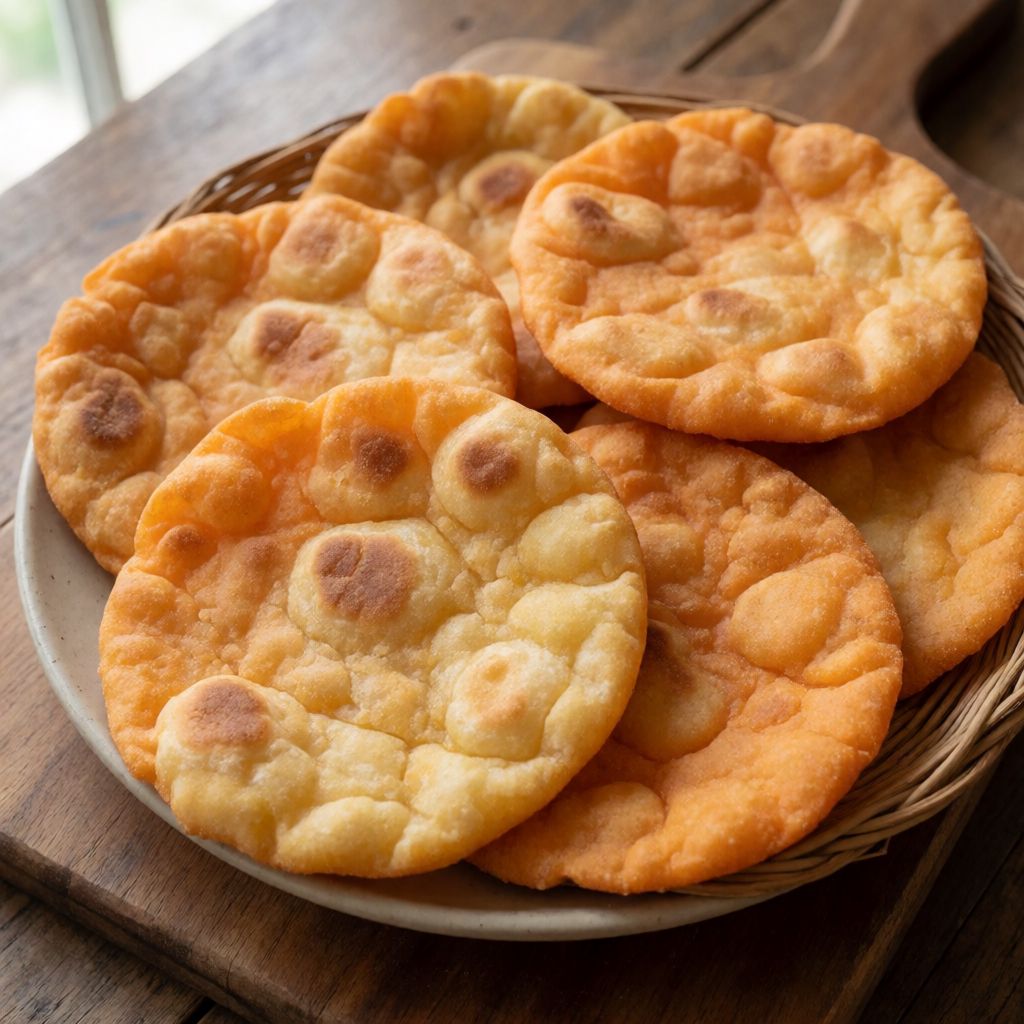
 AI photo
Sopaipillas
A soft pumpkin dough, rolled, cut into rounds and fried until golden.
Labels are worked out automatically from the ingredients and can be wrong. Check the packaging if it matters to you.
Ingredients
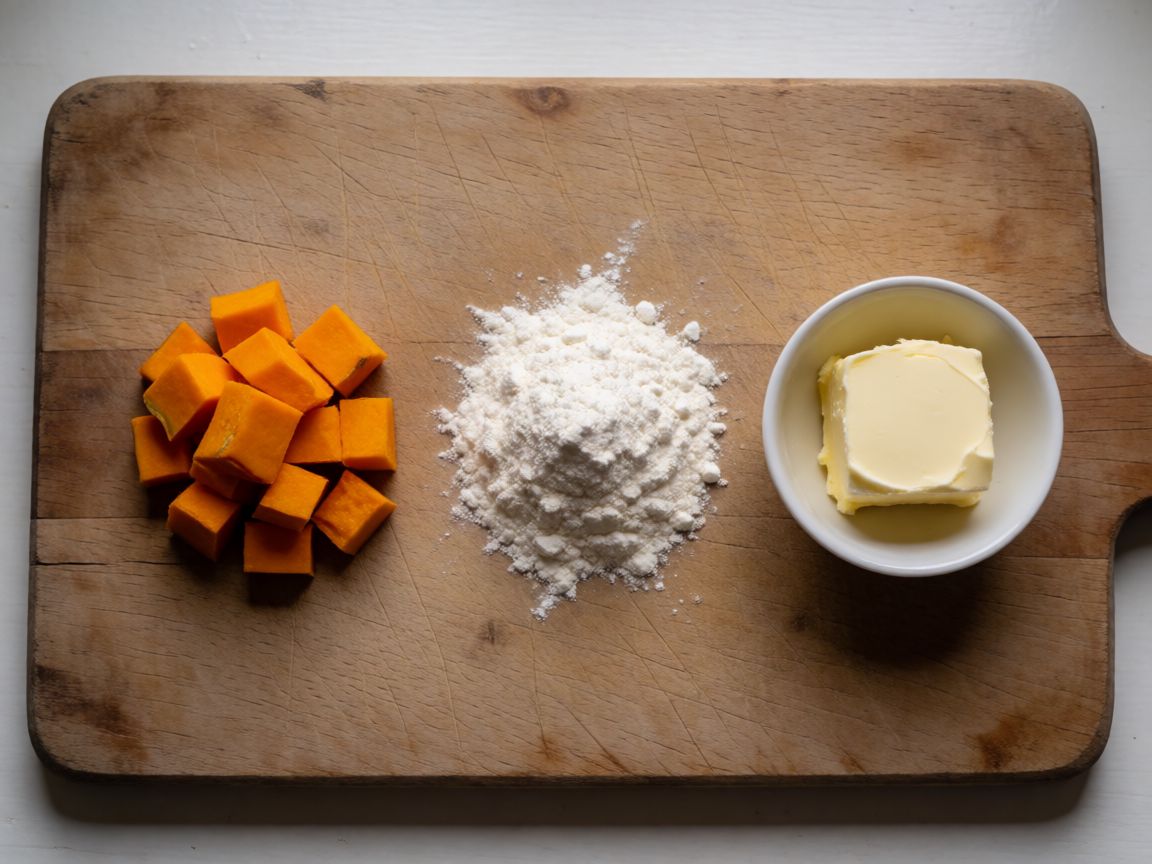
- 450 g Pumpkin
- 210 g Plain flour
- 40 g Butter
- Salt to taste
- Vegetable oil for frying





Steps
Bake the pumpkin in the oven or boil it in a pot fully covered with water until soft.
Mash the pumpkin through a sieve or blend it, then transfer to a bowl.
Gradually add the flour and butter, season with salt and knead into a smooth dough.
Roll out the dough to a thickness of 4-5 mm and cut out rounds using a pastry cutter or a glass.
Fry the rounds in plenty of hot vegetable oil until golden.
Sopaipillas are fried pumpkin bread — not a dessert, not a pastry, just bread that got into oil instead of an oven. The pumpkin isn't a flavouring here, it's doing the job water usually does in dough: it carries the flour, it carries the fat, and it decides almost everything about whether this works.
What decides success is moisture, and nobody tells you that outright. Pumpkin holds an unpredictable amount of water depending on whether you baked it or boiled it. That's why the flour goes in "gradually" — the recipe can't give you a fixed number, because your pumpkin isn't the same as mine. You're looking for a dough that holds together without sticking to your hands and without cracking at the edges when you fold it. That's the real measure, not the 210 g.
The other thing that decides it is the oil. Too cool, and the dough sits there soaking up fat instead of cooking — you get something pale, greasy, and leaden in the middle. Hot enough, and the surface seals the second the dough touches it, steam builds inside from the pumpkin's own water, and the round puffs. That puff is not leavening — there's no yeast, no baking powder in this recipe — it's steam pressure, plain physics, the same reason a jacket potato splits if you don't prick it.
Pumpkin: buy it for dryness, not sweetness. A watery pumpkin (and supermarket pumpkin, picked young, often is watery) will need more flour to come together, and more flour means a tougher, less tender dough. Baking the pumpkin, as the recipe allows, drives off water and concentrates sugar — you'll need less flour and get a dough with more character. Boiling puts water back in. If you boil, drain hard and let it sit in the sieve a few minutes so the water actually leaves rather than just dripping. If pumpkin's out of season in a UK kitchen, butternut squash does the same job — same starch, same behaviour, almost the same colour in the pan.
Flour: plain flour here, not strong bread flour, because you don't want much gluten. Gluten is what makes dough elastic and chewy; too much of it and the sopaipillas turn tough instead of short. The butter helps keep that gluten in check — fat coats the flour's proteins and gets between them, so they can't link up into long stretchy strands. This is the same logic as pastry, just wetter. If you're short on butter, a flavourless oil can stand in, though you lose a little of the short, almost biscuity bite butter gives.
Salt: not a seasoning afterthought, it's balance. Pumpkin is naturally a bit sweet, and salt is what stops the finished bread tasting like dessert when it isn't meant to be one. Taste the dough raw — yes, really — before you commit flour to it, because you can't fix seasoning once it's fried.
Oil: you want plenty of it, deep enough that the round floats rather than sits on the base of the pan frying one side at a time. A domestic hob can get there without a deep-fat fryer — a wide, heavy pan with oil a good few centimetres deep is enough, you just need to watch it, because without a thermostat you're the thermostat. Drop a scrap of dough in first: if it sizzles at once and rises to the surface within a few seconds, the oil's ready. If it sinks and sits, wait. The oil itself should have no smell of its own — sunflower, groundnut, any neutral vegetable oil — because sopaipillas take on whatever you fry them in, and olive oil's flavour will fight the pumpkin rather than support it.
Rolling to 4-5 mm isn't arbitrary either: thinner, and the middle cooks before the outside colours, so you get pale, undercooked sopaipillas that look done; thicker, and the outside burns protecting a raw centre. And once you've cut your rounds, give them a minute before they go in the oil — the dough's been stretched by rolling and cutting, and a short rest lets it relax so it doesn't spring back and go thick and uneven at the edges. That minute of patience is as much an ingredient as the flour.