
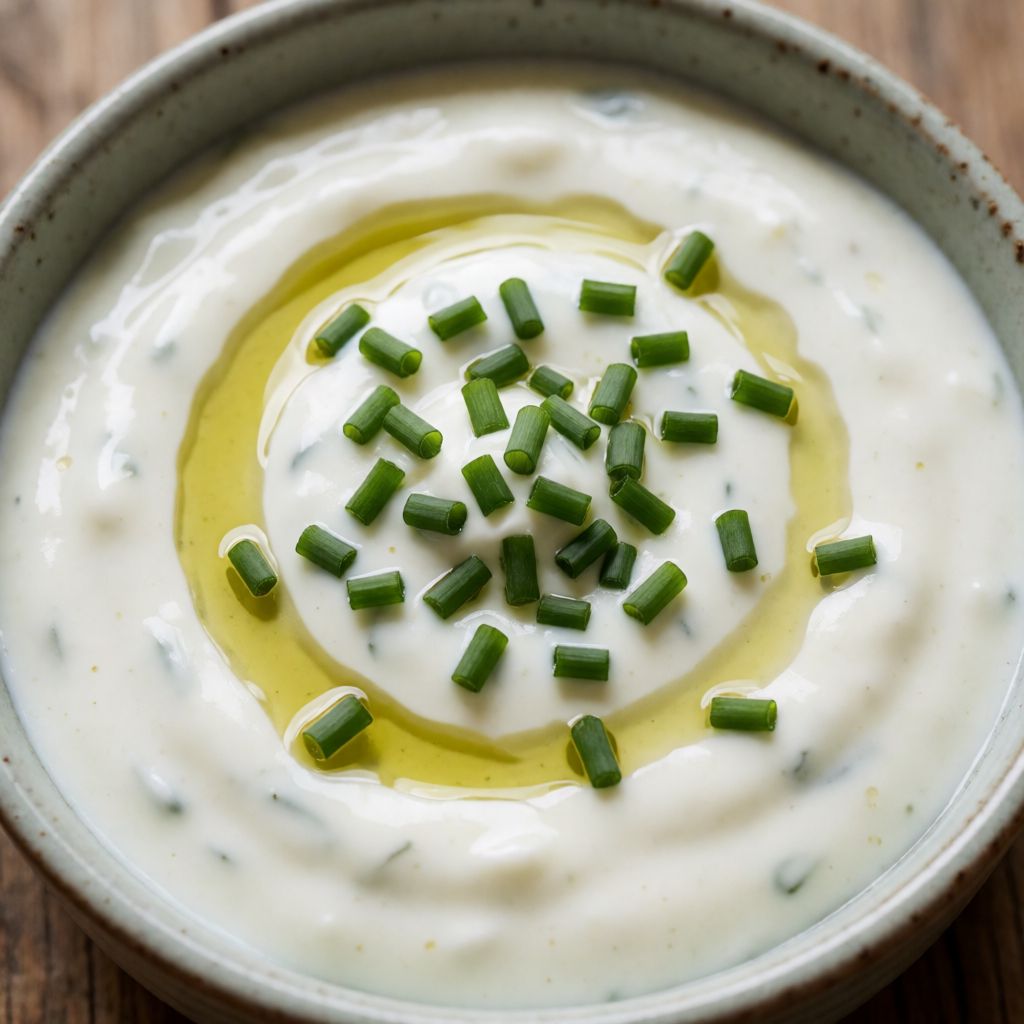
 AI photo
Yoghurt Sauce
A light yoghurt dressing with olive oil, lemon juice and chives, ready in minutes.
Labels are worked out automatically from the ingredients and can be wrong. Check the packaging if it matters to you.
Ingredients
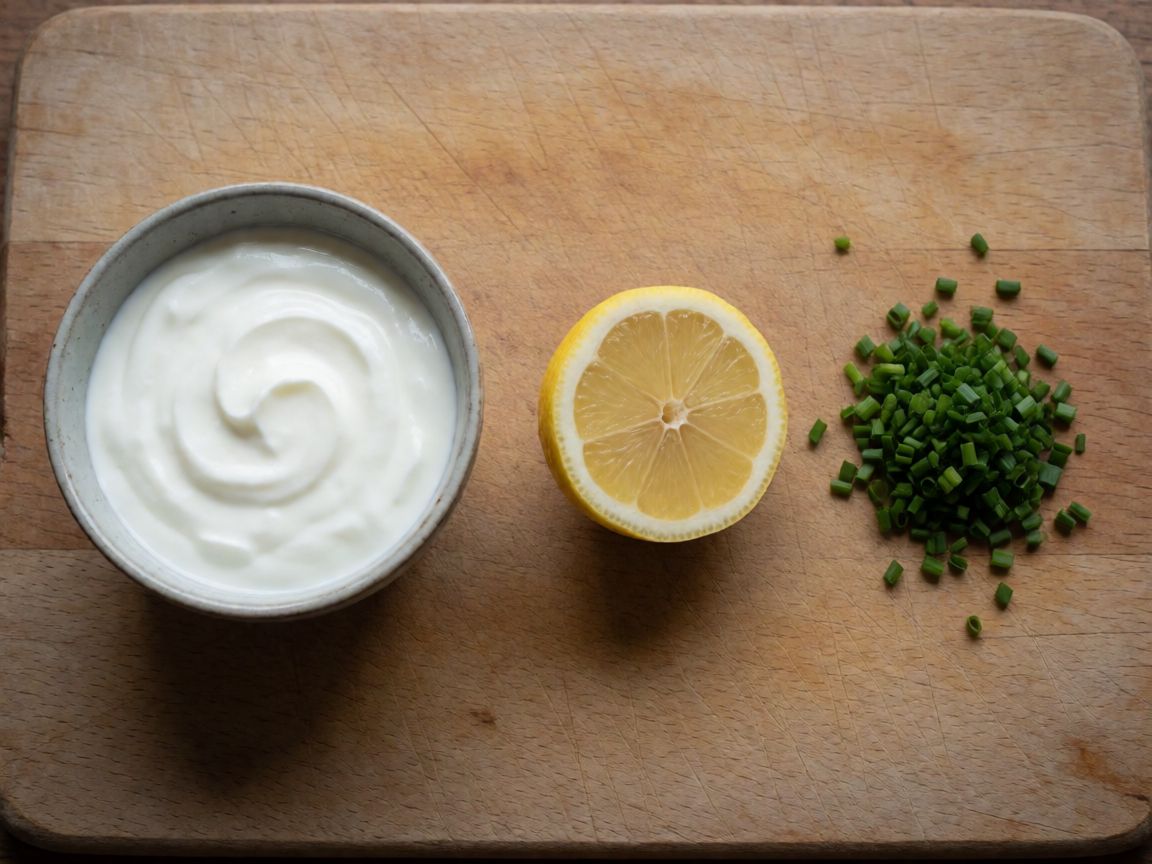
- 150 ml Yoghurt
- 1 tbsp Olive Oil
- 1/2 pcs Lemon Juice freshly squeezed and strained
- Salt to taste
- Chives to taste, finely chopped





Steps
Pour the yoghurt into a bowl, add the freshly squeezed lemon juice and the olive oil.
Mix well until everything is combined.
Add salt to taste and the finely chopped chives.
Stir once more — the sauce is ready.
If not using immediately, store in the refrigerator until serving.
This isn't a dish — it's a tool. Yoghurt, lemon, oil, salt, chives: five things stirred together in a bowl, no flame involved anywhere. It belongs in the "basics" drawer because its whole job is to sit next to something else — a roast, a grilled chop, rice, flatbread — and do what gravy does for beef, except cold and sharp instead of warm and rich.
What decides whether it works is balance, not skill. Yoghurt brings its own sourness; lemon brings a second, sharper kind. Too much lemon and you get vinegar wearing a yoghurt costume. Too little and the sauce tastes flat, like yoghurt that forgot why it was invited. The oil's job is to round off both sournesses — fat coats the tongue a half-second before the acid hits it, so the sharpness feels rounded instead of raw. That's the whole mechanism. Everything else is seasoning.
Some say a sauce like this needs garlic to count as "real" — tzatziki thinking. No, because this one is deliberately bare. It's the base recipe, the one you build tzatziki, or a mint-and-yoghurt sauce for lamb, or a herb sauce for fish out of, by adding one thing. Judge it as what it is: clean, cold, a little sharp, meant to be plain.
On the yoghurt: reach for plain, unsweetened, natural yoghurt — whole milk, if you want body, because fat is doing flavour work here, not just calories. Greek yoghurt, the strained kind sold labelled as such, is thicker because the whey's been drained out of it; use it and you'll need to loosen the sauce with a spoonful of water or it sits like paste rather than coating anything. "Greek-style" yoghurt is a different animal again — thickened with starch or cream rather than by straining — and it can taste duller, less tangy, because it's built for shelf stability, not sourness. If that's what's in your fridge, add a touch more lemon to wake it up.
The lemon juice has to be fresh and strained, and this isn't fussiness — bottled lemon juice carries a preservative tang and a flatter, more one-note acidity that fights the yoghurt instead of matching it. Straining removes pulp and pips so the sauce stays smooth rather than stringy. Half a lemon for 150 ml yoghurt is a starting point, not a law — taste as you go, because lemons vary wildly in how sharp they are, and a watery supermarket lemon in January gives you less acid than a firm one in summer.
Olive oil is traditional because it's what was on the shelf wherever this sauce comes from, not because no other oil will do. The actual requirement is an oil that won't argue with the yoghurt — nothing with a strong personality of its own, so a mild extra virgin works, and so does sunflower or rapeseed oil if that's what you've got, just use a little less since those have no flavour to hide behind and too much turns the sauce greasy rather than rounded.
Salt goes in after the liquids are mixed, not before, so it dissolves properly instead of sitting as grains on top. Taste it after it's dissolved — salt changes how sharp the lemon seems to you, and judging saltiness in an unsalted sauce is guessing blind.
Chives go in last, finely chopped, and stay raw — never cooked, there's no heat here to cook them with anyway. The reason for adding them right at the end rather than letting them sit in the acid is that chives wilt and discolour in lemon juice given time, turning from bright green to a tired khaki. If you've no chives, any mild onion-family herb works — spring onion tops, finely sliced, do the same job. Dill or mint change the character of the sauce rather than just filling the chive-shaped hole, so use them knowingly, not as a straight swap.
Patience here is short but real: give the finished sauce a few minutes before serving, even just the walk from counter to table. The salt needs that time to actually dissolve into the yoghurt rather than sit as separate grains on your tongue, and the lemon mellows slightly as it meets the fat. If you're not using it straight away, the fridge is right for it — not because it spoils fast, but because warm yoghurt sours further and the chives go limp sitting out, and a tired sauce next to a hot roast is a sad contrast nobody asked for.