
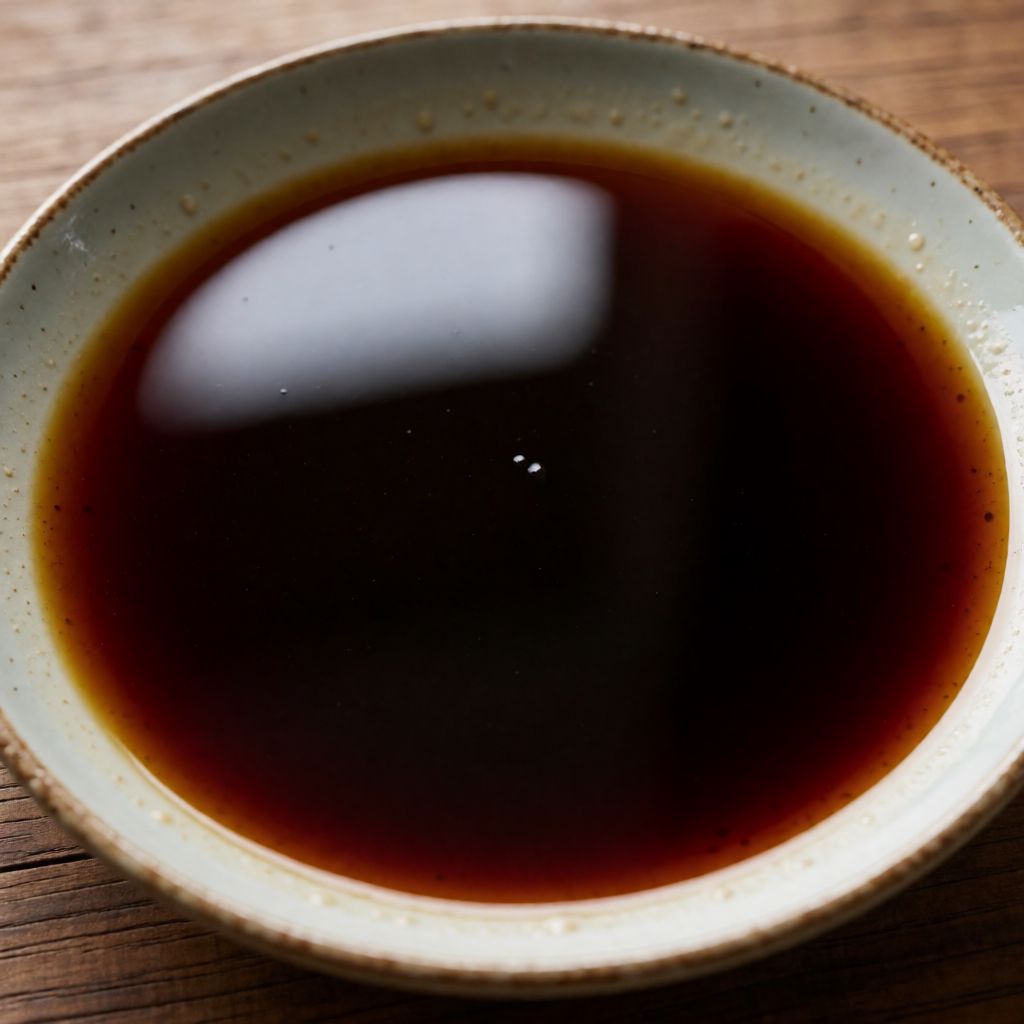
 AI photo
Soy Sauce
A traditional homemade soy sauce made by fermenting soybeans with flour and salt.
Labels are worked out automatically from the ingredients and can be wrong. Check the packaging if it matters to you.
Ingredients
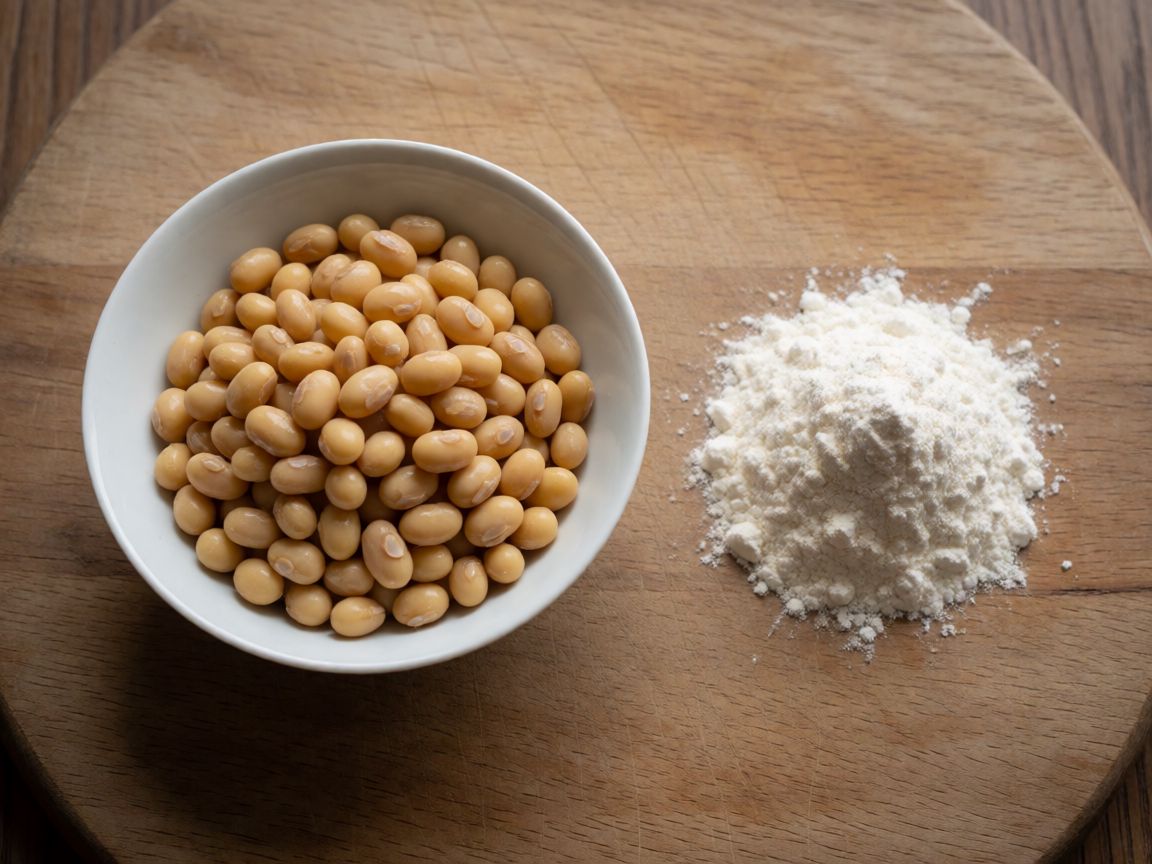
- 450 g Soybeans cooked
- 350 g Plain flour
- 200 g Salt
- 3.7 l Water




Steps
Transfer the cooked soybeans to a blender and blend until smooth. Transfer to a bowl, add the flour and knead into a smooth dough. Shape it into a roll and cut it into discs.
Stack the dough discs, alternating with damp cloths, and cover with a cloth.
Wrap the roll in cling film, place it on a tray lined with parchment paper and leave it in a dry place for about a week.
10080 minUnwrap the roll, remove the discs from the cling film and cloths, place them on parchment paper and let them dry until they turn dark brown.
Pour the water into a pot, add the salt, add the discs, cover with cling film and leave to ferment.
During fermentation, stir the contents of the pot with a wooden spoon at least once a day.
Once the discs have dissolved, strain the sauce through a piece of muslin.
Pour the strained sauce into bottles.
This is not a sauce you cook, it's a sauce you grow and then dissolve. Two separate mechanisms, stacked on top of each other: first a mould spreads over a soy-and-wheat dough and starts breaking it down — that's your homemade koji — then salty water finishes the job, turning what the mould loosened into liquid. People who tell you soy sauce is just boiled beans in salt water have never looked at the colour of that dough on day six.
What decides whether this works is not "how long" but two narrower questions. First: does the right mould take hold on those discs during the week they sit wrapped in damp cloth, or does something worse get there first. Second: does the salt in that brine sit in the band that stops rot bacteria while still letting fermentation do its work. Straining and bottling at the end are just cleanup — the real chemistry is finished long before you reach for the muslin.
Time here is scaffolding, not a stopwatch. "About a week" for the dough and "until dissolved" for the brine are deliberately vague, and rightly so: the dough tells you it's ready by going evenly dark brown, not by a date on the calendar; the brine tells you by falling apart into liquid. Go by what you see and smell, and treat any given number of days as the earliest you can expect it, not the latest.
One honest note before anything else: I haven't personally run this exact wild-mould stage, so I won't pretend to give you a temperature or a smell I haven't tested myself. What I can give you is what the mechanism actually needs, and what tells you it's gone wrong.
Start with the soybeans. Cooked and blended, they're your protein — the raw material that mould enzymes and then brine will slowly cut down into amino acids, which is where the savoury depth of soy sauce actually comes from, not from the salt. Salt only seasons; the beans are doing the flavour-building. Any protein-rich pulse could theoretically ferment this way, but soy's particular ratio of protein to oil is what gives this sauce its specific character — swap the bean and you've made something else, not a substitute.
The flour does two jobs. It gives the mould a starchy surface to spread across quickly, and that same starch becomes sugar as fermentation goes on, which is where the rounder sweetness under the saltiness comes from. Leave the wheat out and you get the leaner, sharper style some traditions make on purpose — not a mistake, just a different drink. If you want wheat-free, know you're trading away roundness, not making a one-for-one swap.
Salt is the real control knob, alongside time. Two hundred grams in 3.7 litres sits around five to six percent — too little and rot bacteria get in ahead of the fermentation you want; too much and you stall the same enzymes you're relying on, because high salt slows them down as surely as it slows down spoilage. Use plain salt with nothing added — no iodine, no anti-caking agent. Those additives exist to keep salt flowing out of a shaker, not to keep a ferment healthy, and they can get in the way. Sea salt or kosher salt, nothing more specialised than that.
Water needs to arrive with no chlorine in it, which matters more in a UK kitchen than people assume — mains water here is chlorinated precisely to kill microbes, which is good news when you're drinking it and bad news when you're trying to grow something in it. Boil it and let it cool, or filter it; either gets the chlorine out of the way.
The week under damp cloth in a dry place looks like a contradiction, but it isn't: the cloth keeps just enough moisture at the surface for mould to establish, while the surrounding dryness stops the disc going soft and rotten all the way through, which is what happens to dough that's wet in its middle before any useful culture reaches it. In an ordinary flat, an airing cupboard or a shelf away from a radiator gives you a steady dry spot — nobody's measuring humidity in there, so trust your eyes: even, dark-brown colouring means the right culture spread properly; patchy black or green, or a smell that turns your stomach instead of interesting it, means something else won, and that batch isn't worth saving.
Daily stirring during the brine stage isn't fuss for its own sake — it's what stops the batch separating into trouble. Left still, the surface can grow its own unwanted film while salt settles unevenly below, leaving weak pockets too fragile to resist spoilage sitting next to strong pockets too salty to ferment at all. The spoon just keeps the whole pot talking to itself. And it's worth saying plainly: this whole process — gambling on whatever mould lands on your dough — is exactly how soy sauce was made for most of its history, in households and villages over a season, long before anyone could buy a reliable mould culture in a packet. That's the real reason a shop bottle tastes the same every time and your homemade batch might not: industrial producers bought consistency, you're growing it from scratch, and that's the whole trade you're making.