
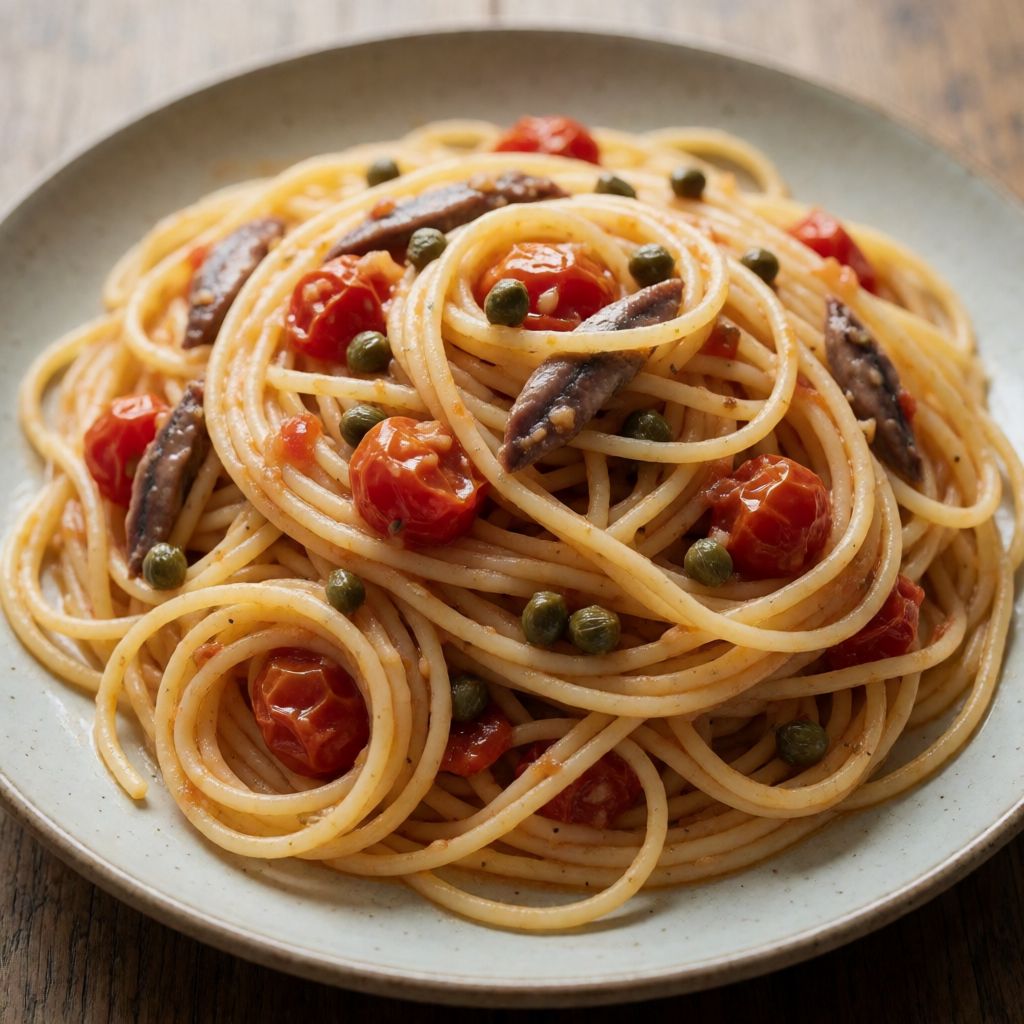
 AI photo
St John's Spaghetti
A quick Sicilian-style spaghetti with anchovies, cherry tomatoes and capers.
Labels are worked out automatically from the ingredients and can be wrong. Check the packaging if it matters to you.
Ingredients
- 2 pcs salted anchovies
- 1 clove garlic
- 250 g cherry tomatoes halved
- 2 tbsp capers in vinegar drained
- 2 tbsp sunflower oil
- 8 tbsp water
- 100 g spaghetti
- 1 pinch salt







Steps
Heat the oil in a pan, add the garlic and salted anchovies, and cook until the anchovies melt.
Halve the cherry tomatoes and add them to the pan together with the capers.
Add 8 tablespoons of water and cook over medium heat.
13 minBoil the spaghetti in plenty of salted water until done, toss quickly with the sauce and serve hot.
What was changed
We've used capers in vinegar, as they are easy to find ready-jarred in British shops.
This is a fast weeknight sauce built the way Italians build a thousand of them: dissolve something salty into fat, throw in acid and sweetness, bind it to the pasta at the end. The anchovy doesn't survive as a fillet here — it melts, and that's the whole trick. You're not adding fish flavour, you're adding depth, the kind you can't taste as fish at all once it's gone into the oil.
Some say anchovies make a dish taste fishy. No — because a fillet left whole tastes of fish, but a fillet melted into hot oil disappears into salt and savour, the way an onion disappears into a stew. If you can still see anchovy shape in the pan, you haven't given it long enough; if you can taste 'fish' on the fork, the oil was too hot and it fried instead of dissolved.
What decides whether this works is heat control at two separate moments: low and patient for the anchovy-garlic melt, so the garlic doesn't scorch and turn bitter before the fish gives up its salt; then a steadier simmer for the tomatoes, long enough that they collapse from firm little balls into a loose, clinging sauce rather than staying as hot tomato halves swimming in water. The thirteen minutes in the recipe is a floor, not a finish line — you're watching for the tomatoes to break down and the liquid to thicken slightly, not for a timer to ring.
The last move, tossing the drained spaghetti straight into the pan, is where the dish either becomes a sauce or stays a soup with noodles in it. Do it hot, do it quick, and let a little of the pasta's own starchy water finish the emulsion if the pan looks dry.
Anchovies: buy the salted kind, not the ones packed soft in oil if you can help it — the salt-cured ones hold their shape until heat breaks them down, which is exactly the control you want. If yours taste aggressively salty on their own, that's fine, it's doing your seasoning job for you; just go easy on the pinch of salt at the end, taste before you add it. No anchovies in the cupboard? A dash of Worcestershire sauce or a teaspoon of fish sauce gives you the same thing — a salty ferment that dissolves into the fat rather than sitting in it as a lump.
Garlic: one clove, and the reason it's only one is the same reason you keep the heat low at this stage — garlic burns fast and bitterness doesn't cook back out. If your clove is large or you like it stronger, slice it rather than mince it; a sliver browns evenly and you can see trouble coming before it's ruined.
Cherry tomatoes: the whole sauce depends on these actually being sweet and ripe, not just red. British supermarket tomatoes are often bred to survive a lorry journey, not to taste of anything, which is a fair trade for them and a bad one for you. If what's in the shop looks pale and hard, a tin of good cherry tomatoes (or even chopped plum tomatoes) will give you more flavour than sad fresh ones — cooking was always going to break them down anyway, so ripeness on the vine matters less than ripeness in the can.
Capers: drained, not rinsed to death — their job is a sharp, briny pop against the sweetness of the tomato, and washing all the vinegar off them is washing off the point. No capers, use a few green olives, roughly chopped; different brine, same contrast.
Oil: sunflower is fine here because this step needs an oil with no character of its own — it's a carrier for the anchovy and garlic, not a flavour in its own right. Save a fruity olive oil for drizzling on something raw later; heat this hard enough to melt an anchovy and a good olive oil's aroma is gone anyway, so you'd be wasting the expensive one.
Water and pasta: the eight tablespoons of water in the sauce isn't there to boil anything, it's there to give the tomatoes room to break down without scorching before they've released their own juice — think of it as insurance against a dry pan, not a quantity to measure obsessively. Spaghetti at 100g is a single, honest portion — scale it up by the same amount per person if you're feeding more than one, and salt that pasta water properly, since almost nothing else in this dish is going to season the strand itself. And give the anchovy its minute or two to vanish before you add anything else — patience here is the difference between a sauce with backbone and one that just tastes of tinned tomato with garlic in it.