
 AI photo
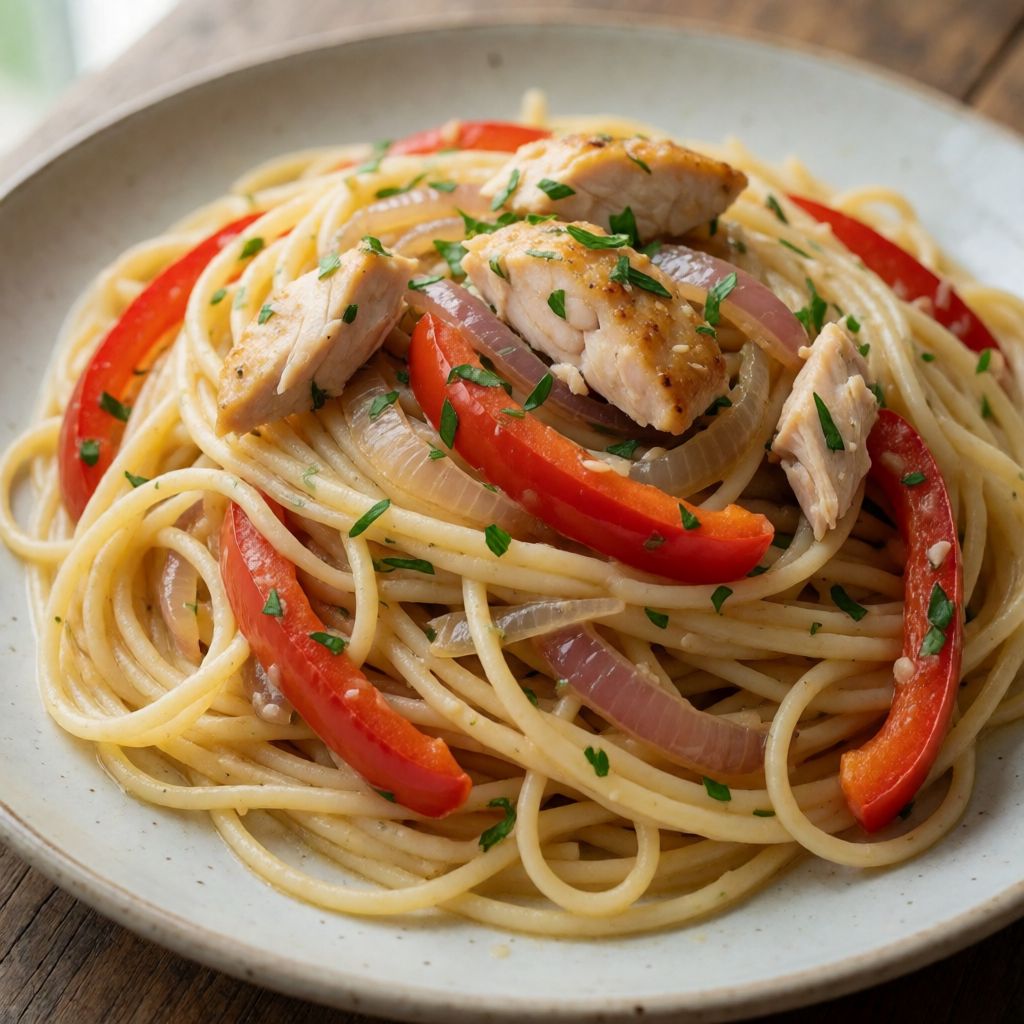
Spaghettini with Red Pepper and Mackerel
A quick pasta dish of spaghettini, sweet red pepper and tinned mackerel, ready in half an hour for a simple dinner.
Labels are worked out automatically from the ingredients and can be wrong. Check the packaging if it matters to you.
Ingredients
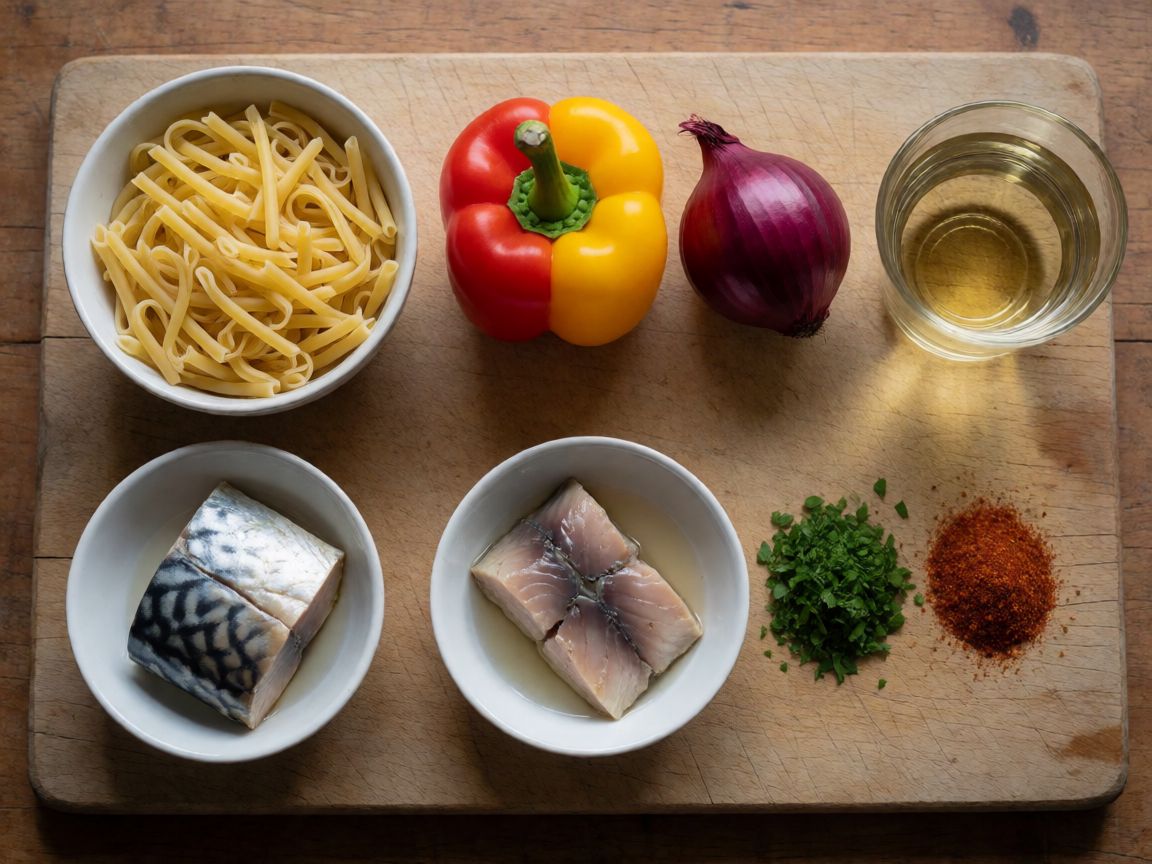
- 400 g Spaghettini
- 1 pcs Red Pepper
- 1 pcs Red Onion
- 8 tbsp White Wine
- 240 g Tinned Mackerel Fillets in brine, drained and flaked
- Parsley to taste
- Salt to taste
- Chilli Powder to taste








Steps
In a pan, fry the very thinly sliced onion.
Add the red pepper, cut into strips, pour in a tablespoon of warm water, cover, lower the heat and cook gently.
10 minAdd the mackerel, drained and flaked.
Pour in the white wine and let it evaporate, then continue cooking for a few more minutes until done.
Add salt, a pinch of chilli powder, and sprinkle generously with parsley.
Cook the spaghettini, drain while al dente, transfer to the pan and fry together for a few more minutes.
Serve immediately.
This is a pan dish built on three different clocks running at once, and the whole trick is getting them to finish together. The onion wants to go slow, soft, almost sweet. The pepper wants gentle steam, not fire. The mackerel is already cooked — it only needs warming through and breaking apart with a fork, nothing more. Get those three timings wrong and you either have raw pepper with burnt onion, or fish gone to grey paste because someone treated tinned fish like raw fish and "cooked" it for ten minutes.
What decides the result is restraint, not skill. The onion, sliced thin, caramelises evenly because there's less of it to heat through at once — thick half-moons burn at the edge before the middle softens. The pepper goes in with just a spoon of water under a cover, because what you want is steam, not char. Some say a pepper only tastes sweet once it's blistered black over open flame — no, because the sugar is already there in the flesh; heat only has to break down the cell walls to release it, and steam does that as well as fire, just without the smoke alarm going off in a flat with no extractor worth the name.
The wine isn't there to make a sauce. It's there to lift whatever stuck to the pan from the onion and pepper, and then it has to go — you're waiting for the sharp, raw-alcohol smell to turn into something rounder, almost sweet. That's the cue, not a stopwatch. If you pull the pan off while it still smells of the bottle, the dish will taste of it too.
On the ingredients, start with the fish, because it's the one people get most suspicious about. Tinned mackerel in brine is already cooked — pressure-cooked in the tin, bones softened to nothing, flesh set. That's not a shortcut forced on you by a tin opener; it's the reason the whole dish can be ready in half an hour. Fresh mackerel would need its own pan and its own timing, and you'd be building a different recipe. Choose brine over oil or tomato sauce here — oil adds a second fat you don't need, and tomato sauce turns this into something else entirely. When you fold it in, do it gently and briefly: you want flakes, not paste. Stir it like scrambled eggs, not like mince.
The pepper should be a sweet one with enough flesh on it to hold up through ten minutes of covered, low heat without collapsing to rag. Red is traditional here mostly for colour against the onion and the dark fish, not because yellow or orange won't do the same job — any thick-walled sweet pepper behaves the same way under steam.
Red onion earns its place by being milder raw and sweeter cooked than a white or brown one, which matters when it's sliced paper-thin and going in alone, with nothing yet to soften its bite. If you only have a white onion, it'll work — just expect a touch more sharpness at the start, and give it a minute longer before the pepper joins it.
The wine's job is acid plus something that evaporates cleanly, carrying its own smell away as it goes. A dry white does this without leaving sweetness behind. If you've nothing but a half-empty bottle gone slightly flat in the fridge, that's fine — flat wine still lifts the pan, it's lost nothing but bubbles. Dry vermouth is close enough in a pinch. Water with a splash of vinegar is the last resort, and it'll taste like one.
Parsley wants to be fresh — dried parsley has given up its smell long before it reaches your cupboard, it's only there for colour by that point, which defeats its purpose here. The chilli powder is a pinch for warmth in the background, not for heat you notice on its own; add it with the salt, taste once the fish is in, and adjust.
On kitchen terms: nobody's pan at home has a lid shaped to it, so a plate set over the pan does the same job for that one covered step — it traps the steam from the spoon of water well enough, which is all that's being asked of it. And your hob won't throw the flame a trattoria burner does, so the wine may take longer to lose its smell than you'd guess — stand by it, nose over the pan, rather than setting a timer and walking off. That waiting is not dead time. It's the one ingredient in this recipe you can't buy — patience, spent in small amounts, three or four times over, is what keeps the onion from scorching, the pepper from going to mush, and the fish from turning to paste before the pasta ever reaches the pan.