
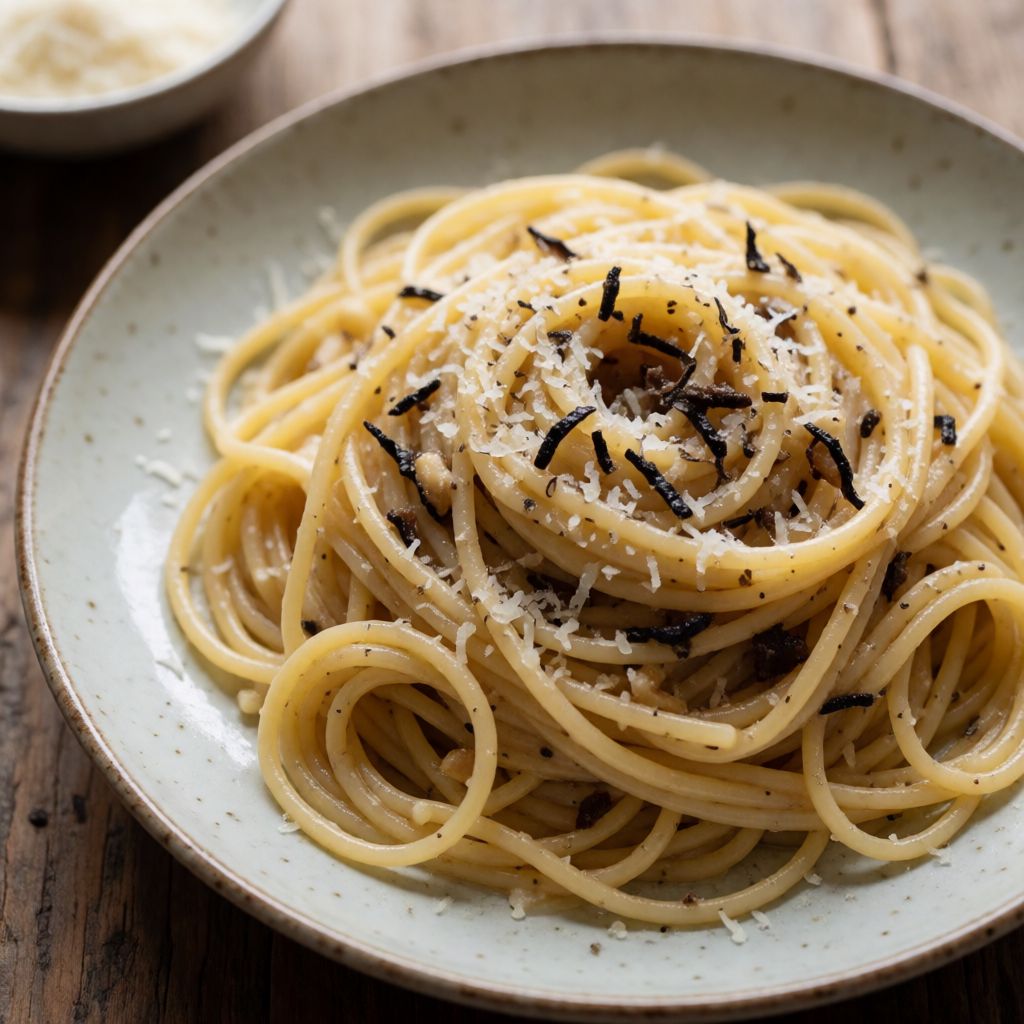
 AI photo
Spaghetti with Black Truffle
A simple, luxurious pasta dish where black truffle is the star, finished with butter and a touch of Parmesan.
Labels are worked out automatically from the ingredients and can be wrong. Check the packaging if it matters to you.
Ingredients
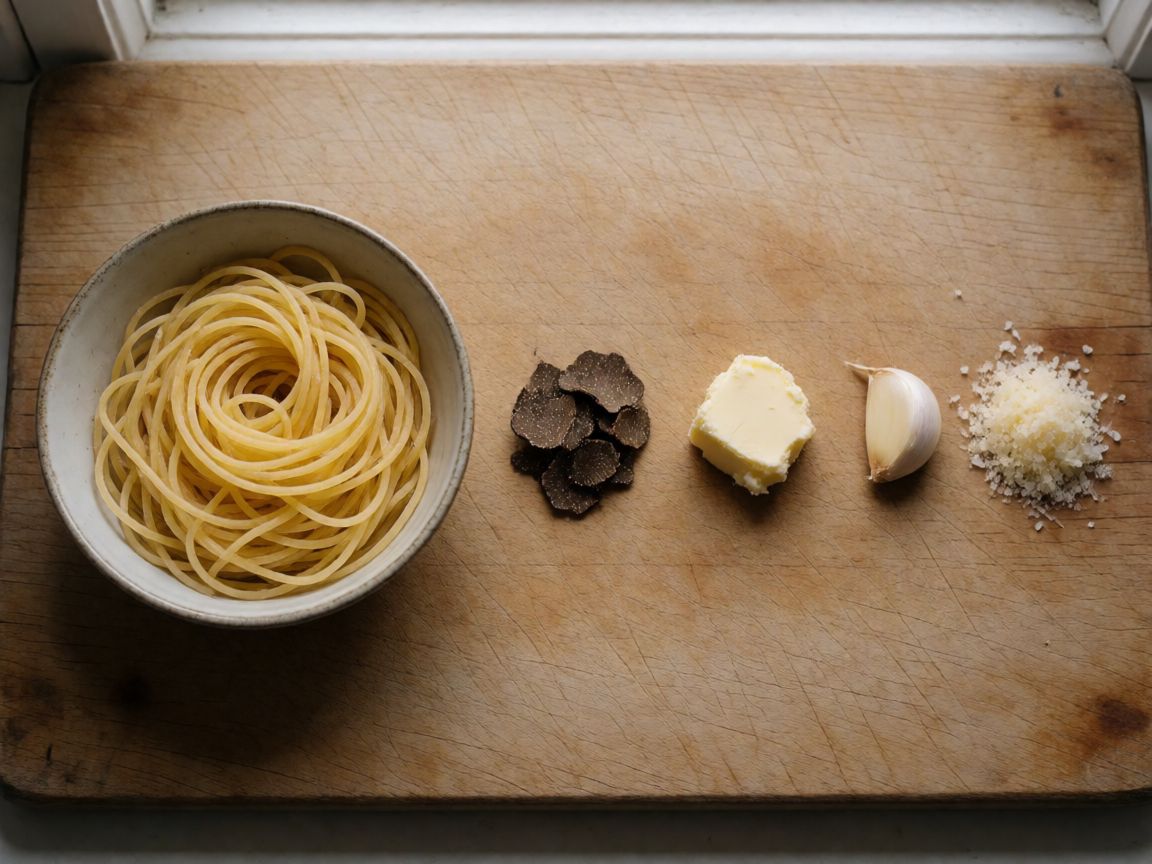






Steps
Clean the truffle thoroughly with a brush, then grate it or slice it thinly.
In a pan with a little butter, fry an unpeeled garlic clove, add the truffle and cook over a very low heat.
10 minRemove the pan from the heat, add the remaining butter — it should melt without further heating — and season with salt to taste.
Cook the spaghetti until al dente, drain and toss with the truffle sauce.
Sprinkle with grated Parmesan to taste, if you like, and serve.
This is not really a pasta dish with a sauce on it. It's a dish built entirely around one ingredient's smell, and spaghetti is just the vehicle that carries that smell to your mouth in warm, grippy strands. Truffle itself has almost no taste worth mentioning — what you're chasing is aroma, and aroma is a volatile thing, it leaves the food the moment you give it too much heat or too much time. Everything in this recipe is there to stop that from happening.
That's why the heat under the truffle is described as 'very low' and nothing more specific — because there's no number that matters here, only the fact that nothing should sizzle, bubble or brown. You're warming fat, not cooking truffle. The unpeeled garlic clove sitting in the butter isn't there for flavour in any serious sense — it's a buffer between the hot metal and the truffle, slowing the transfer of heat, giving the pan a gentler character before the truffle ever touches it.
And this is also why the rest of the butter goes in off the heat, melting from residual warmth alone. Every extra minute of cooking after that point is a minute the aroma spends escaping into your kitchen instead of staying in the pan. Some cooks assume more cooking means more infusion — no, because with truffle it works the other way: more cooking means more evaporation, less dish.
On the truffle itself: buy it firm, heavy for its size, and strong-smelling before you've even cut into it — if it smells like very little in the shop, it will smell of nothing on the plate. If you have none, don't reach for bottled 'truffle oil' as a stand-in — most of what's sold under that name is a synthetic aroma compound dissolved in flavourless oil, not actual truffle, and it will teach your nose the wrong thing entirely. There's no honest substitute for truffle in a truffle dish; if you don't have it, this becomes a different, perfectly nice garlic-and-butter spaghetti, and that's fine, just don't call it the same thing.
Butter is doing real chemical work here, not just richness: truffle's aroma compounds are fat-soluble, which is exactly why they dissolve into butter and cling to warm pasta rather than washing away in the cooking water. If you want a substitute, the criterion is simple — any fat with no smell of its own, so it doesn't compete. A light, flavourless olive oil works; a loud, grassy extra virgin one doesn't, because now you've got two smells arguing instead of one carrying.
The garlic clove stays unpeeled on purpose — its job is to season the fat mildly and slowly, through the skin, not to dissolve into the sauce. Fish it out before serving, or leave it for whoever at the table likes gnawing on soft, butter-cooked garlic — either way, it was never meant to be eaten as a main event.
Parmesan is marked 'to taste' for a reason, and this is one of those places where a strict old rule turns out to be mostly right: strong aged cheese, with its own fat and protein, can sit on top of truffle's aroma and muffle it rather than complement it. Use it lightly if at all — this isn't a dish to bury in cheese, it's one to taste through.
On your hob: there is rarely a setting on a domestic cooker that gives you a true, gentle, kazan-style simmer of fat at the bottom of its dial — the lowest ring can still run hotter than you'd like. If the butter starts to colour or smell nutty, pull the pan half off the ring rather than fighting the dial. Ten minutes of apparent nothing happening is the whole trick of this recipe — patience is the one ingredient not listed with a weight, and here it matters more than the truffle's price tag.
For the pasta itself: cook it to a real bite, not soft, because starch that's gone past al dente coats the tongue and mutes exactly the delicate smell you spent all this care protecting. Toss it hot, straight from the water, into the truffle butter — the steam still coming off the strands is what carries the aroma up to your face as you eat, which is, in the end, most of what this dish is for.