
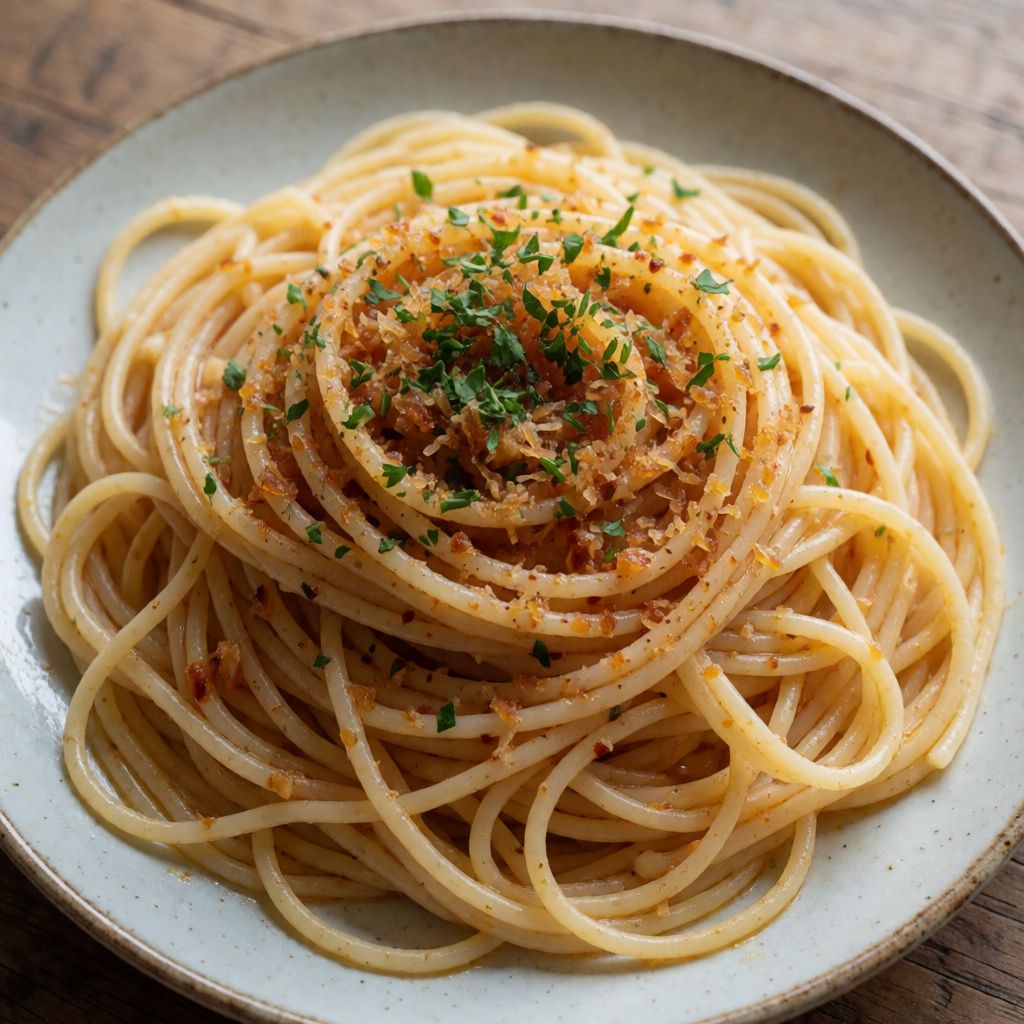
 AI photo
Spaghetti with Bottarga
A simple Italian-style spaghetti dish with cherry tomatoes, garlic, chilli and prized cured fish roe (bottarga).
Labels are worked out automatically from the ingredients and can be wrong. Check the packaging if it matters to you.
Ingredients
- 500 g Spaghetti
- 20 pcs Cherry Tomatoes
- 3 clove Garlic
- Chilli Powder to taste
- Parsley to taste
- Olive Oil to taste
- Salt to taste
- Bottarga (Cured Mullet Roe) to taste








Steps
Put the garlic, cherry tomatoes, chilli powder, parsley, salt, olive oil and bottarga into a fairly large frying pan — all raw.
Cook over medium heat, crushing the cherry tomatoes with a wooden spatula.
15 minMeanwhile, cook the spaghetti.
Drain the spaghetti and toss it with the sauce from the pan.
This is a one-pan, no-stock sauce — the kind a fishing family puts together with whatever is already in the house plus the one thing worth real money: bottarga, the salted and dried roe of grey mullet (or sometimes tuna). Everything else — tomato, garlic, chilli, parsley — exists to carry that one strong, briny flavour through the dish without drowning it.
What decides whether it works is restraint, not technique. You put raw garlic straight into cold oil alongside the tomatoes, and that's not laziness — it's protection. Garlic dropped into a hot, empty pan burns before you can blink, and burnt garlic is bitter in a way nothing afterwards can fix. Starting everything together, cold, means the tomatoes release their juice slowly and that juice keeps the garlic wet and gentle while it cooks. The heat you want is the kind that makes tomatoes slump and weep, not spit and scorch — a soft, steady bubble, not a hiss.
Doneness here is a tomato, not a clock. You crush them with the spatula and watch the skins give up, the juice thicken into something glossy, the oil separate and sit on top like it's finally relaxed. Fifteen minutes is the floor, not the answer — if your tomatoes are still holding their shape and the sauce looks watery rather than coating the spatula, it needs longer, full stop.
Bottarga is the one ingredient here that has nothing to do with convenience and everything to do with preservation. Before fridges, a fisherman's catch of roe had to survive the season, so it was salted hard and pressed and hung to dry until it turned waxy and amber. That curing is why it's sold by the gram and priced like a luxury now, even though it started as a way to waste nothing. Buy it as a whole lobe if you can — it should feel firm, not soft or sweating — and grate it yourself just before it goes in the pan, because the pre-grated jars lose their aroma to the air within days. If you genuinely can't get it, there's no true substitute, but a hard, salty aged cheese or a couple of finely chopped anchovies will at least give you the savoury backbone, without pretending to be the sea.
The cherry tomatoes are doing a second job most people miss: they are your only liquid. There's no stock, no wine, no water added, so the sauce is exactly as good as the tomatoes are ripe. Choose the reddest, softest ones you can find — a slightly underripe supermarket tomato won't collapse the same way, it'll stay rubbery under the spatula and leave you with a thin, pale liquid instead of a sauce. If cherry tomatoes aren't worth buying that week, any small, very ripe tomato halved will behave the same way. Tinned tomatoes won't — they're already broken down to a puree, and this dish needs the burst, not the paste.
Garlic and chilli powder are the backbone underneath the tomato, not flavours of their own that should be noticeable on the tongue. Three cloves for this amount of pasta is enough to perfume the oil without turning sharp — if you want it milder, bruise the cloves instead of chopping, so they give flavour slowly and you can fish them out before serving. Chilli powder works here because it dissolves evenly into the juice as it cooks; if you only have fresh chilli or flakes, either is fine, just remember flakes take longer to soften and release their heat, so give them the full simmer, not a last-minute stir.
Parsley is listed with everything else going in raw at the start, which means by the time the sauce is done, it's had its full fifteen minutes in a hot pan — the colour will have gone from bright green to a tired olive, and some of its sharpness will be gone with it. That's fine if you like a mellow, cooked herb flavour folded through. If you want the fresher bite parsley is known for, hold half of it back and stir it in raw once you've tossed the pasta through the sauce — cheap trick, no downside.
Salt is the one place this recipe can go wrong without you noticing why. Bottarga is already a cured, salted product — it's doing half your seasoning job before you've added a single grain. Taste the sauce after the bottarga has melted in, before you reach for the salt pot, or you'll end up with something that tastes of brine rather than tomato.
As for the pan: a wide frying pan standing in for a kazan is exactly right here, you don't want depth, you want surface area so the tomato juice reduces rather than steams under its own weight. No lid needed — a lid traps the steam you're trying to cook off. And on the quantities: five hundred grams is a full box of spaghetti, and that feeds four people with a normal appetite, not one — scale the tomatoes and garlic with it if you're cooking for fewer, roughly five cherry tomatoes and one clove of garlic per person is a fair ratio to start from.