
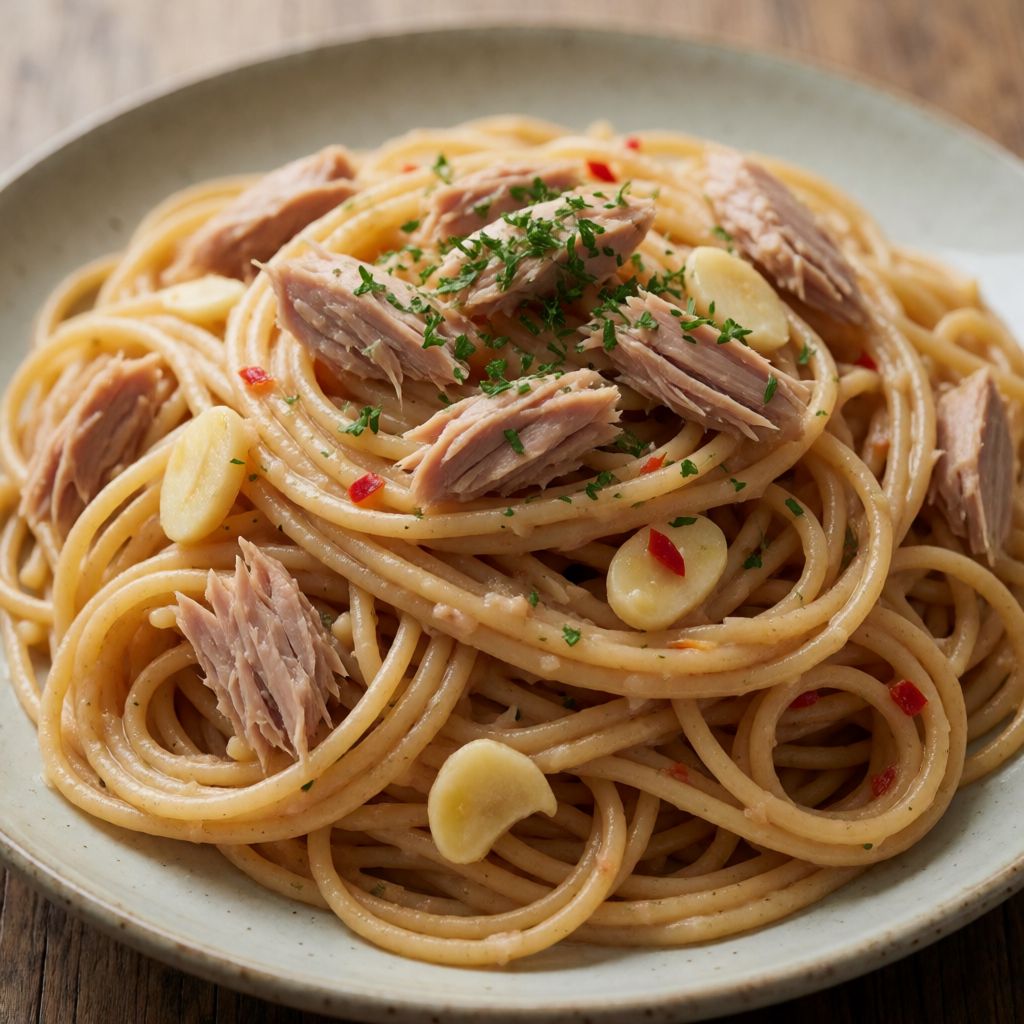
 AI photo
Whole Wheat Spaghetti with Garlic, Olive Oil, Chilli Pepper and Tuna
A quick spaghetti dish tossed with garlic, olive oil, chilli pepper and tuna.
Labels are worked out automatically from the ingredients and can be wrong. Check the packaging if it matters to you.
Ingredients
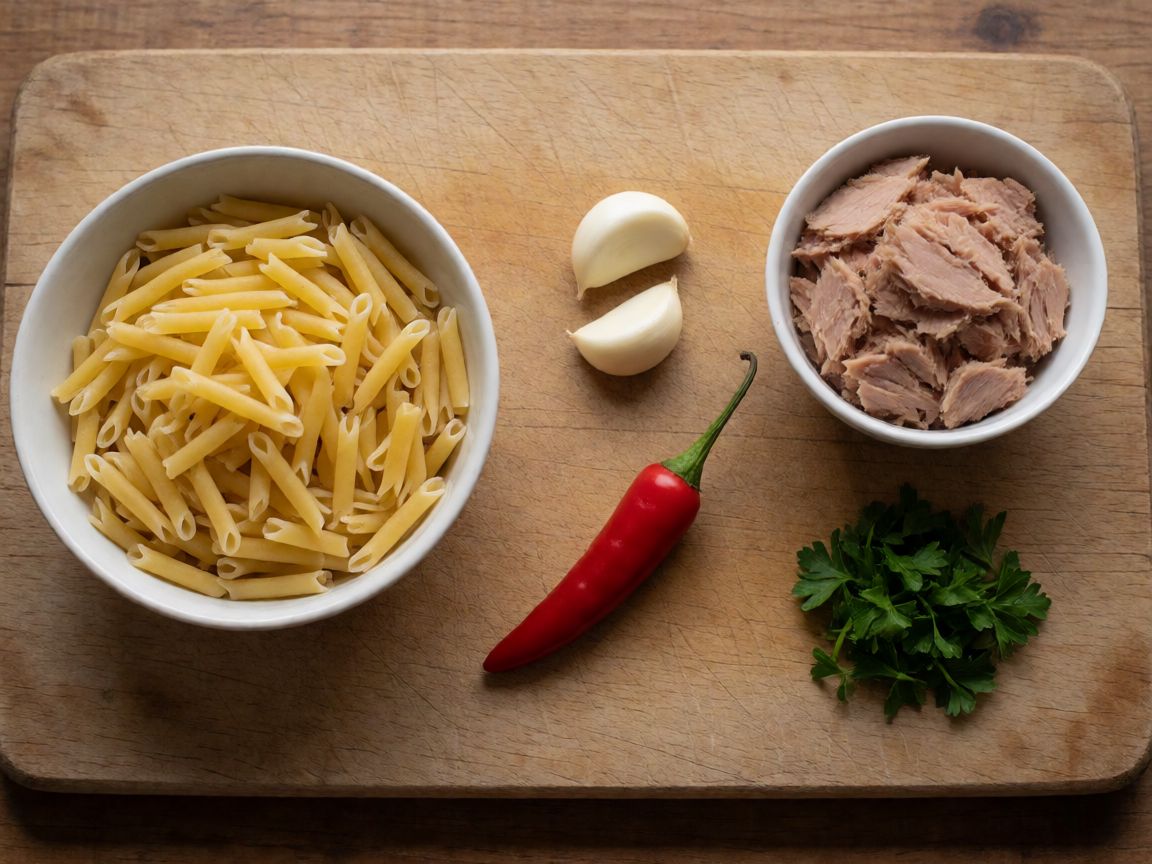
- 400 g Whole Wheat Spaghetti
- 2 clove Garlic
- 1 pcs Fresh Chilli Pepper fresh
- 160 g Tuna in Olive Oil drained
- 1 bunch Parsley
- 2 tbsp Olive Oil
- 1 pinch Salt







Steps
In a frying pan, sauté the finely chopped garlic and crushed chilli pepper in 2 tbsp of olive oil, taking care that the garlic does not burn.
3 minAdd the drained tuna in oil, flaked with a fork.
1 minCook the spaghetti until al dente, then drain.
5 minToss the spaghetti into the pan and fry for a few minutes, generously sprinkled with fresh chopped parsley.
2 min
This is a fisherman's pasta — aglio, olio e peperoncino with tuna folded in, built for the ten minutes you have when the boat's back late and nobody wants to stand over a stove all evening. Four people, one pan, one pot: the whole thing lives or dies on two small decisions made before the spaghetti even goes in the water.
First: what happens to the garlic in the oil. You're not frying it, you're infusing the oil — garlic's flavour compounds are fat-soluble, so a gentle heat (oil that shimmers, never cracks or spits) pulls them out slowly. Patience here is not a virtue, it's an ingredient: three minutes of actually watching the pan, not stirring with one eye on your phone. Push past gold and garlic doesn't get "more garlicky" — it turns bitter, and that bitterness does not cook out later, no matter what you add on top of it. The sign is colour, pale straw, not a clock.
Second: the tuna. It's already cooked — tinned months ago, shelf-stable. In that pan you're warming it and letting its own oil marry the garlic oil, not cooking it a second time. Handle it roughly in a hot pan and it goes dry and stringy, which is the most common complaint about this dish and almost always comes from treating cooked fish like raw fish.
Some people salt the pasta water heavily and think that settles the seasoning question. Fair habit, but here the salt is already arriving from two other directions — the tin's brine and the chilli's sharpness — so that single pinch in the list is a top-up, not the main event. Taste before you add more.
Garlic — two cloves, no more, because this isn't meant to taste of garlic so much as be scented by it. Buy it firm with the skin tight; a clove showing a green shoot has already started spending its sugar on growing and tastes thinner and more bitter for it. Chop it fine and even — a rough, uneven chop means some pieces catch and char while the thicker bits stay raw, and you get both faults in the same mouthful.
Chilli — one, fresh, crushed rather than sliced, so it bruises and bleeds capsaicin straight into the oil instead of sitting there whole for decoration. The idea that the seeds carry the heat is backwards — capsaicin lives mostly in the white membrane the seeds cling to, which is why scraping seeds out and leaving the pith does nothing useful. No fresh chilli to hand? A pinch of dried flake does the job, but dried chilli has already given up its water, so it releases heat into hot oil faster — watch it, don't trust the same three minutes.
Tuna in olive oil, drained — the oil it was packed in matters as much as the fish, because it's already picked up tuna flavour and folds that straight into the garlic oil. Tuna in brine or water works if that's what's in the cupboard, but you lose that layer, so make it up with a little extra olive oil of your own.
Olive oil, two tablespoons — here it's not a cooking medium you can swap for anything neutral, it's a flavour in its own right, so use one that actually tastes of something. What you can't dodge is that it has a lower smoke point than a flavourless oil, which is one more reason the garlic step wants gentleness and not a roaring ring.
Parsley, a whole bunch, chopped and added right at the end off real heat — it's raw on purpose, for the sharp green smell and a bit of colour against all that pale oil and garlic. Cook it even briefly and you lose both reasons for having it.
Whole wheat spaghetti, 400g for four, holds its bite a touch longer than white pasta, so test it the honest way — pull a strand, bite it, feel resistance in the middle — rather than trusting the packet's minutes to the second. The old trick of throwing a strand at the wall tells you about escaped starch, nothing about whether the centre's cooked; ignore it. And on an ordinary British hob, you're not going to get trattoria heat, nor do you need it — a domestic ring on a middling setting is already close to what the garlic wants, it just recovers slower if you walk off, so stay by the pan for those few minutes rather than wandering off to put the kettle on.