
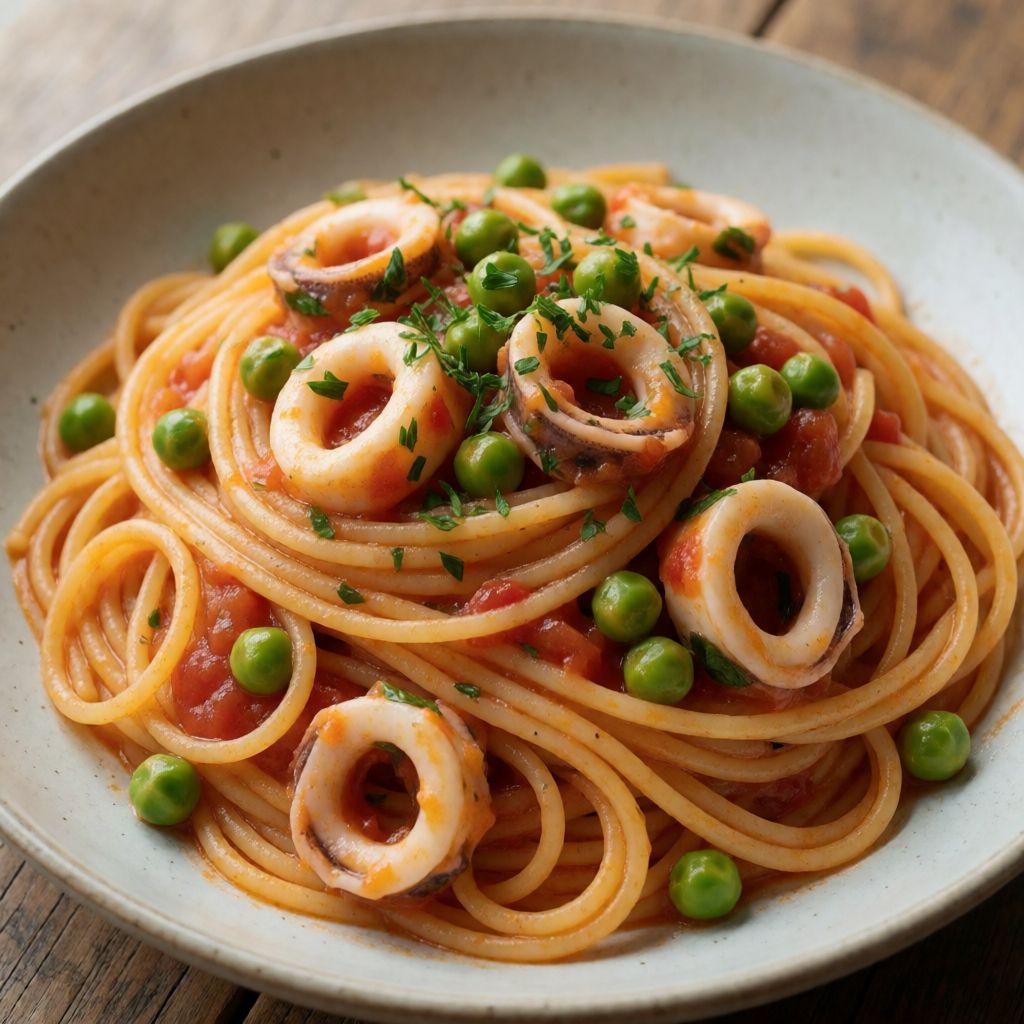
 AI photo
Spaghetti with Squid and Pea Sauce
A rich pasta sauce of squid, tomato and peas, simmered slowly and tossed with spaghetti.
Labels are worked out automatically from the ingredients and can be wrong. Check the packaging if it matters to you.
Ingredients
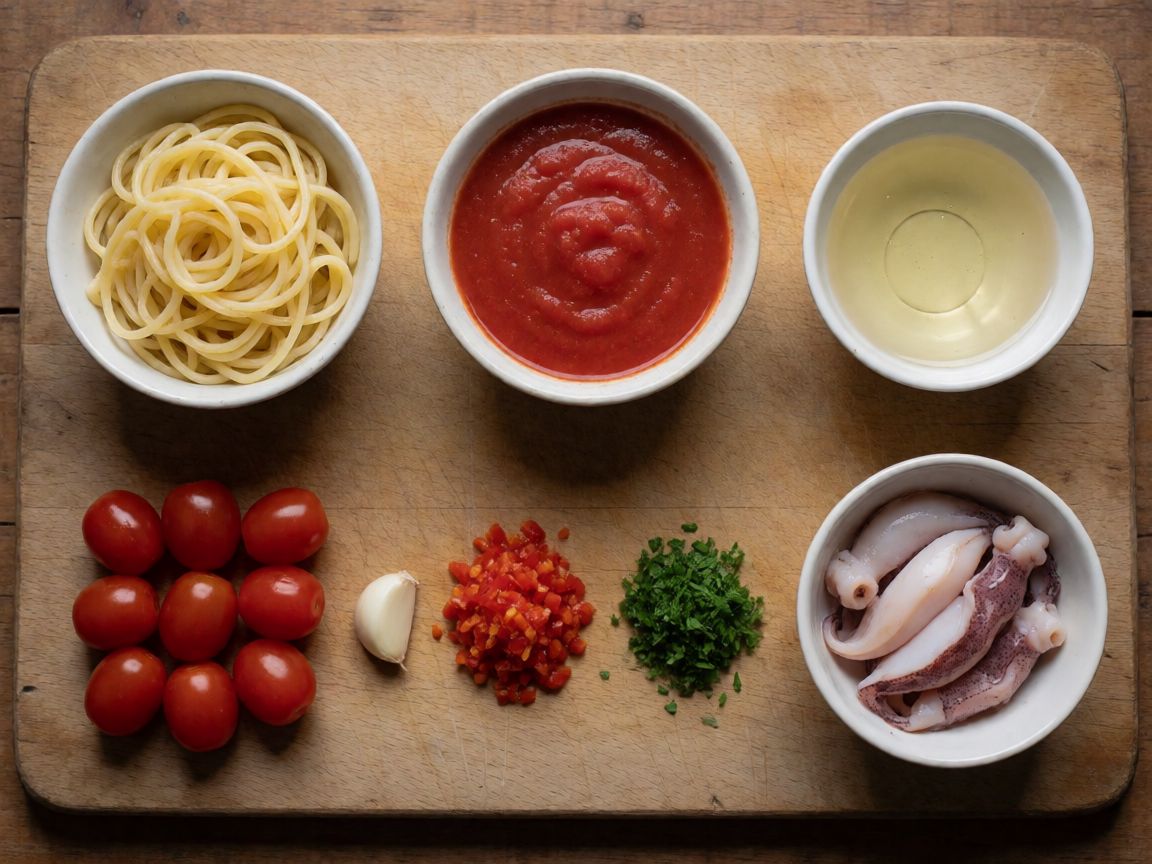
- 400 g Spaghetti
- 200 g Tomato passata
- 10 pcs Cherry tomatoes
- 1 clove Garlic
- Chopped chilli to taste
- Parsley to taste
- 400 g Squid
- 125 ml White wine
- 200 g Peas
- 3 pcs Salted anchovies rinsed well
- 1 pinch Salt to taste











Steps
In a pan, fry the chopped garlic, parsley and chilli.
Add the well-rinsed salted anchovies and wait until they melt into the oil.
Add the squid, pour in the white wine and let it evaporate completely.
Simmer over low heat.
20 minAdd the tomato passata, halved cherry tomatoes and peas, and cook further. Doneness: 63°C at the thickest point.
Season the sauce with salt to taste.
Cook the spaghetti in salted water until al dente.
Drain, toss the spaghetti with the sauce, sprinkle with parsley and serve.
This is squid cooked slowly enough to forget it's squid — a sauce where anchovy, wine and tomato do the work of turning seafood into something closer to a ragù. The whole dish stands or falls on one decision: how long you let the squid sit over low heat before the tomatoes go in. Rush that, and you get rubber bands in a nice sauce.
Squid has two settings — raw-soft for seconds in a hot wok, or long-and-slow until the connective tissue gives up and the flesh turns tender again. There is no good middle: 90 seconds to 2 minutes, or the better part of half an hour. This recipe takes the second route, which is also the one that suits a domestic hob — you're not chasing a blazing kazan-heat moment, you're letting a pan sit and do nothing dramatic for a while. That 20-minute simmer isn't padding, it's the whole mechanism: collagen in squid needs time and gentle heat to soften, the same way a tough cut of beef does, just faster because the pieces are smaller.
The anchovies aren't there to taste "fishy" — they're there to disappear. Rinsed of their salt crust and melted into warm oil, they break down into glutamates that make the base taste deeper than its ingredients suggest, the same trick behind a good Bolognese or a Caesar dressing. You won't find them on the plate. If someone at the table claims to hate anchovies, don't argue — just don't tell them, and watch them eat the sauce anyway.
Squid: buy it already cleaned if you can — most UK fishmongers and supermarket fish counters sell squid tubes ready-prepped, tentacles separate. Size matters less than you'd think, but smaller squid (tubes under 10cm) tend to be more forgiving when stewed; big ones can go chewy even with the long simmer if you cut them too thickly. Slice into rings or strips roughly a centimetre wide so the heat gets through evenly. Frozen squid, defrosted properly in the fridge, works just as well as fresh — freezing actually helps break down some of the toughness, which is useful here, not a compromise.
Salted anchovies, rinsed well: this is not the same as anchovy fillets in oil from a jar, though those will do in a pinch — use fewer, since they're saltier and more aggressive in flavour, and skip adding extra salt until you've tasted the sauce. The rinsing step for salt-packed ones exists because under that crust is a lot of salt used originally to preserve the fish before refrigeration — an old method of keeping anchovies edible for months, not a flavour choice. Rinse properly or the whole sauce tips salty.
Tomato passata and cherry tomatoes together, not one or the other: passata gives you the smooth body and quick-cooking base: cherry tomatoes, halved, give pockets of fresher, brighter acidity and bits of texture that don't fully dissolve. If you've only got tinned chopped tomatoes, blitz them smoother and use slightly less liquid, since they're wetter than passata.
Peas: fresh if they're in season, frozen the rest of the year — and don't feel guilty about frozen, they're podded and frozen within hours of picking, often fresher in nutrient terms than "fresh" peas that have sat in a lorry for days. Add them towards the end regardless, so they keep some bite and colour rather than turning grey and mushy.
White wine: its job is to deglaze the pan and burn off its harsher alcohol edge before the tomato goes in — "let it evaporate completely" is the instruction that matters, not the quantity. Any dry white without heavy oak or sweetness works; if you don't cook with wine, a splash of water with a squeeze of lemon gets you some of the acidity, though not quite the same depth.
Chilli and garlic: to taste genuinely means to taste — this isn't a dish that needs heat to work, it needs it to wake up. If you're nervous of chilli, start with a pinch and taste the oil before the anchovies go in, since that's your only chance to adjust it before everything else joins in.
A domestic hob note: don't rush the simmer by cranking the heat to speed things up. A squid sauce that boils hard tightens the proteins fast and you're back to rubber; what you want is a gentle, patient bubble, the kind where the sauce moves but doesn't fight you. Patience, here, really is the main ingredient — the rest is just squid and tins.