
 AI photo
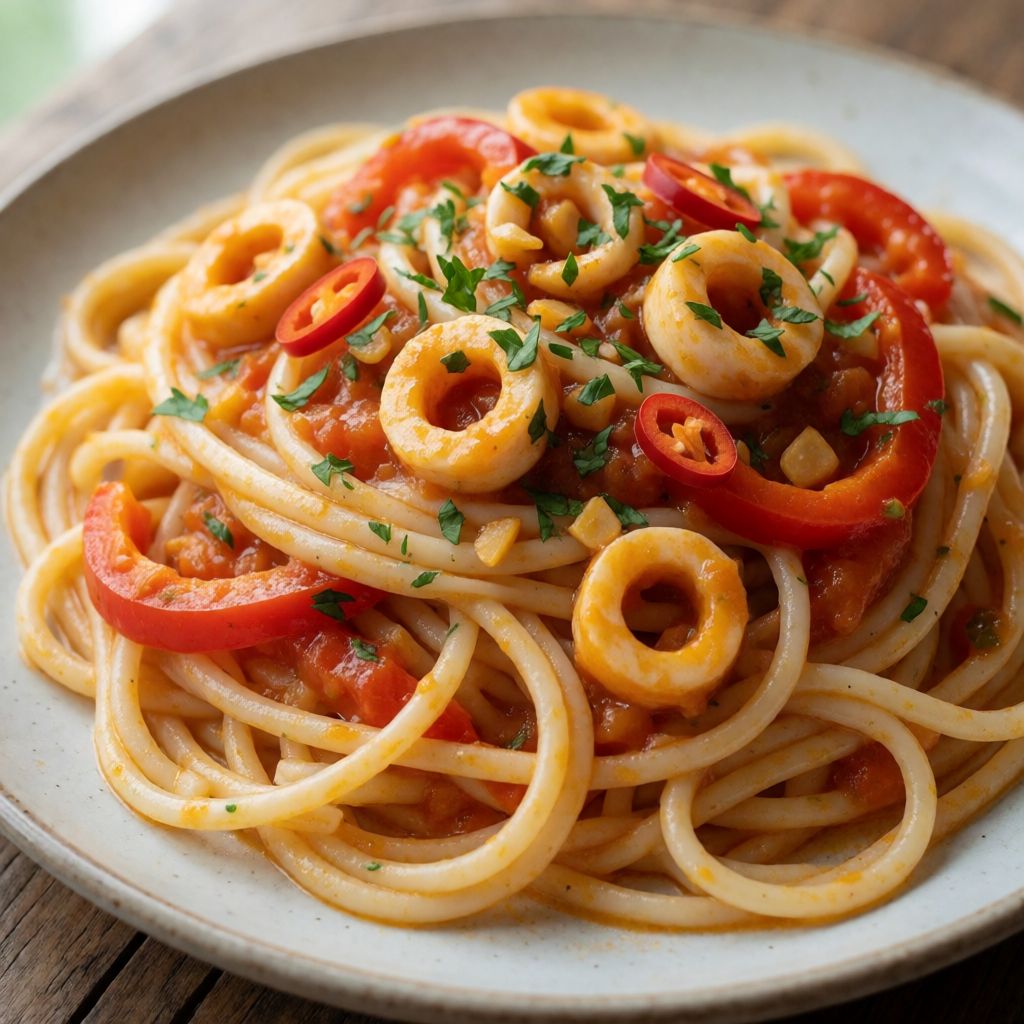
Spaghettoni with Squid and Pepper Sauce
A rich pasta sauce of squid, peppers, tomato and anchovy, finished with white wine and parsley.
Labels are worked out automatically from the ingredients and can be wrong. Check the packaging if it matters to you.
Ingredients
- 500 g Squid
- 1 clove Garlic
- 1 pcs Fresh chilli pepper
- Parsley to taste
- 2 pcs Peppers
- 200 g Tomato
- 3 pcs Anchovies in oil
- 2 tbsp Olive oil
- 125 ml White wine
- 350 g Spaghettoni
- Salt to taste











Steps
Cut the squid into small pieces.
Heat the olive oil in a pan and fry the chopped garlic, chilli and anchovies.
Add the squid, pour in the wine and let it reduce slightly, then add the chopped peppers, cover and simmer on low heat.
25 minAdd the chopped tomato and cook further. Doneness: 63°C at the thickest point.
Season with salt to taste and sprinkle generously with chopped parsley.
Boil the spaghettoni in plenty of salted water.
Drain the pasta al dente, mix with the finished sauce and serve.
This is a sauce built on a contradiction: squid wants speed, peppers want patience, and the anchovies are there to vanish. Whether it works depends on whether you treat the squid like meat (wrong) or like an egg (right) — cook it too long and it goes from tender to rubber in the time it takes you to answer the phone. The whole dish is really a timing argument dressed up as a recipe card.
Some say squid needs long, slow cooking to go tender, the way you'd braise a shin of beef. No — the opposite. Squid is mostly protein with almost no connective tissue to break down, so heat doesn't soften it, it just squeezes the water out, same as scrambling an egg too hard. That's why the method here is backwards from a Sunday roast: you flash the squid in hot fat for a minute or two at the start, pull the texture you want, and then let everything else — peppers, tomato, wine — do the slow work around it while the squid just sits there absorbing flavour instead of being cooked by it.
The anchovies aren't a fish course, they're a seasoning trick. Fried gently in oil until they collapse, they dissolve into the fat and disappear as shape but stay as savour — this is how you get a sauce that tastes like it's been simmering with stock all day, without stock. If you can't get anchovies in oil, a small spoon of nam pla or even a pinch of extra salt plus a squeeze of lemon at the end gets you partway there; it won't be the same but it won't be bland either.
The tomato goes in last and stays in only briefly, cooked just to that 63°C mark at its thickest point — past a translucent interior, short of collapsing into mush. This isn't fussiness, it's a defect you're dodging: tomato added early turns acidic and flat under long heat, fighting the sweetness the peppers worked to build. Added late, it stays bright and keeps its own shape against the softer pepper and squid.
On squid itself: 500g for four people sounds generous until you remember squid is mostly water and shrinks hard the moment it hits heat — don't buy less expecting portions to match raw weight. Fresh is better if your fishmonger has it, but frozen squid (often pre-cleaned, a real time-saver) works fine here because the brief hot sear doesn't depend on pristine freshness the way a raw squid salad would. Cut it small and even, because an uneven piece means some bits overcook while others are still raw — the usual cause of "my squid went chewy" isn't the squid, it's the knife.
Peppers: any sweet pepper works, but choose by skin, not colour — thinner-skinned ones collapse faster and give you that tender bend sooner, thick-skinned supermarket block peppers will test your patience further. If you only have one pepper, use it; the dish survives on less, it just loses some of its sweetness and bulk.
Chilli and garlic are there for lift, not heat-as-spectacle — one fresh chilli, chopped fine, gives background warmth, not a burn. If you can't get fresh, a pinch of dried chilli flakes added with the garlic does the job, just add it a beat later since dried chilli scorches faster than fresh.
Olive oil here isn't for frying at high heat, it's the medium the garlic, chilli and anchovy infuse into — use something with actual flavour, not a neutral oil, because this is one of the few places in the dish where the oil itself is tasted, not just a cooking medium. The wine's job is to deglaze and add acid lift after the squid sears; if you've none open, a splash of water with a squeeze of lemon covers the acid side of the job, though you lose the depth wine brings.
Spaghettoni — thicker than ordinary spaghetti — holds its own against a loose, oily sauce like this without going lost or slimy; if you can't find it, use the thickest long pasta your shop stocks. Salt the pasta water properly, since this is a dish with a short ingredient list and no stock cube hiding behind it — the pasta water is one of your few chances to season from inside. Parsley at the end isn't garnish for the plate's sake; it's the one raw, green, bitter note cutting through all that slow-cooked sweetness, so be generous, not decorative.