
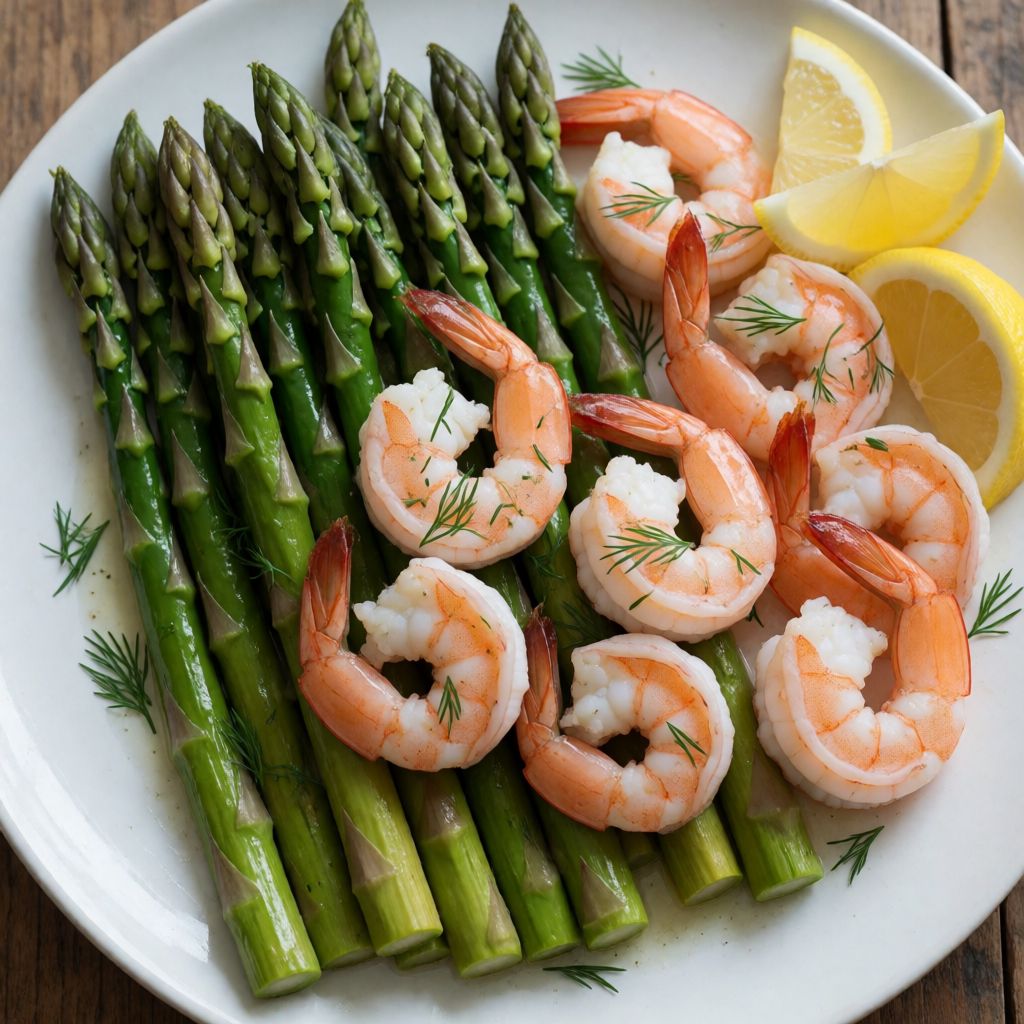
 AI photo
Asparagus with Prawns
A pan-fried dish of asparagus and prawns with garlic, lemon juice and fresh dill.
Labels are worked out automatically from the ingredients and can be wrong. Check the packaging if it matters to you.
Ingredients
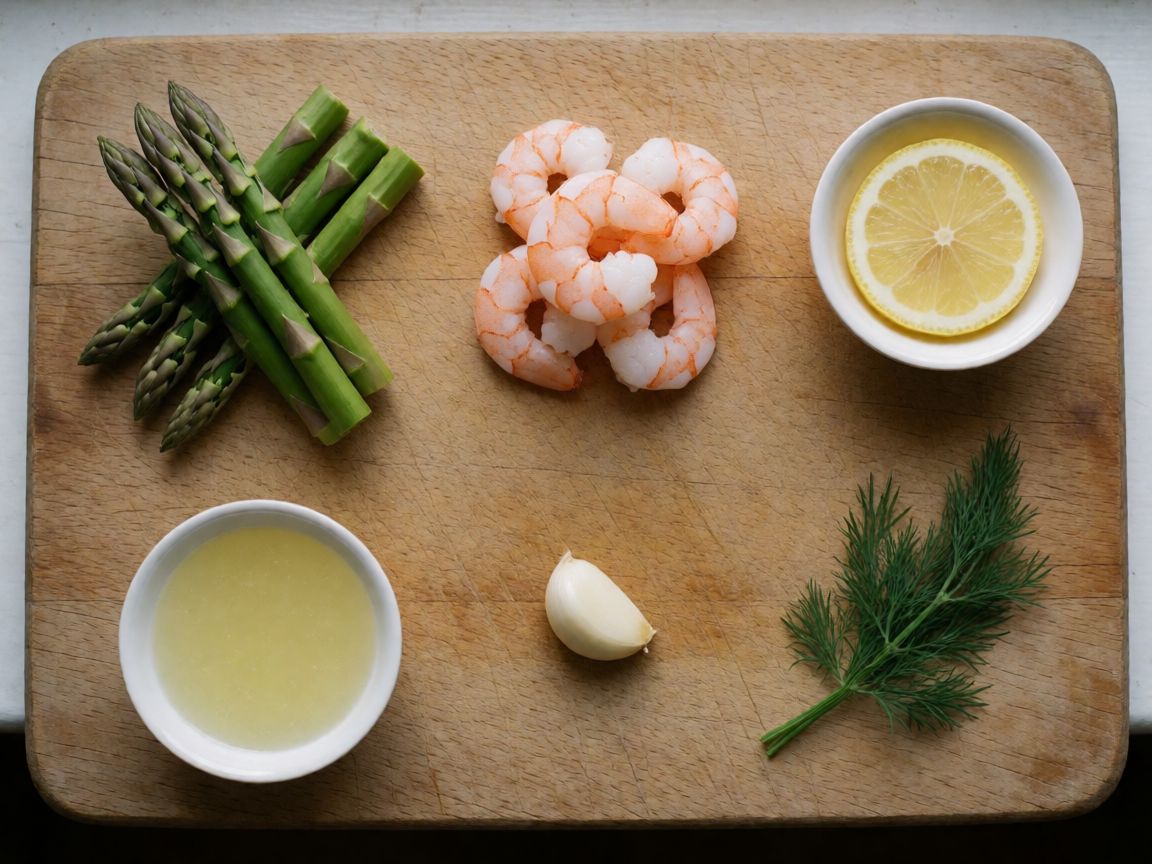






Steps
Cut along the outer part of the shell of each prawn, remove the vein, rinse and leave to drain in a colander.
Trim the asparagus, rinse, pat dry and cut into even pieces.
Finely chop the dill with a knife.
Heat the olive oil in a frying pan with the garlic, add the asparagus and sauté.
When the asparagus is half cooked, add the prawns, lemon juice and salt.
Cook until the prawns reach 63°C at their thickest point.
Turn off the heat and stir in the dill.
This is not really a recipe for asparagus, and not really one for prawns either — it's a recipe for timing two foods that cook at completely different speeds in the same pan, without either waiting for the other to catch up. Asparagus needs a few real minutes to go from raw-green to bendable. A prawn needs almost none. Put them in together and you get soggy asparagus and rubber prawns. Put them in the right order, and both land tender at the same moment.
Forget "medium heat" — nobody's stove behaves the same, and the instruction tells you nothing. What you're after at the asparagus stage is oil that shimmers but doesn't smoke, enough to soften the stalk without browning it hard, because asparagus scorched on the outside and raw in the middle is a defect of impatience, not of the vegetable. You'll know it's halfway when the colour deepens from grass-green to a darker green and the stalk starts to give slightly when you press it with a spatula — not bend fully, just lose its snap.
The 63°C the recipe mentions for the prawn is a lab number, not a kitchen one — unless you own a probe thermometer and intend to stab a prawn with it mid-sauté, which nobody does. The real tell is visual and textural: the flesh turns from grey-translucent to opaque white-pink, and the prawn curls into a loose C. A prawn curled into a tight O is a prawn that's been left in the pan too long — that's where the "rubbery prawns" complaint actually comes from, not from bad prawns, from an extra thirty seconds of heat squeezing the moisture out of the protein.
Asparagus: look for stalks that are firm enough to click, not bend, when you flex them — that's the test for freshness, not thickness. Trim the base where it turns from green to pale and woody; that part never softens no matter how long you cook it, and leaving it in is the real cause of "stringy asparagus," not the vegetable itself. Cut the spears into even lengths so they all meet the oil at the same depth — uneven pieces mean some finish before others, and you end up fishing out the thin ones while the thick ones are still raw in the middle.
Prawns: raw, shell-on if you can get them, because the shell gives up flavour into the oil as it cooks — that's free seasoning you lose with pre-peeled ones. If you're using frozen prawns, which most UK kitchens will, thaw them properly and pat them dry before they go anywhere near the pan. Wet prawns dropped into hot oil don't sauté, they steam, and the water they shed cools the pan and waters down the lemon-oil mixture you're trying to build. That's the actual reason the method tells you to drain them in a colander first — not neatness, moisture control.
Garlic and oil: the garlic goes in with the oil while it's still cold, so both come up to temperature together. Garlic dropped into oil that's already hot burns in seconds and turns bitter — that bitterness doesn't cook off, it sits on the dish. Olive oil here isn't interchangeable with just any fat; it has its own taste and that taste is part of the dish, so use one with flavour, not a bland bottle you keep for frying chips. If all you have is a neutral oil — sunflower, rapeseed, anything with no smell of its own — the dish will still work, but you're making a plainer version, and you'll want to lean harder on the lemon and dill to carry it.
Lemon juice: added when the prawns go in, not before. Lemon juice sitting on raw prawn for any length of time starts doing to the protein what it does in a ceviche — firming and slightly curing it — which is a different texture than what you want from a sautéed prawn. Added at the same moment as the heat, it just brightens the pan juices instead of pre-cooking anything.
Dill: chopped fine and stirred in only after the heat is off. Dill's whole point is a volatile, grassy smell that heat destroys in under a minute — cook it and you're left with the look of herb and none of the actual aroma. This is the one place in the recipe where patience isn't about waiting longer, it's about the opposite: resisting the urge to throw it in early because it looks like it belongs in the pan.
A note on why this combination exists at all: asparagus and prawns share a season and a coastline in southern Europe, and this kind of dish — quick pan, olive oil, a squeeze of citrus, nothing simmered for hours — comes from cooking that didn't have time to spare, not from any particular ceremony. It's weekday food dressed up by good ingredients, which is probably the most honest kind there is.