
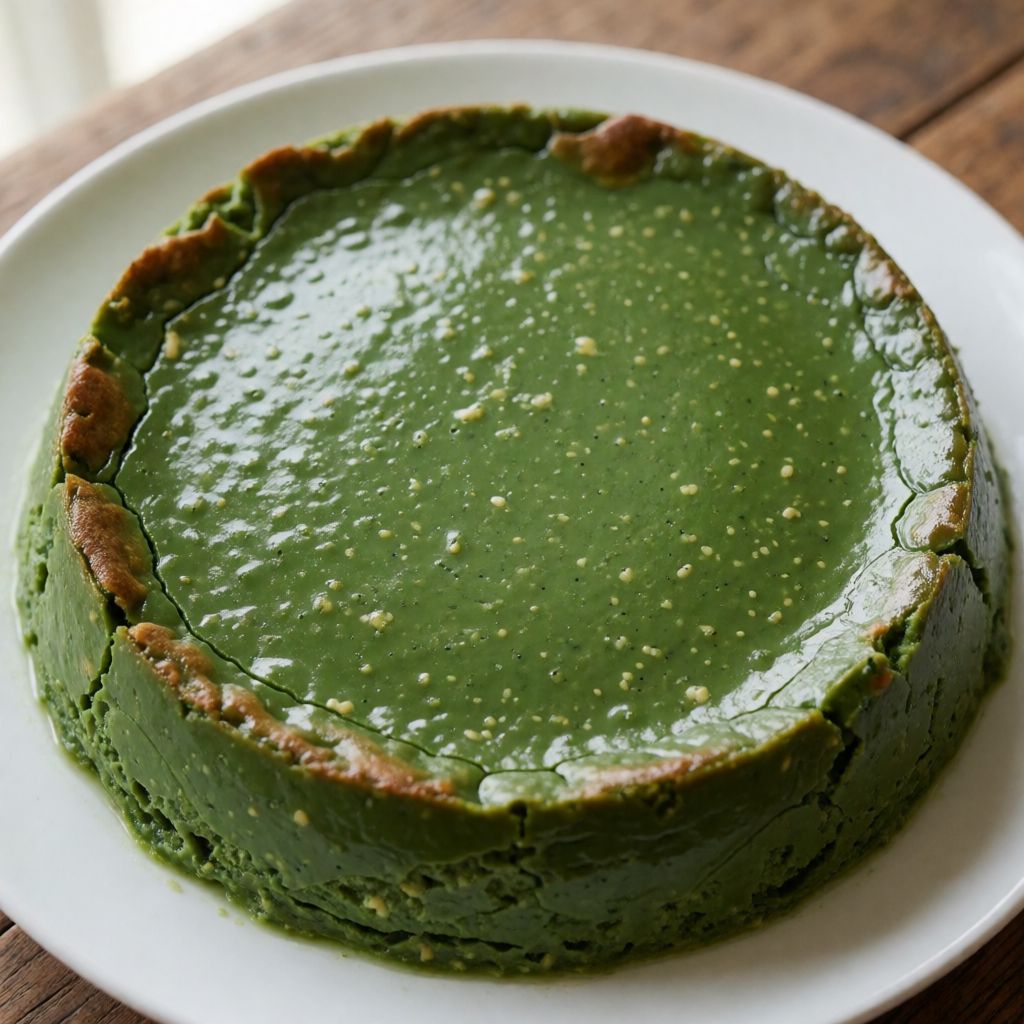
 AI photo
Spinach Flan
A light savoury spinach flan baked in individual moulds with Parmesan and Pecorino.
Labels are worked out automatically from the ingredients and can be wrong. Check the packaging if it matters to you.
Ingredients
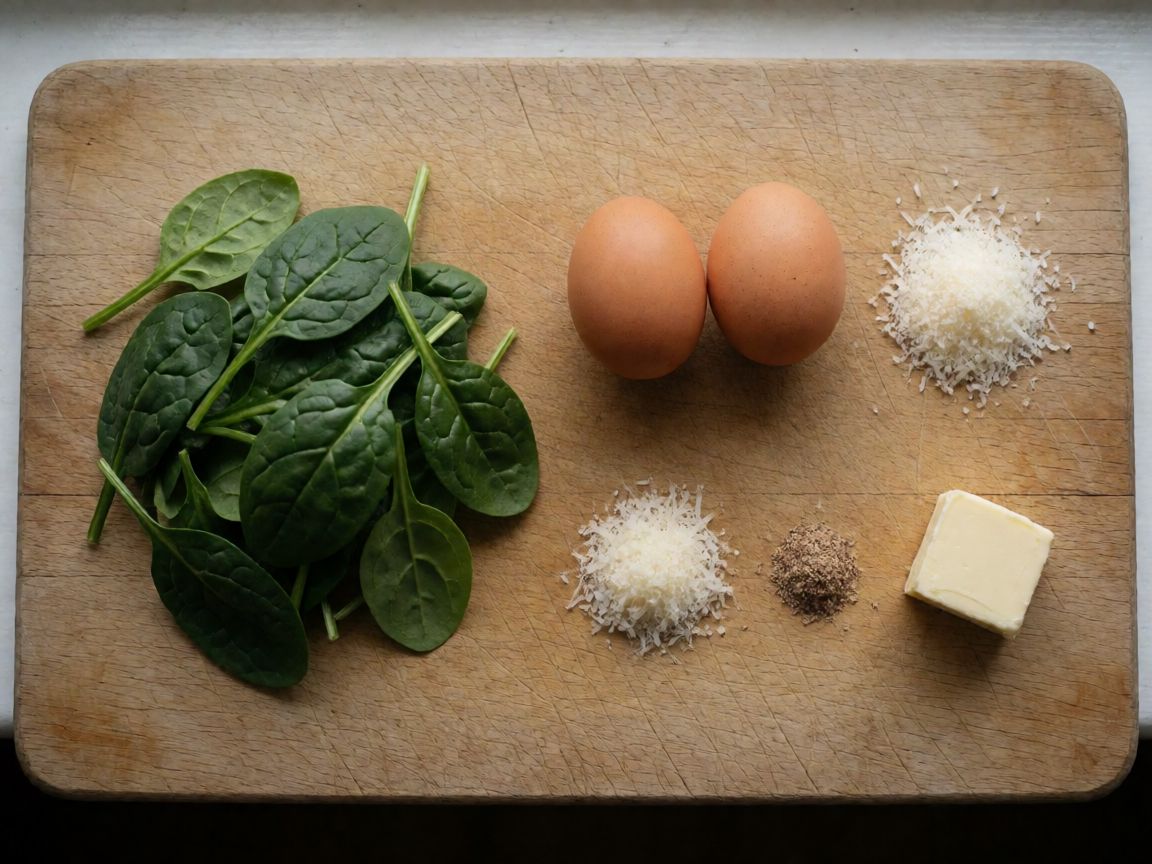







Steps
Prepare the spinach: boil or steam it, then squeeze out the excess water.
Let the spinach cool, then put it into a blender together with the eggs, Parmesan and Pecorino.
Add salt, black pepper and nutmeg, and blend until creamy.
Grease the moulds with butter and fill them with the prepared mixture.
Preheat the oven to 160°C.
Place the moulds in a roasting tray filled with water and bake in the oven.
20 minLet the flan cool before serving.
This is a savoury custard, not a pudding — the word flan here means what Italians call a sformato: eggs and cheese holding vegetable in suspension. Spinach doesn't give it green colour for show; spinach gives it bulk and a faint iron bitterness that the cheese has to balance. Everything else in the method exists to protect two fragile things: the egg, which wants to scramble the second it meets real heat, and the spinach, which wants to leak water into your careful mixture and turn it grainy.
What decides whether this works is almost entirely about water and heat, not seasoning. Squeeze the spinach properly — not a polite press, but a fist's worth of twisting in a clean tea towel until no more drips come. Water left in the leaf doesn't disappear in the oven; it sits in the mixture, keeps the eggs from binding into a smooth set, and you get a flan that weeps liquid onto the plate. That's the actual cause of a 'wet' flan — not too little egg, as people sometimes assume, but too much water that was never egg's job to absorb.
Spinach: 300 g fresh leaf collapses down to almost nothing once cooked, which is why it looks like a lot in the bag and not much in the bowl — that's normal, not a sign you've under-bought. Boiling or steaming both work; what matters is stopping as soon as the leaf goes fully dark and limp, because spinach cooked past that turns grey, loses its clean taste, and starts tasting of tin. If you have no spinach, any leaf that wilts down softly and isn't sharply bitter will do — chard works almost identically; kale needs longer cooking and a firmer squeeze, since it holds water more stubbornly.
Eggs: two is the architecture here, not a filler ingredient. They're what turns blended spinach-and-cheese paste into something that holds a shape when you tip the mould out. This is also why the oven runs low — egg protein sets gradually between about 60–70°C inside the mixture; push past that too fast and it tightens, squeezes out water, and you get the curdled, weeping texture people wrongly blame on 'too much spinach'.
Parmesan and Pecorino together give you two different kinds of salt — Parmesan nuttier and rounder, Pecorino sharper and saltier, since it's sheep's cheese and carries more bite. Using both means you season with less salt overall. If you only have one, lean toward less added salt if it's Pecorino alone, and taste the raw mixture before it goes in the mould — you can't fix seasoning once it's baked.
Nutmeg isn't decoration — it's the traditional partner to cooked spinach and cream-based mixtures across several European kitchens, because its warmth cuts the slightly mineral, metallic note spinach carries. A light grating is plenty; it should be felt, not tasted as 'nutmeg'.
Butter for greasing isn't about flavour, it's a barrier — any fat with no smell of its own will stop the set egg from gripping the mould's surface and tearing when you try to turn it out. Neutral oil does the same job if that's what's in the cupboard.
On equipment: four small ramekins, about teacup-sized, give you the four servings here — a shallower, wider dish will set faster at the edges than the centre, so if that's what you have, check the centre a little earlier rather than trusting the same timing. And once it's baked, let it rest and cool properly before turning out — a hot egg custard is still soft-structured and will slump or tear; the cooling is where it finishes firming into something you can actually serve whole. This sits well alongside a roast, incidentally, in place of a vegetable course — it's not trying to be a dessert flan, whatever the name suggests.