
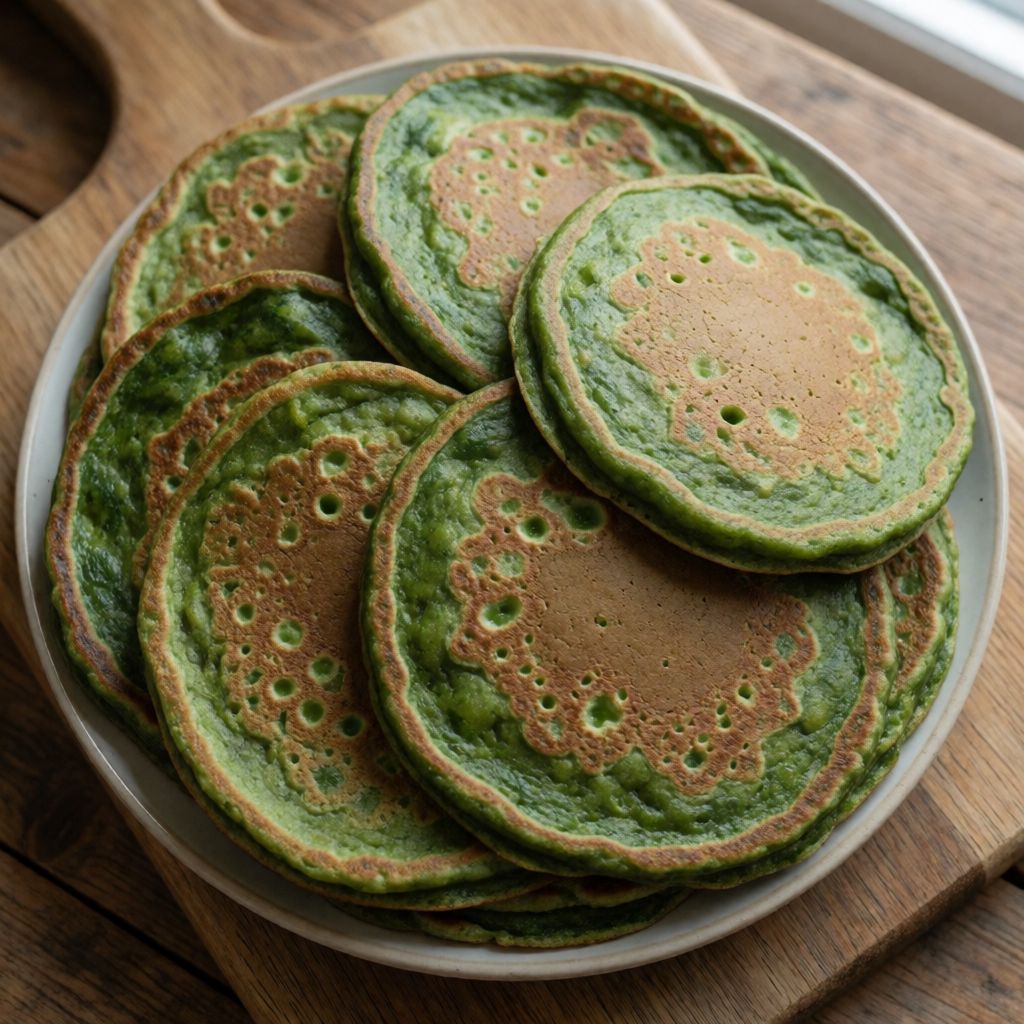
 AI photo
Spinach Pancakes
Soft green pancakes made by blending spinach straight into the batter.
Labels are worked out automatically from the ingredients and can be wrong. Check the packaging if it matters to you.
Ingredients
- 125 g Spinach
- 100 g Plain flour
- 50 g Wholemeal flour
- 3 pcs Eggs
- 300 ml Milk
- to taste Salt
- to taste Black pepper freshly ground
- 1 tbsp Olive oil for frying








Steps
Wash the spinach thoroughly and put it in a blender with the rest of the ingredients.
3 minBlend everything into a smooth, even batter.
2 minSpread a little oil in a frying pan and cook the pancakes for a few minutes on each side.
5 min
This is a crepe wearing a vegetable's clothes. Not a dessert pancake, not a stack for syrup — a thin, green, savoury round, closer to a wrapped omelette than to anything from a Sunday fry-up. The spinach goes in raw, straight from the colander into the blender, and that one choice is what makes the whole thing work the way it does.
Three things decide whether it comes out right. First, how finely the spinach breaks down — the blade has to turn whole leaves into something closer to a purée than a salad, because any stray bit of leaf will scorch before the batter around it sets, and you'll taste bitterness where you wanted green. Second, the ratio of batter to liquid: too thick and you get a vegetable omelette that won't bend without cracking, too thin and it tears the moment you try to lift it. Third, the pan's heat when the batter hits it — it has to be hot enough that the edge sets into a skin within a few seconds, because that skin is what lets you get a spatula underneath later without the pancake sticking and shredding.
Some say you must wilt the spinach in a pan first, the way you would for a filling, before it goes anywhere near a pancake. No — because the blender already does the job a hot pan would do to raw leaves: it breaks the cell walls and releases the water inside them. Cook it first and you'd just be adding extra water you then have to subtract from the milk, for no gain. Raw spinach blended fine is not a half-measure, it's the method.
Spinach: buy it loose or bagged, it doesn't matter much here since it's going to be liquefied, but wash it properly — grit hidden in the folds of a leaf will grind unpleasantly between your teeth later, and no amount of blending disguises sand. If all you have is frozen spinach, thaw it and squeeze it hard in your fist over the sink until no more water comes out, then use it; frozen spinach has already given up its structure to the freezer, so skipping that squeeze means a batter too thin to hold together in the pan.
The two flours do different jobs, and that's the whole reason there are two. Plain flour brings gluten, which is what lets the pancake bend over the spatula instead of snapping. Wholemeal brings bran — texture, a slightly nutty taste, and a bit less gluten per gram, which is exactly why it isn't the only flour here: all wholemeal and the pancake turns crumbly rather than pliable. If you've no wholemeal in the cupboard, use all plain flour and accept a slightly blander, smoother result — it will still hold. Eggs are the binder: their protein sets with heat and locks the spinach and flour into one sheet rather than a scramble. UK eggs are usually sold medium, which is what this recipe assumes — if yours are large, the batter will be looser, so hold back a splash of the milk until you see the consistency of thin double cream running off a spoon. Milk thins the batter to pouring consistency and feeds moisture into the crumb as it cooks. Whole or semi-skimmed both work; what you're after is a liquid with no strong flavour of its own fighting the spinach, so a dairy-free oat or soya milk substitutes cleanly if that's what's in your fridge. Olive oil here is a frying medium, not a flavour statement — a light, everyday olive oil, not anything labelled extra virgin and proud of it, because that one burns its character into bitterness well before the pancake is cooked. Any oil with no smell of its own does the job: sunflower, rapeseed, a flavourless vegetable oil. Judge the pan the way you'd judge a kettle about to boil — a drop of batter at the edge should sizzle gently and hold its shape, not spit and scatter; that's your sign the pan is hot enough, since no domestic hob gives you a number worth trusting anyway. Salt and pepper go in with everything else in the blender, because there's no gluten here to overwork by adding salt early, unlike with bread dough — so don't worry about timing them separately. This batch makes enough for eight, cooked one or two pancakes at a time in a single wide frying pan, which is the only pan most flats have room for on the hob anyway. Keep the finished ones warm under an upturned plate rather than a lid you don't own — it holds in just enough heat without trapping steam and turning your crisp edges soft. And give yourself the five minutes the recipe asks for before you start frying the next batch — rushing the blend means lumps of unbroken spinach, and patience here costs you nothing but a bit of standing around.