
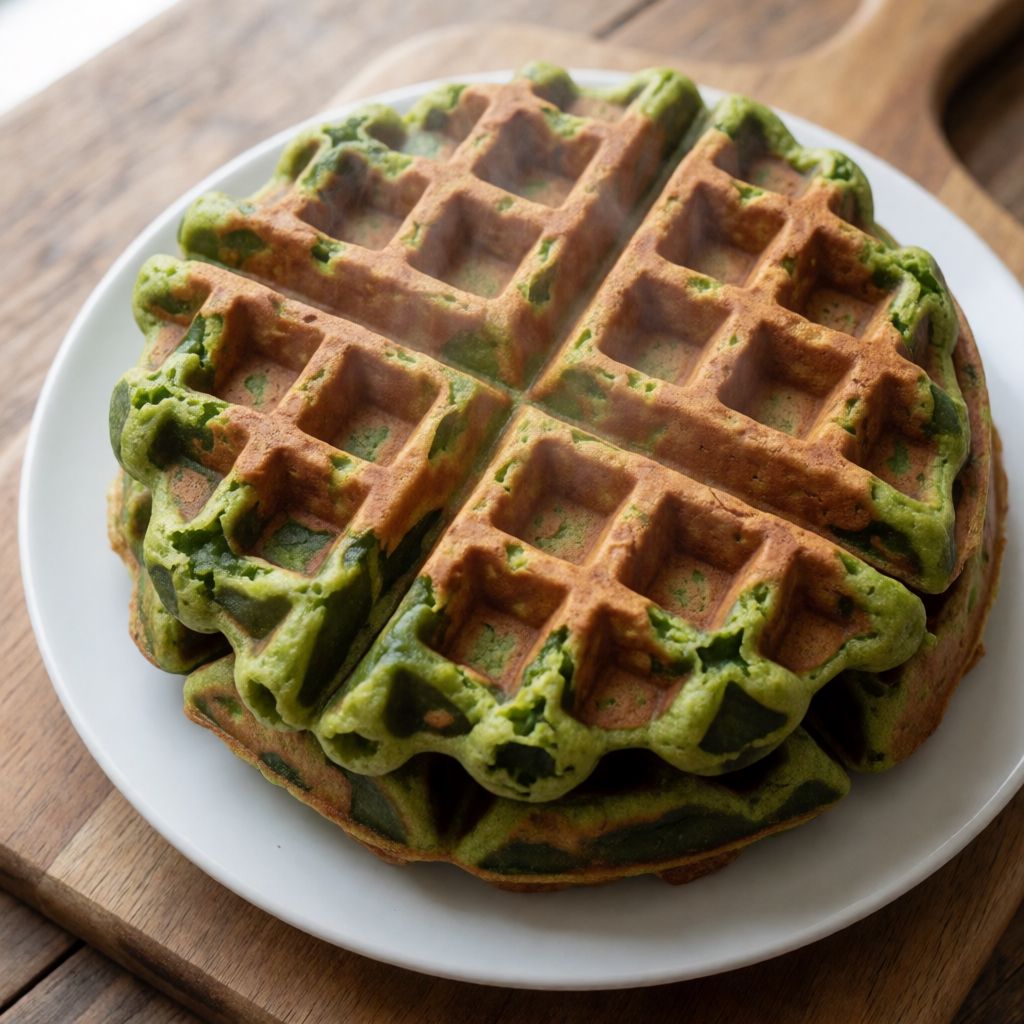
 AI photo
Spinach Waffles
A quick batter of spinach, eggs and flour baked into golden waffles.
Labels are worked out automatically from the ingredients and can be wrong. Check the packaging if it matters to you.
Ingredients
- 150 g Plain Flour
- 75 g Wholemeal Flour
- 0.5 tsp Baking Powder
- 130 g Spinach fresh or frozen
- 4 pcs Eggs
- 250 ml Milk
- Butter for frying
- Salt
- Black Pepper freshly ground









Steps
Mix the plain flour, wholemeal flour and baking powder well in a bowl.
Rinse the spinach, then put it in a blender together with the eggs, milk and the flour mixture.
Blend everything until you have a smooth, runny batter.
If you like, let the batter rest for 15–30 minutes so the flour can absorb the liquid and thicken slightly.
20 minSpread a little oil or butter in the waffle iron and bake the waffles until golden and cooked through.
15 min
This is a savoury waffle — no sugar, no vanilla, just egg, milk, flour and a fistful of spinach turned into a bright green batter. People expect waffles to be sweet because they only ever meet them under syrup at breakfast. But a waffle is really just a griddle cake with a grid pattern — the iron doesn't care what you put in it, and plenty of countries use it for savoury things. Here the spinach isn't a boiled side vegetable chopped in afterward; it goes into the blender raw, with the eggs and milk, and the blades do what cooking would otherwise do slowly — break the cell walls, let out the water, release the colour. That's the whole trick of this batter: you are not adding spinach to a mixture, you are building the mixture around it.
What decides whether this works is moisture. Spinach is almost entirely water held inside stiff little cells; blend it and that water comes out all at once, straight into your batter. If you don't balance it with enough flour, or you skip the rest, you get something closer to green soup than batter, and it will refuse to set properly in the iron — soft in the middle no matter how long you leave it, because there's simply too much liquid for the starch to lock up. The rest — fifteen, twenty minutes, however long you can leave it — is there so the flour can actually drink that water in, swell, and thicken the mix on its own, no extra flour needed. Skip it if you're in a hurry; the waffles will still cook, just looser and more prone to sticking.
On the flour: plain flour alone gives you a soft, almost cakey waffle, because it has little gluten to resist the iron's pressure. Wholemeal on its own would be heavy and a bit sandy — bran cuts gluten strands short and drinks up more liquid than you'd expect, which is exactly why the batter needs that rest even more with wholemeal in it. Mixing the two gives you some backbone from the wholemeal's flavour and bran, with enough of the plain flour's gluten to let the waffle hold together without turning dense. If you only have one or the other in the cupboard, use it — just lean towards less flour overall if it's all wholemeal, because it absorbs more.
Eggs are doing two jobs, not one. They bind the batter, yes, but they're also what sets the structure in the iron — egg proteins firm up with heat the way flour alone never quite manages on its own, which is why this isn't just a thick pancake. Four eggs for 150g plus 75g of flour is a generous ratio; it's what lets the batter stay pourable even once the spinach's water and the flour's swelling are both working against it.
Spinach, fresh or frozen, works the same way once it's in the blender — frozen is actually more convenient here, since it's already partly broken down by the freeze and needs no washing, no grit from the garden. If you use frozen, let it thaw a little first or your blender will just spin ice chips around the eggs instead of pulping them. Fresh spinach gives a slightly brighter colour and a cleaner taste; either way, there's no need to blanch or wilt it first — raw is exactly what the blender wants, because cooked spinach has already lost the water you're relying on to loosen the batter.
Milk is the other half of the liquid, and 250ml is a lot against 225g of flour — that's deliberate, since the spinach brings its own water too, and together they need to add up to something a waffle iron can spread thin and cook through evenly. If you're short on milk, any plain unsweetened milk substitute works the same, because its only job here is liquid and a little fat for tenderness, nothing more.
Butter for frying is about taste, not function — any neutral fat would cook the waffle just as well, but butter browns and smells like something, which matters more here than in a sweet waffle buried under syrup. If your waffle iron is nonstick already, you need barely a trace of it; its real enemy isn't a lack of fat, it's cold spots in the iron where batter sticks because that patch never got hot enough to crust over. Salt and black pepper are there because spinach on its own is mild and a little mineral-tasting — salt sharpens it, pepper gives it some bite, and without either the whole thing tastes like something you're eating for your health rather than for lunch.