
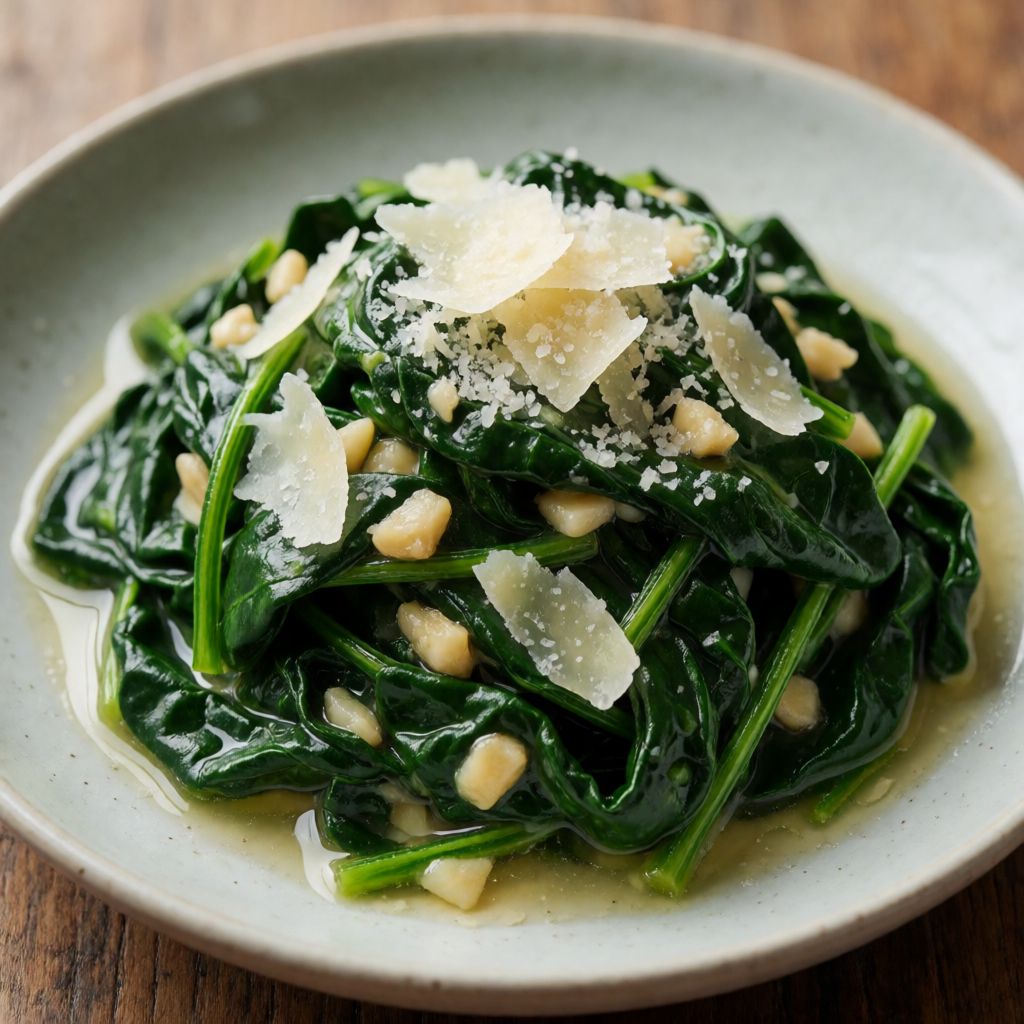
 AI photo
Spinach with Butter and Parmesan
A simple side dish of spinach sautéed with butter, garlic and parmesan.
Labels are worked out automatically from the ingredients and can be wrong. Check the packaging if it matters to you.
Ingredients
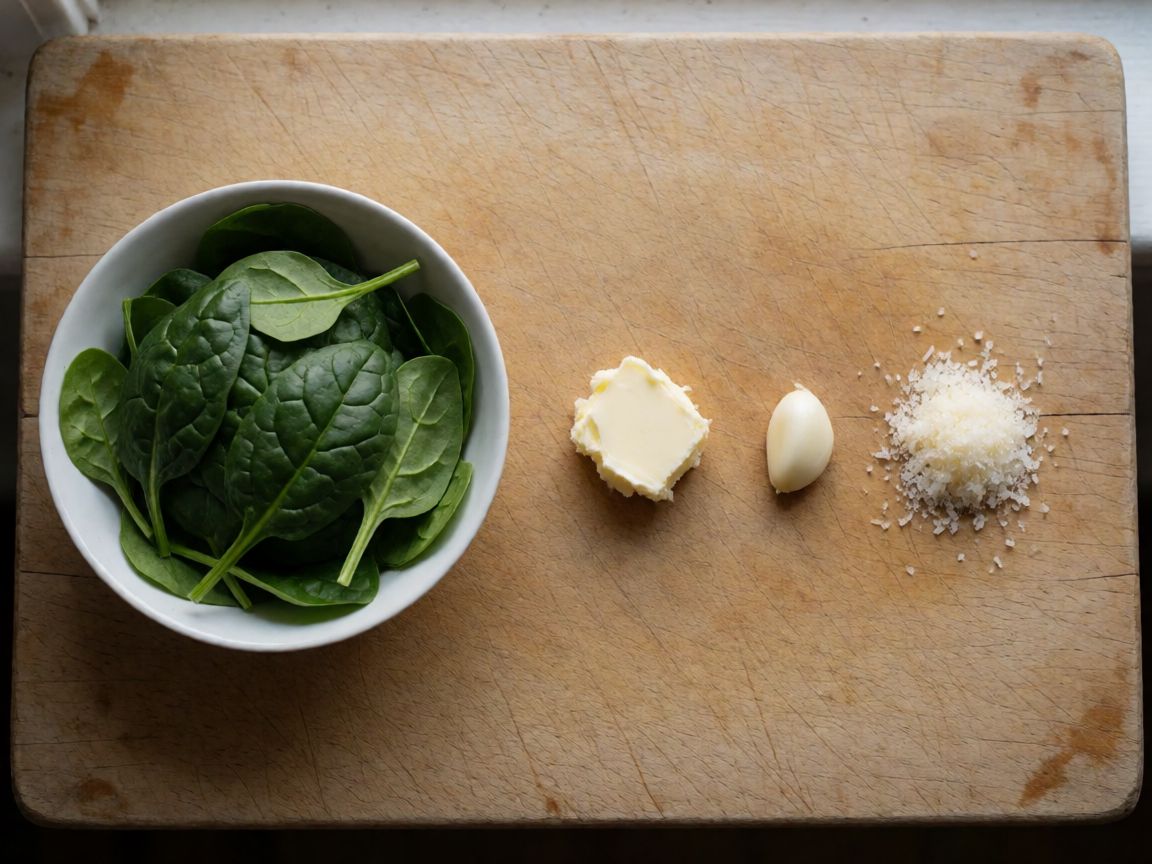





Steps
If using fresh spinach, wash the leaves thoroughly
Place the spinach in a wide non-stick pan, add a little water, cover and cook
5 minSeason with a pinch of salt and drain off any excess water if needed
In a separate pan, melt the butter, slice the garlic and sauté
Remove the garlic, add the cooked spinach, stir and cook over high heat
2 minToss the spinach with the parmesan
Serve hot
This isn't really a spinach recipe — it's an exercise in getting rid of water at the right moment. Spinach is close to ninety percent water locked inside its leaves, and almost everything that can go wrong with this dish comes from that water showing up in the wrong pan at the wrong time. Cook it right and you end up with glossy, buttery leaves coated in cheese. Cook it wrong and you end up with green soup with a parmesan skin on top.
The first pan does one job only: it breaks the leaf down and makes the water come out, using steam, not a boil. You add "a little water" not to cook the spinach in it, but to get the first few leaves hot enough, fast enough, that the rest wilt from their own moisture before the bottom ones scorch. Lid on traps that steam — in a British kitchen without a proper tight-fitting lid, a plate set over the pan does almost the same job, it just leaks a bit more, so check sooner rather than later.
450g fresh spinach looks like you've bought a hedge. Don't panic. It will collapse to something close to a cupful once wilted, because you're watching water leave a leaf, not the leaf disappearing. That collapse — leaves going from bright and springy to dark, glossy, and folded over themselves — is the only doneness cue that matters here, not a stopwatch.
Fresh versus frozen: frozen spinach is not the lesser option here, it's the more predictable one. It's usually blanched and frozen within hours of picking, so it arrives with a known, fairly consistent water content, which makes step 3 — draining — easier to judge. Fresh spinach varies: young leaves hold more structure, older ones collapse into more liquid. Either works; frozen just removes a variable, and it's cheaper most weeks of the year, which is exactly why it ended up a kitchen staple rather than a compromise.
Butter here isn't decoration, it's the second cooking medium and it needs to stay a fat, not become a sauce. That's why the spinach is drained before it goes in — any water carried over fights the butter, drops the pan's heat, and you spend your two minutes on high heat boiling off water you could have poured away a minute earlier. Criterion for substitution: you need a fat that can take a short burst of real heat without complaining and whose flavour sits comfortably next to a hard, salty, aged cheese — clarified butter works, a mild olive oil works, a flavoured or very grassy oil will fight the parmesan instead of backing it up.
Garlic goes in to perfume the butter, not to be eaten. Sliced, not minced — minced garlic burns within seconds in hot butter and turns bitter, sliced garlic gives you a wider window to catch it pale gold, smelling sweet rather than sharp, and pull it before it goes past that point. This is the one step that actually asks for your attention rather than your patience: everything else in this dish can wait a beat, garlic can't.
Parmesan is added once the pan is off that aggressive heat, because a hard cheese tossed into leaves that are still near a hard sizzle will seize — the proteins tighten and you get strings and a greasy slick instead of a coating. Criterion for substitution: any hard, low-moisture, well-aged cheese with real salt in it — Grana Padano, a sharp Pecorino if you're happy with more salt, even a strong mature Cheddar in a pinch, though it melts wetter and won't behave quite the same way.
Salt comes late on purpose. Salt added early, into wet raw leaves, pulls even more water out by osmosis — which just means more liquid for you to drain off later, and salt sitting in water you're about to throw away, doing nothing for the dish. Season once the spinach has already given up its water and sits in the butter, and the salt stays where you want it, on the leaf.
This is a quick side, which is its whole appeal next to a Sunday roast running slow in the oven: it needs two pans and about ten attentive minutes spread over half an hour, most of which is the spinach wilting quietly under its lid while you deal with everything else on the hob. Four people, 450g spinach, one clove of garlic, a thumb of butter and a handful of parmesan — it's not a dish that scales down gracefully for one, since a single portion collapses to almost nothing in the pan, so it's worth making for the table, not for yourself alone.