
 AI photo
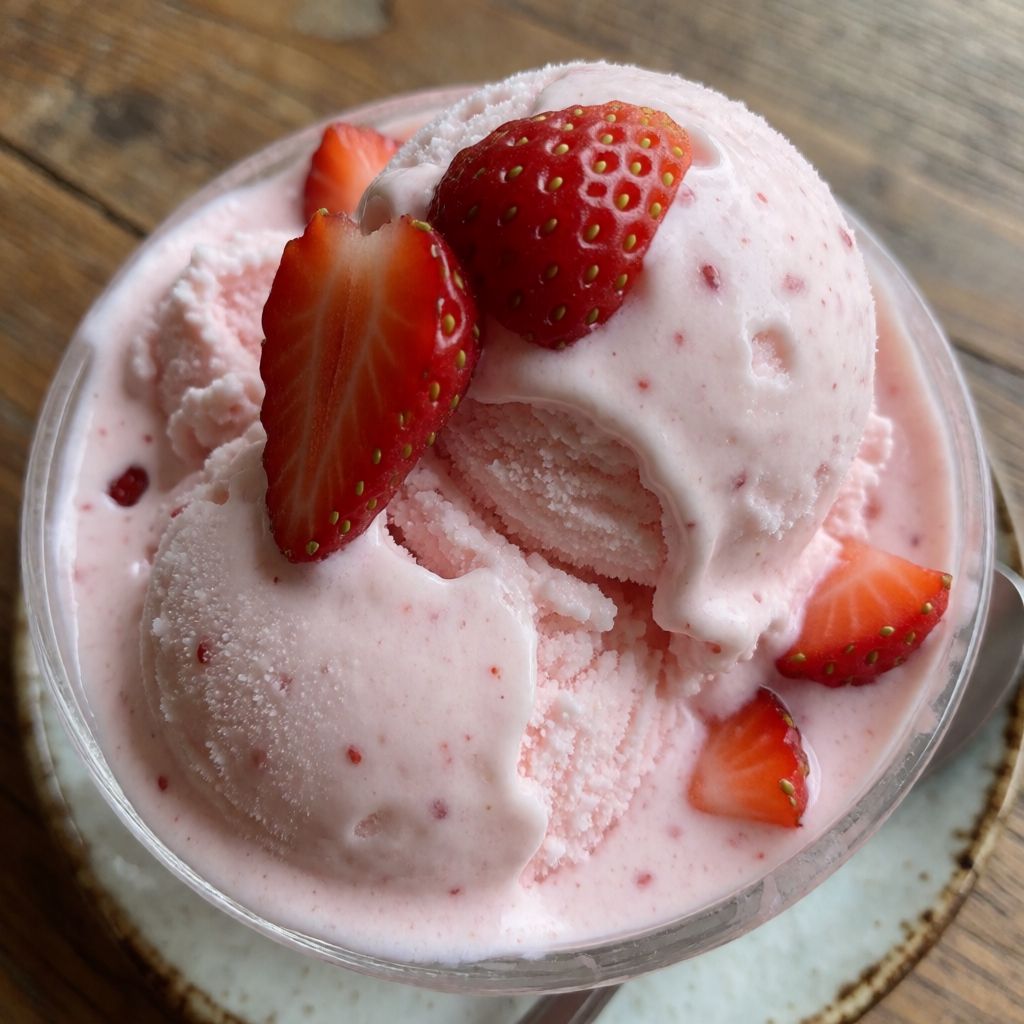
Strawberry Ice Cream
A creamy strawberry ice cream made with fresh strawberries, vanilla and an egg custard base, churned until smooth.
Labels are worked out automatically from the ingredients and can be wrong. Check the packaging if it matters to you.
Ingredients
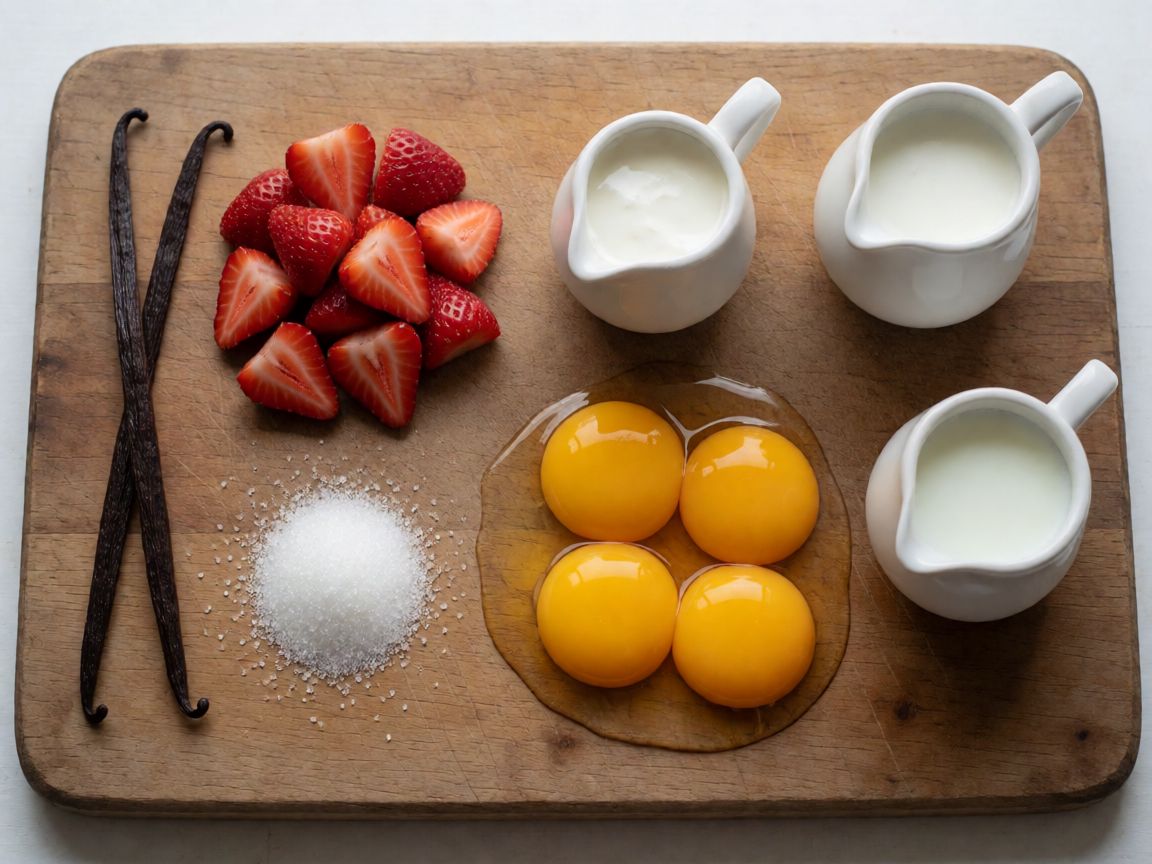
- 1 pcs Vanilla pod
- 500 g Strawberries cut into quarters
- 150 g Sugar
- 5 pcs Egg yolks
- 400 ml Whipping cream
- 200 ml Milk




Steps
Cut the vanilla pod lengthways and scrape the seeds onto a chopping board.
5 minPut the empty vanilla pod, strawberries and half the sugar into a saucepan and bring to the boil. Stir and let it simmer for a few minutes.
5 minBlend the strawberry mixture into a purée with a hand blender and push it through a sieve to remove the small strawberry seeds. Use the back of a tablespoon to press the purée through the sieve.
10 minPut the vanilla seeds, the remaining sugar and the egg yolks into a bowl and whisk until light, airy and pale.
Mix the cooled strawberry purée with the cream and milk, then fold it into the egg mixture. Chill the mixture in the fridge for at least 1 hour.
60 minPour the strawberry ice cream base into the bowl of an ice cream maker and churn for about 25 minutes.
25 minTransfer the ice cream into a container with a lid and freeze for at least 2 hours.
120 min
This is a custard-style ice cream, not a sorbet and not the eggless "Philadelphia" kind some ice cream vans still scrape out. The difference isn't academic — it's what decides whether the finished thing is silky or a strawberry-flavoured ice cube. Water wants to freeze into big crystals. Fat and egg yolk get between those crystals and keep them small. Everything in this recipe is really about managing that one war between water and fat, and about getting air into the mix before the freezer locks everything in place.
The strawberries get cooked down before anything else happens, and that's not to make them sweeter — sugar does that on its own, raw. It's to drive water out. Fresh fruit is mostly water held in cell walls; simmering with sugar breaks those walls (osmosis pulls juice out, heat finishes the job) and lets some of that water boil away as steam. Some people think you can just blitz raw strawberries and freeze the purée — no, because raw purée carries too much free water, and that water freezes into a block with strawberry taste, not into ice cream.
Vanilla pod: you split it and scrape the seeds for the custard, but the empty pod goes into the strawberry pan too — don't throw it away, most of a vanilla pod's flavour lives in the husk, not just the seeds, and simmering it with the fruit pulls that out while the seeds go in separately for speckle and a sharper hit later. No pod to hand? A teaspoon of real vanilla extract or a smear of vanilla paste does the same job — just make sure the label says vanilla, not vanillin, which is the same smell made in a lab from wood pulp and tastes one-dimensional once you've had the real thing side by side.
Strawberries: ripe, soft, slightly battered ones from the reduced shelf are actually better here than the perfect punnet — you're going to cook and sieve them anyway, so looks don't matter, sugar content does. Underripe berries are more acid than sweet and need more sugar to balance, which throws off the whole recipe's sugar total. The sieving afterward isn't fussiness — strawberry seeds are small and hard, and in a smooth custard base they feel like grit under the tongue. Push firmly with the back of a spoon; a fine-mesh sieve works, a jelly bag works better if you have one gathering dust from jam-making days.
Egg yolks: five yolks for this amount of liquid is there to thicken and emulsify, not mainly to flavour — whisk them with the sugar and vanilla seeds until the mixture goes pale and falls off the whisk in a ribbon that sits on the surface for a second before sinking back in. That ribbon stage tells you the sugar has properly dissolved into the yolk; skip past it and you risk sugar crystals surviving into the freezer, which is one real cause of grainy, not creamy, ice cream. Keep the egg whites for meringue another day — don't waste them.
Cream and milk: the cream needs real fat in it — double cream, nothing labelled "single" or "half" — because fat is what coats the ice crystals and stops them fusing into something that scrapes like a Slush Puppy. The milk is there to loosen the cream so it churns rather than whips into butter in the machine; cut the milk and you get something closer to frozen whipped cream, heavy rather than light.
On the ice cream maker itself: if yours is the kind with a bowl you freeze overnight rather than one with its own compressor, that bowl has to be rock solid before you start — a bowl that's only half-frozen from a rushed few hours in a UK freezer (which runs colder than most fridges but isn't bottomless) will churn your base into something closer to a cold milkshake. Churn until it looks like soft-serve and holds its shape when the paddle lifts it — some think longer churning always means creamier, but keep going past that point and you start knocking the fat right out of the cream, which is how butter is made, and butter flecks in ice cream are a fault, not a feature.
And the waiting — the hour in the fridge, the two hours in the freezer at the end — isn't dead time, it's the ingredient nobody puts on the shopping list. Rush the first chill and the machine fights a warm base; rush the final freeze and you get something that melts to soup the second it's in a bowl, because the structure the churning built hasn't had time to set. Ice cream historically was a rich person's trick precisely because it needed ice, salt and patience before anyone had a freezer to do the waiting for them — your freezer is doing in two hours what used to take a cellar full of winter ice and a servant turning a crank. Let it finish the job.
Worth saying plainly: this version skips cooking the egg base over heat, which is how most French-style custards are made safe as well as thick. If that bothers you, you can cook the yolk-sugar mixture gently with the milk until it just thickens (not boiling, just past the point where it coats the back of a spoon) before folding in the cooled strawberry purée and cream — same mechanism, safer eggs, slightly more washing up.