
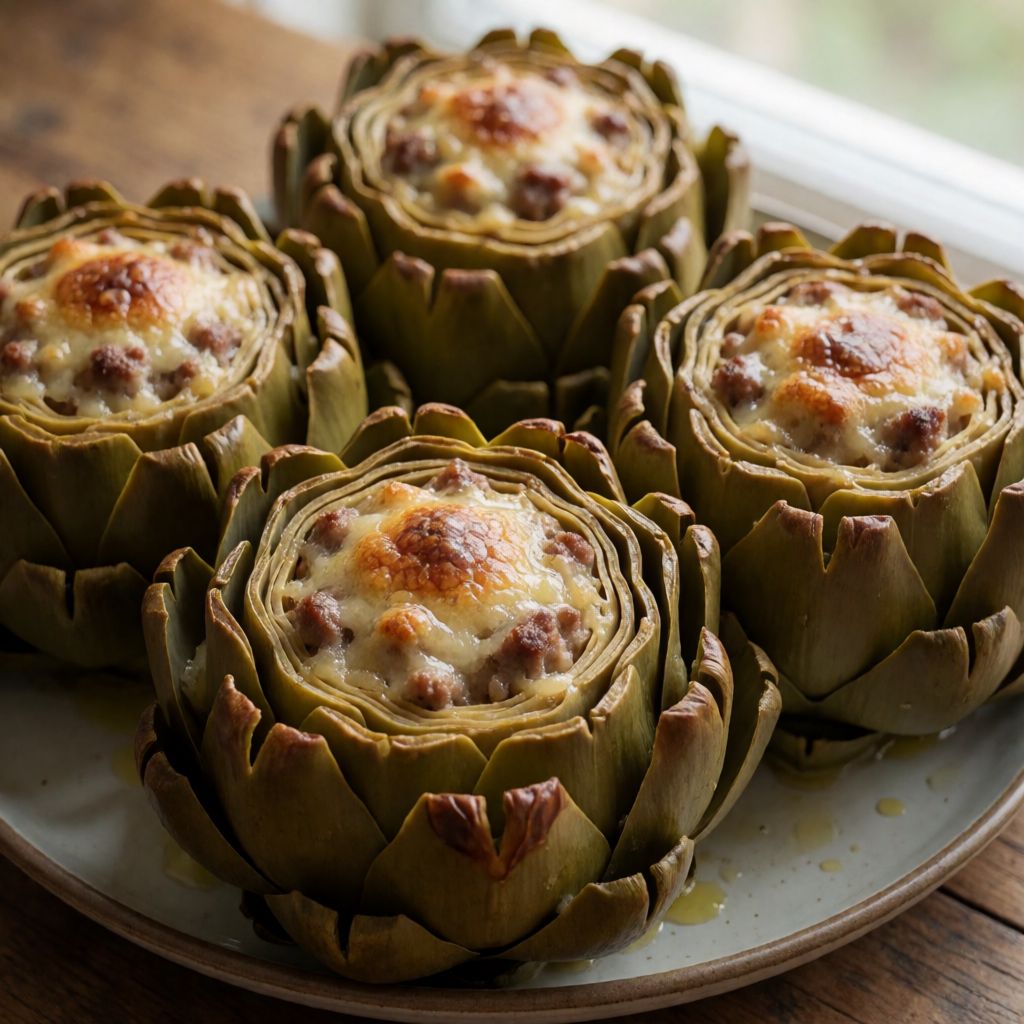
 AI photo
Stuffed Artichokes
Artichokes filled with a savoury sausage, parmesan and marjoram stuffing, then baked until golden.
Labels are worked out automatically from the ingredients and can be wrong. Check the packaging if it matters to you.
Ingredients
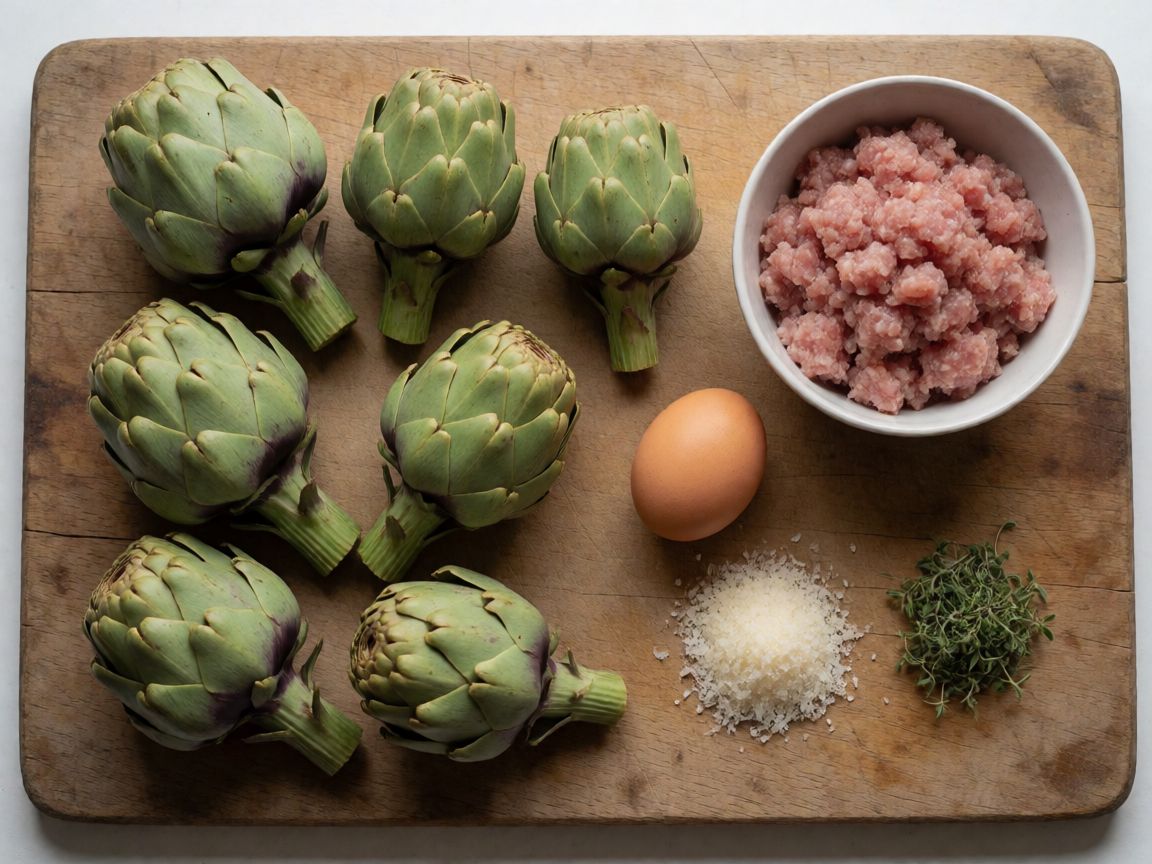







Steps
Cut off the stem of the artichokes, trim away the tough outer layer, remove the hard leaves and trim the tips.
Bring water to the boil, season with salt, submerge the artichokes halfway and simmer gently.
4 minFinely chop the reserved stem and base.
Heat olive oil in a pan and fry the stem and base pieces.
Add the sausage meat and fry.
2 minTransfer everything to a bowl, add the parmesan, egg and marjoram, and mix until smooth.
Fill the cooled artichokes with the sausage stuffing.
Sprinkle with parmesan, drizzle with oil and bake at 180°C in a fan oven. Doneness: internal temperature 70°C.
This is a vegetable turned into a vessel. The artichoke heart holds a meatball's worth of sausage, and the whole thing finishes in the oven until vegetable and meat are done at the same moment. It's old peasant arithmetic: nothing about the artichoke goes in the bin — even the stem and base, which most people cut off and throw away, get chopped and fried into the filling.
What decides whether this works is the par-boil, and specifically why it's done half-submerged, not whole. The base is dense, fibrous, needs direct contact with boiling water to go tender. The leaves above the waterline don't need that — they're thin, they'd collapse to mush if you drowned them for the same time it takes the base to soften. So you let the water do one job and the rising steam do the other, at the same time, in the same pot. That's the whole trick of step two, and it's the reason the artichoke survives the oven afterwards instead of turning to paste.
Some say you should boil the artichoke right through — fork slides to the centre, then just stuff it and warm it up. No — because by then the heart is already cooked, and the oven still needs time to cook raw sausage and egg through and brown the cheese on top. Keep boiling that long and the vegetable is finished twice: once in the pot, once more in the oven, and the second time ruins it.
Choose artichokes the way you'd choose anything else that's mostly water and fibre: tight closed heads, leaves that resist a little when you press them rather than flop, a stem that snaps clean rather than bends — that's a young, less woody plant. If yours still carry the hairy choke in the centre, you'll feel it once they're par-boiled and softened a touch — scoop it out with a teaspoon before you fill, it won't cook away on its own and it's unpleasant to bite into. Cut artichokes brown fast — that's oxidation, not spoilage, the same chemistry as a cut apple. If you've got lemon or vinegar water and the patience, keep them in it between trimming and boiling; if you haven't, don't fuss, the stuffing and the cheese cover the colour anyway.
The sausage meat is doing two jobs: it's the protein, and it's the seasoning, because a decent Italian sausage already carries fennel or chilli and its own fat. Don't trim that fat off — it's what keeps the filling from drying out in dry oven heat. If you can't get it, buy any raw sausage from the counter — Cumberland, Lincolnshire, whatever's local and squeeze the meat out of its skin. The criterion is: a meat that arrives already fatty and already seasoned, so you're not building flavour from a bare mince in a hot pan.
Egg is the binder. Around the same temperature that makes the filling safe to eat, it also sets — the stuffing goes from loose sausage to something you can actually slice through rather than something that crumbles off the fork.
Parmesan does two different jobs depending on where it sits. Mixed into the filling it's savoury backbone. Sprinkled on top before baking it's there to brown — a hard, low-moisture cheese crisps under dry heat instead of just melting into a puddle. The criterion for substitution is hardness and age: pecorino, grana padano, at a pinch a mature cheddar, though that last one changes the flavour note from nutty to sharper.
Marjoram is there to cut the fat of the sausage with something earthy and a little bitter. Its closest relative is oregano — same genus, close enough you won't notice the swap. Thyme is a different character but it will do the job of cutting richness if that's what's in the cupboard.
On your hob: a fan oven at 180°C runs drier and more even than a static domestic one, and that dry moving air is exactly what crisps the parmesan on top rather than steaming it soft. Trust the probe over the dial — the same habit anyone doing a Sunday roast already has, checking the joint rather than believing the oven. You don't need a kazan or anything specialist here; a wide ovenproof dish with the artichokes standing close enough to lean on each other does the job. And give the trimming itself real time — eight artichokes, each leaf pulled back properly, each tip cut clean. Rush it and you leave fibrous bits in, and no amount of sausage and cheese fixes a mouthful of string.