
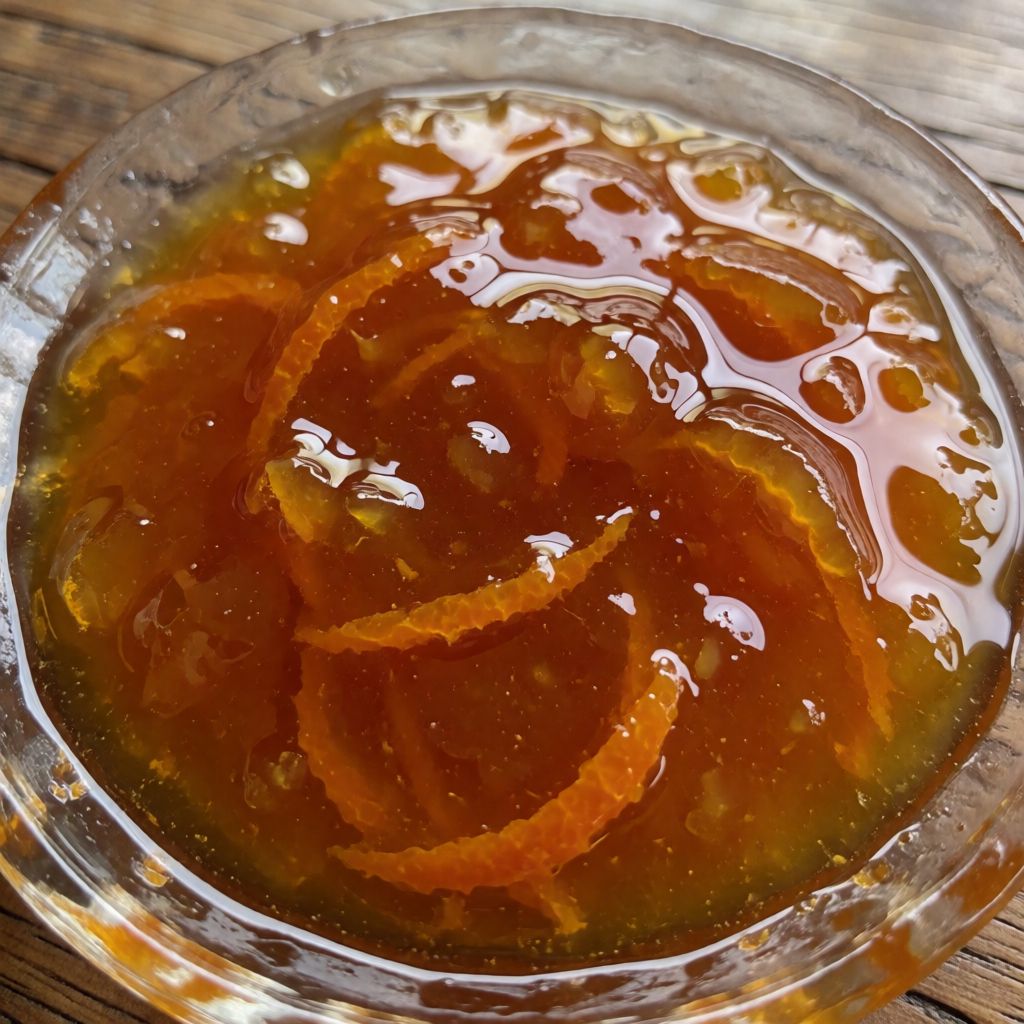
 AI photo
Mandarin Jam
A simple homemade mandarin jam, slow-cooked until thick and glossy.
Labels are worked out automatically from the ingredients and can be wrong. Check the packaging if it matters to you.
Ingredients



Steps
Peel the mandarins, cut into small pieces and remove the pips. Put the juice into a saucepan, stir in the sugar and pour in 100 ml of water.
Cook over a very low heat, stirring frequently, for at least 40–45 minutes, topping up with 100 ml of water at a time.
45 minMake sure the mixture doesn't stick to the pan or caramelise.
Prepare and sterilise glass jars with tin lids for 30 minutes.
30 minFill the jars with the hot jam, seal with the lids and turn upside down for a few minutes.
If a vacuum seal hasn't formed, boil the upside-down jars in a saucepan for a further 30 minutes.
30 min
This is not marmalade, whatever the colour tells you. Marmalade needs peel and white pith boiled hard, because that's where the pectin lives, and the bitterness is the price you pay for the set. Here you throw most of that pith and peel away, keep the flesh and the juice, and get the set a different way entirely — by boiling water off until the sugar is concentrated enough to gel on its own. That's why it takes two hours of care over heat instead of twenty minutes of a hard boil. No pectin to speak of, so the mixture has to do the work by losing water, slowly.
What decides whether it works is heat and attention, not ambition. A domestic hob gives you a thin pan bottom and hot spots underneath it — it is not a copper preserving pan with even, gentle heat right through the metal. Put mandarin pulp and sugar over anything brisk and the sugar at the bottom scorches before the fruit two centimetres up has even softened. That burnt sugar doesn't wash out — it tastes of ash, not orange, and it's in there for good. So the heat stays low enough that you can watch, not walk away, and you stir because the bottom of the pan is always the first place that dries out.
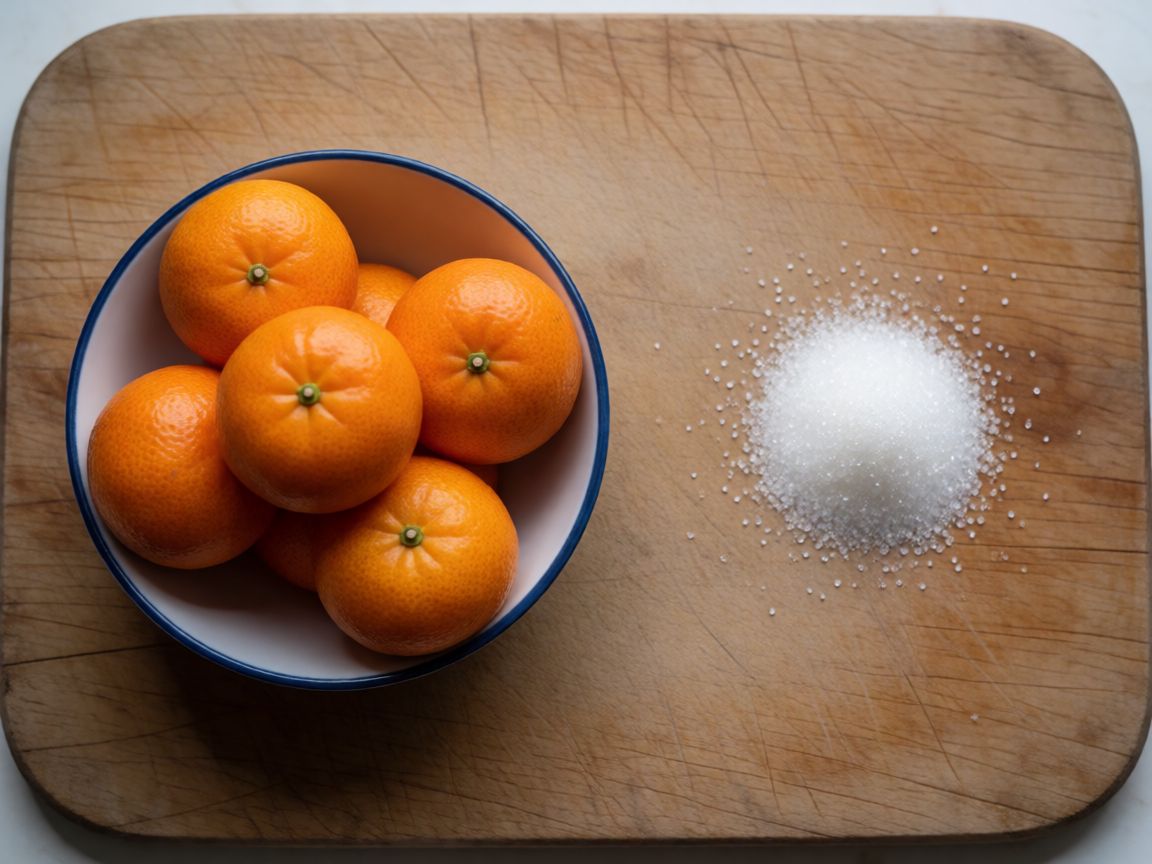
Mandarins themselves are chosen for being easy, not special — thin skin, loose segments, few pips, and sweetness that doesn't need rescuing with lemon the way a Seville orange does for marmalade. In a British kitchen the obvious stand-ins are clementines or satsumas, the ones that turn up by the net-bag at Christmas — same thin skin, same low bitterness, same behaviour in the pan. What you're avoiding is anything with a thick bitter pith or a sour, heavily-pipped flesh, because that bitterness doesn't cook out, it just gets more concentrated as the water leaves. Removing every pip matters for the same reason — citrus pips carry a bitter compound that a stray one or two will spread right through a whole jar.
Sugar here isn't just sweetness, it's the setting agent, doing the job pectin would do in a fruit with more of it. That's why the ratio is close to equal weight with the fruit — go much lower and you'll be cooking for hours trying to reach a set that never quite arrives, because there isn't enough sugar in the pot to concentrate to gel strength. You can use any granulated white sugar; there's no flavour argument for anything fancier here, the orange is doing all the talking.
The water is a tool, not a flavour. Its job is to stop the pan drying out and scorching while the fruit is still giving up its own moisture and softening — adding it gradually rather than all at once means you're never flooding the pot and resetting the clock on evaporation, just keeping pace with what's being lost. Towards the end you stop adding it on purpose, because that's when you actually want the water to leave for good — that's the reduction that sets the jam.
Sterilising the jars isn't superstition about keeping luck in, it's about keeping mould spores and bacteria out of something that's going to sit in a cupboard for months. Heat for thirty minutes kills what's living on the glass and the lid rubber; skip it and you're trusting the jam's sugar alone to preserve it, which works less reliably than people assume, especially once a jar's been opened and closed a few times at the table.
Turning the filled, sealed jars upside down does two things at once — it lets the hot jam itself sterilise the underside of the lid, and it's your test for a vacuum seal: a lid that's pulled itself slightly concave and doesn't flick back when you press the centre has sealed properly as the jar cooled and the air inside contracted. If it hasn't taken, that's not a wasted jar — it's telling you there's still air in there that could carry mould, so back into boiling water it goes, upside down, until heat finishes the job the vacuum didn't.
One kilogram of mandarins against this much sugar and water comes out to roughly two or three medium jam jars, enough for eight people across a few rounds of tea and toast rather than one Sunday's spread. It keeps like any sugar preserve once sealed properly — a cool cupboard, not the warm spot over the oven — and once opened, into the fridge like any other jam, because the vacuum that was protecting it is gone the moment you break the seal.