
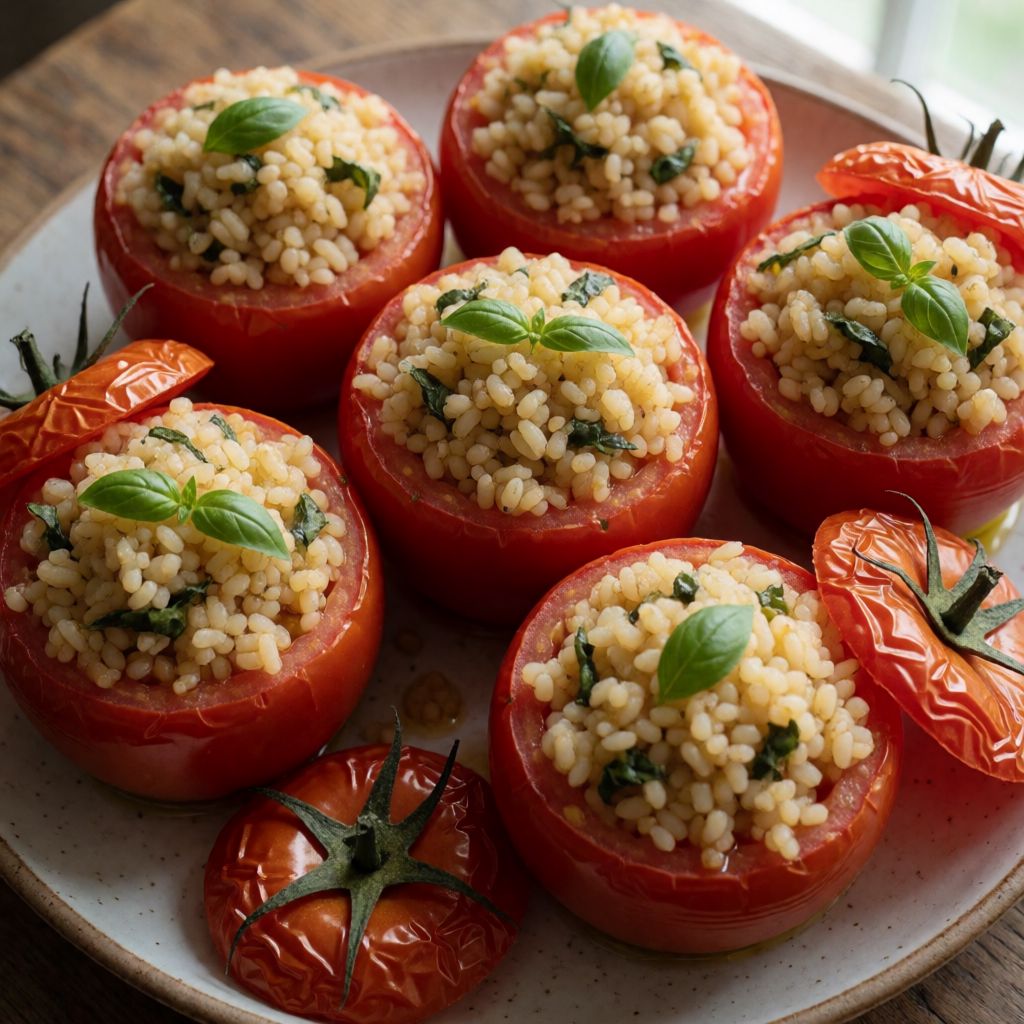
 AI photo
Tomatoes Stuffed with Bulgur
Juicy tomatoes filled with a herby bulgur stuffing, baked until tender.
Labels are worked out automatically from the ingredients and can be wrong. Check the packaging if it matters to you.
Ingredients
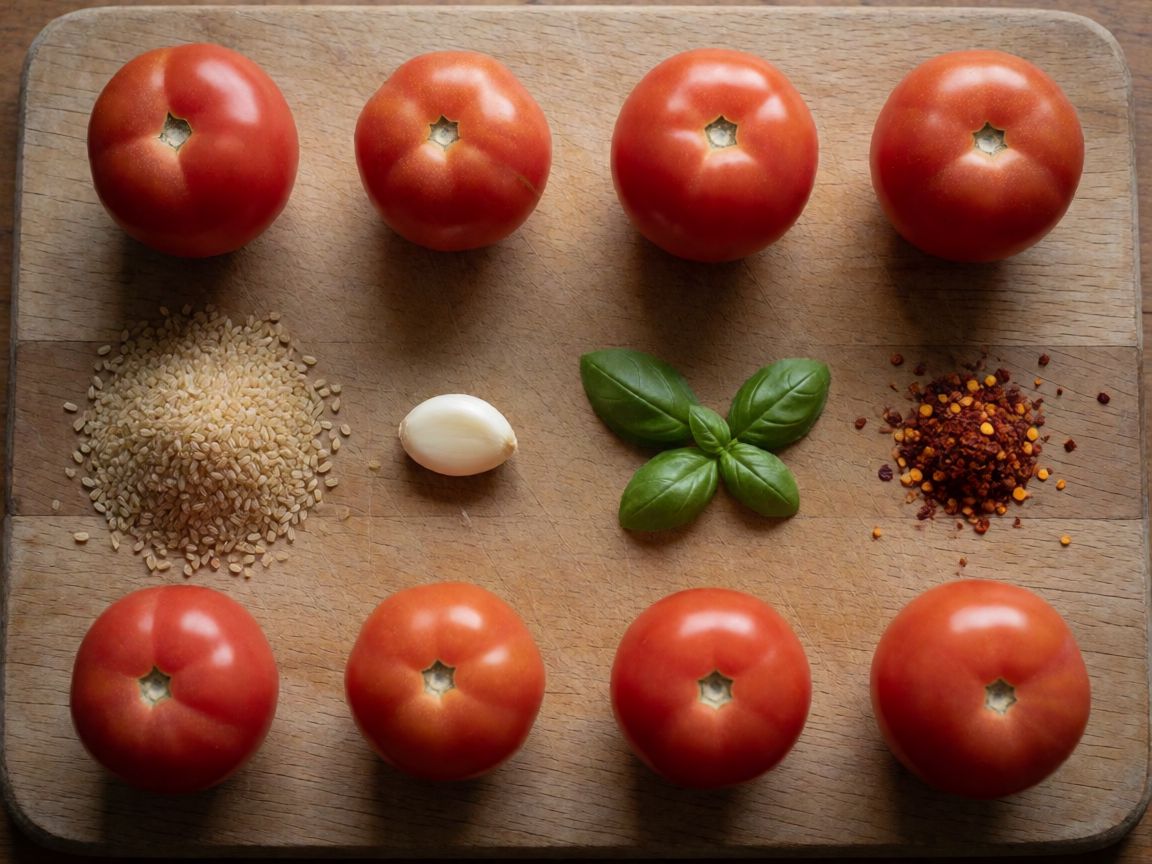







Steps
Soak the bulgur in hot water in a separate bowl for at least 30-40 minutes.
40 minWash the tomatoes, pat dry, cut off the top to make a lid and set it aside. Use a teaspoon to scoop out the flesh from the centre. Place the hollowed tomatoes upside down on a plate.
Drain off any excess liquid from the scooped-out tomato flesh and transfer it to a blender with a pinch of salt, basil leaves, chilli flakes and olive oil. Blend until smooth.
Add the soaked bulgur to the tomato and basil mixture and mix well.
Line a baking tray with parchment paper and place the empty tomatoes on it. Season the insides with salt and fill with the stuffing.
Cover each tomato with its lid, drizzle with olive oil on top and bake at 220°C for about 1 hour.
60 min
This dish is a trick of borrowing: you ask the tomato to be its own pot. Scoop it, keep the shell, and let bulgur cook inside using nothing but the tomato's own water and an hour in a hot oven. No stock, no pan of boiling grain — the vegetable does both jobs, container and cooking liquid.
What decides whether it works is simple: does the shell hold its shape, or does it collapse into a puddle. Two things stop the collapse. First, you stand the hollowed tomatoes upside down before filling — this drains the juice that would otherwise pool back in and turn your filling into soup. Second, the oven runs hot and long, so what water is left boils off through the open top rather than steaming the walls soft from inside. Skip either step and you get eight sad bags of wet grain.
Some say bulgur needs to be boiled like rice, pot and all. No — bulgur is wheat that's already been parboiled and dried at the mill, which is the whole point of it existing as a product. Hot water and time is all it needs to come back to life; the real cooking happened before it reached your kitchen. That's why it survives an hour in a domestic oven without turning to paste — it was never raw in the first place.
You'll know it's done by the tomato, not the clock: the skin has wrinkled and loosened its grip, the whole thing has slumped slightly but still stands, and when you lift the lid the bulgur underneath looks swollen and glossy, not dry. An hour is the floor, not a target — a cooler oven or thicker-walled tomatoes will want longer.
Pick tomatoes with some structure — round, firm-fleshed, not the sort that's two days from the compost. A tomato that's already soft will give up its shape before the filling has had time to cook; you need the wall thick enough to survive an hour of heat and still stand. Plum tomatoes work if yours run small — just allow a little less filling per fruit.
Bulgur is cracked wheat that's been steamed and dried in processing — that's the mechanism, not a mystery. Soaking in hot water simply rehydrates what's already cooked, which is why 30–40 minutes is a floor, not a recipe for porridge: longer soaking just gives it more time to plump evenly. If you've no bulgur, couscous or even fine cracked wheat will take the same hot-water treatment, though couscous turns softer faster, so give it less time and watch it rather than the clock. Seven tablespoons is roughly 90g dry — weigh it once and you'll never need the spoon again.
The garlic belongs in the blender with the tomato pulp, basil and chilli, even though the step that says so got lost somewhere between hand and page — put it in at step 3. Raw garlic blended into a sauce that then bakes for an hour loses its sharp edge entirely; it mellows into background sweetness rather than announcing itself. That's the same logic as roasting a whole bulb — heat over time, not force, takes the bite out.
Olive oil here isn't interchangeable with just any fat, because you use it twice: once blended in, where it just carries flavour, and once drizzled raw on top before baking, where its own fruitiness actually survives the oven and you taste it. If you want a substitute for the blended portion, any oil with no smell of its own will do — sunflower, groundnut. For the top drizzle, don't bother substituting; a flavourless oil there does nothing for you.
A domestic oven at 220°C is not gentle, and ovens lie about their own number more often than people admit — if your tomato tops are blackening hard before an hour is up, lay a sheet of foil loosely over the tray rather than clamping it down; you're not trying to trap steam like a kazan lid, just slow the browning on top while the inside keeps cooking. There's no shame in checking at 45 minutes and adjusting from there.
The hour itself is the one ingredient you can't shortcut by raising the heat. Rushing it at a higher temperature just chars the skin before the bulgur inside has pulled in what it needs from the tomato's own juice. Patience here isn't virtue for its own sake — it's literally how the flavour gets from the pulp into the grain.