
 AI photo
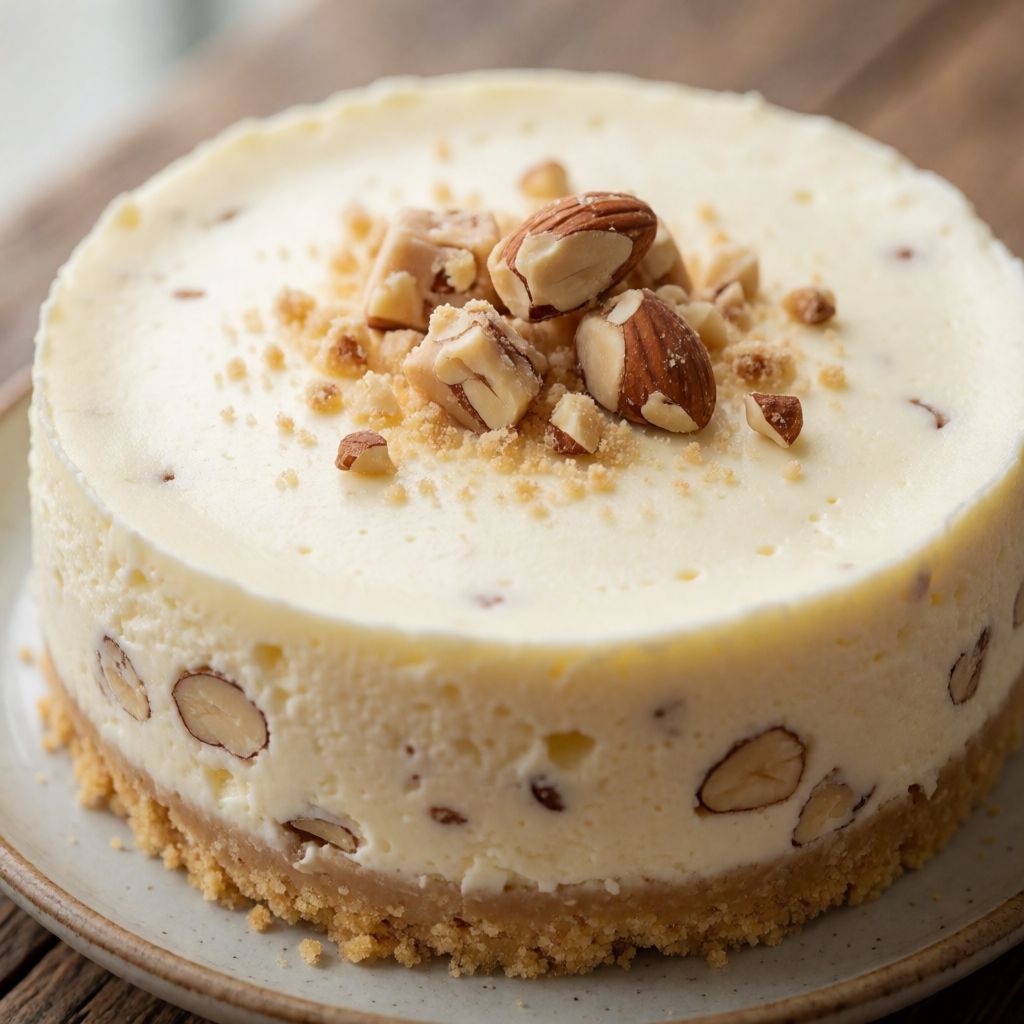
Torrone Cheesecake
A creamy no-bake cheesecake with crushed torrone nougat on a buttery biscuit base.
Labels are worked out automatically from the ingredients and can be wrong. Check the packaging if it matters to you.
Ingredients
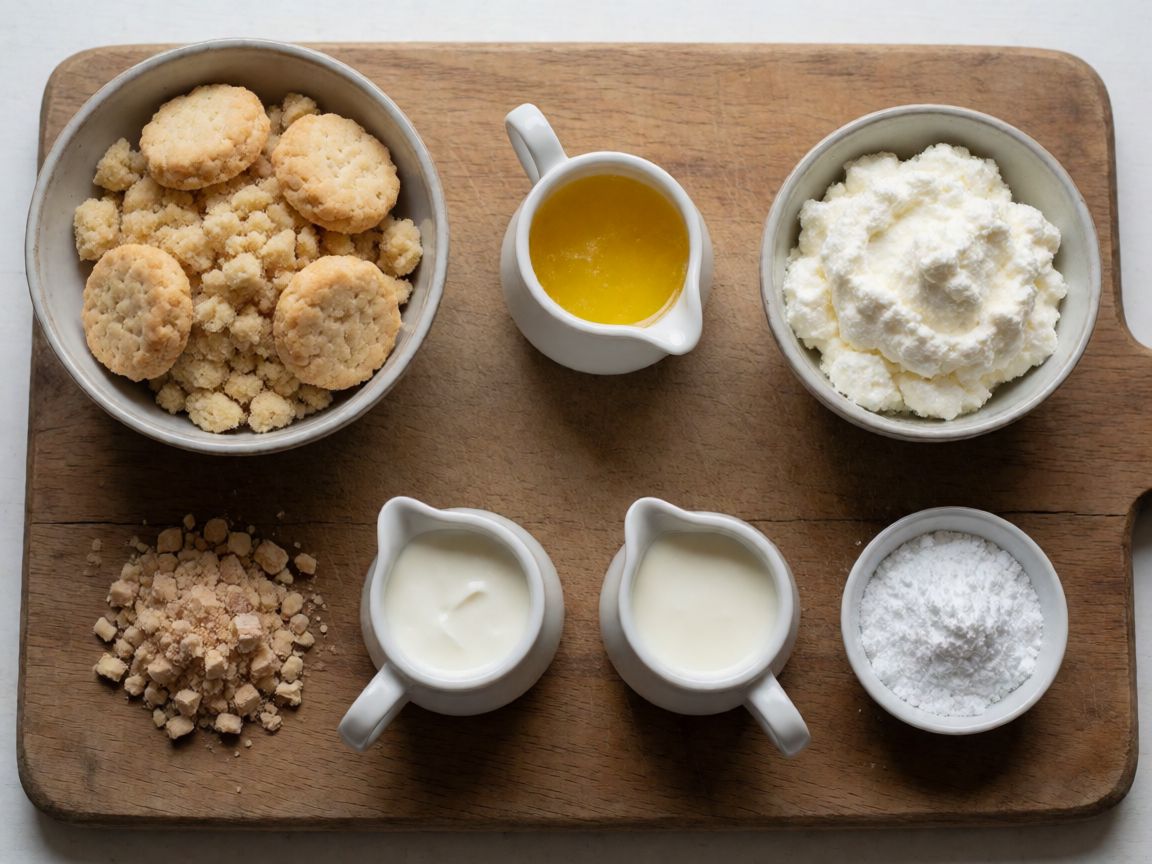
- 320 g digestive biscuits
- 150 g butter melted
- 250 g ricotta
- 300 g torrone nougat crushed
- 350 ml double cream
- 2.5 tbsp double cream hot
- 15 g gelatine
- 40 g icing sugar







Steps
Crush the digestive biscuits and combine with the melted butter, mixing until smooth.
Transfer the mixture into a 22 cm springform tin, spread evenly and press down firmly.
Leave the base in the fridge.
30 minSoak the gelatine in cold water, squeeze out and dissolve in 2.5 tbsp hot double cream, then let cool.
Beat the ricotta with a mixer until creamy, then add the dissolved gelatine and crushed torrone, mixing well.
Whip 350 ml double cream with the icing sugar until thick.
Gently fold the whipped cream into the torrone cream, mixing from bottom to top.
Spread the cream over the biscuit base and smooth the surface with a spatula.
Leave the cheesecake in the fridge before serving.
180 min
This is not a baked cheesecake at all — it's a set cheesecake, and that one word changes everything about how you think of it. There's no oven involved, so the structure doesn't come from eggs firming in heat. It comes from gelatine setting the ricotta-cream mixture cold, and from cold fat (the butter in the base, the cream in the filling) staying solid in the fridge. Understand that, and you understand why every fiddly bit of this recipe — the cooling, the resting, the folding — exists.
What decides whether it works is temperature at one single point: the moment the dissolved gelatine meets the ricotta. Gelatine that's still hot will seize into threads the instant it touches cold cheese — you get rubbery strings through the cream instead of a smooth set. Gelatine that's gone cold and started to firm up won't disperse at all; you'll get lumps. The window is narrow: warm enough to flow, cool enough not to shock. That's the whole trick of this cake, and it has nothing to do with skill — it's just patience with a bowl.
The second thing that decides it is air. You whip the cream to hold its shape but not to turn grainy — the moment it looks like it's about to split into butter and water, stop, you've gone too far. Then you fold it into the torrone-ricotta mix gently, bottom to top, because whipped cream's whole job here is to carry bubbles of air into a mixture that has none. Stir hard and you knock the air back out — the cake sets dense and heavy instead of light, and no amount of fridge time fixes that afterwards.
Start at the base. Digestive biscuits are already the right biscuit for this — dry, low in sugar, happy to crush to sand rather than clump. The butter, melted and mixed in, is glue, nothing more: it coats every crumb so that once it's cold and solid again, the crumbs are locked to each other rather than to the tin. Press the mix down firmly, not just level it — a loosely packed base is the single most common reason a slice collapses at the front edge when you lift it out. If you've no digestives, use any plain, not-too-sweet biscuit that turns to crumb easily — shortbread works but tastes richer, ginger nuts work and add a flavour of their own.
Ricotta, not cream cheese, is doing the main work in the filling, and that's worth knowing why. Ricotta is a whey cheese — lighter, wetter, with almost none of the tang or density of cream cheese — so it needs beating with a mixer first just to loosen it into something smooth enough to take the gelatine evenly. If you swap in mascarpone you'll get a richer, heavier cake; cream cheese will give you something closer to a New York cheesecake in flavour, further from the Italian original this recipe is built on. Either works, but know you're changing the dish, not just the ingredient.
Torrone is the reason this cake exists at all. It's the Italian Christmas nougat — honey, egg white, toasted almonds, set hard or soft depending on the maker — and it tends to turn up in boxes nobody quite finishes over the holidays. This cake is a thrifty way of using it up once Christmas is over, the same instinct that turns leftover British Christmas cake into trifle. Crush it, don't pulverise it — you want pieces that survive as crunch and bite inside a smooth cream, not a flavour dissolved into nothing. Any firm honey-and-nut nougat will do the same job; even a crushed chocolate-nut bar gets you partway there, though you lose the honey note.
Double cream is non-negotiable in the sense that it needs enough fat to whip and hold air — that's roughly the 48% fat mark UK double cream sits at. Single cream won't thicken no matter how long you beat it; it simply hasn't got the fat structure to trap bubbles. The icing sugar, not granulated, dissolves into the cream without leaving grit, which matters more here than in a cooked dessert because nothing melts it later.
Gelatine is the one ingredient where the method matters more than the brand. Soak it in cold water first — this lets it swell and absorb water gently, so when it hits the hot cream it dissolves evenly instead of clumping. The cream should be hot, not boiling — gelatine loses its setting power if it's actually boiled, which is the opposite of what people assume when they think 'more heat, stronger set.' No — heat dissolves it, it doesn't strengthen it. Let that dissolved mixture cool before it meets the ricotta, for the reason already covered.
Last point: the fridge is your oven and your timer both. Thirty minutes firms the base enough that it won't smear when the filling goes on top. Three hours is a lower bound for the filling, not a target — you're waiting for the gelatine network to finish setting through the whole depth of the tin, and a shallower or deeper tin than 22 cm will change that time without changing the written number. Press the centre lightly before you unclip the tin: a slight give and a clean edge means it's ready; if it moves like liquid under a skin, give it longer. No oven to open and check on — just your finger and your patience.