
 AI photo
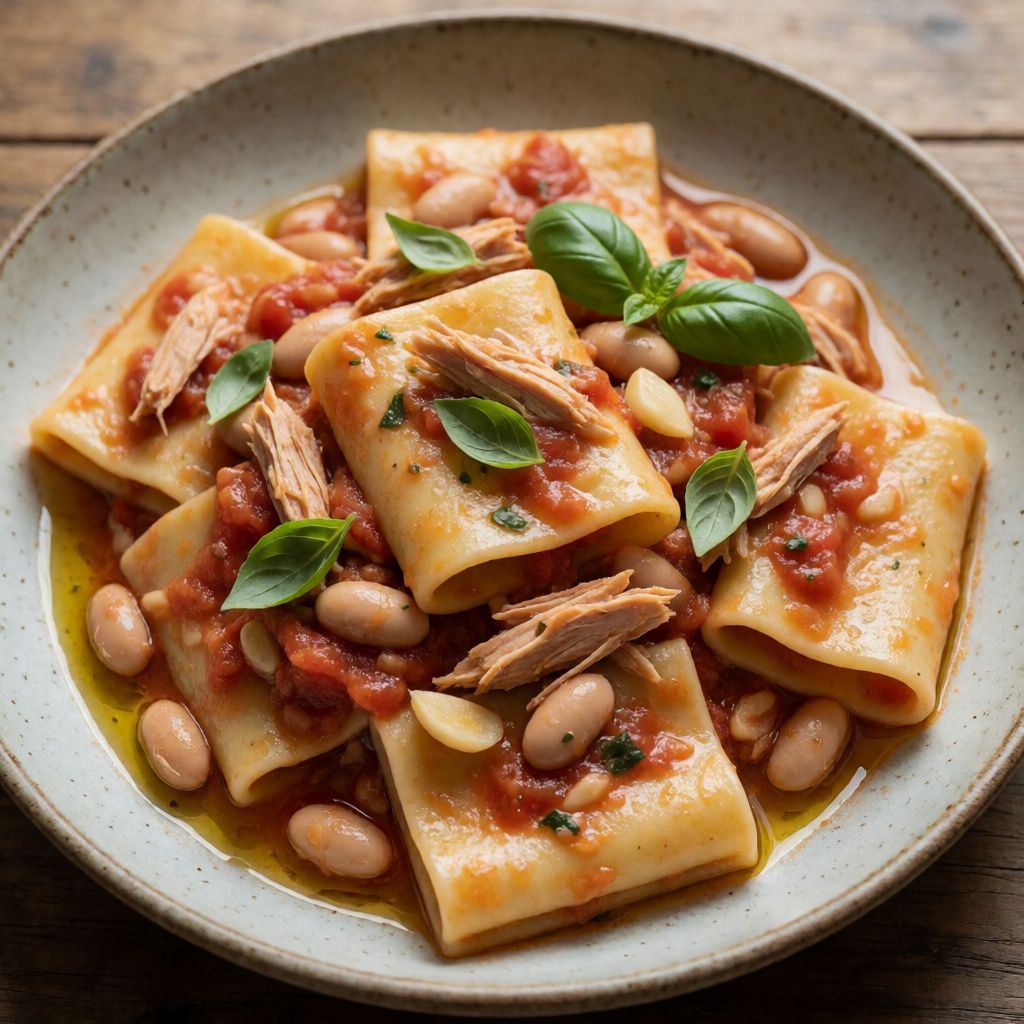
Paccheri with Tuna and Borlotti Beans
A hearty pasta dish combining tuna, borlotti beans, cherry tomatoes and fresh basil.
Labels are worked out automatically from the ingredients and can be wrong. Check the packaging if it matters to you.
Ingredients
- 300 g Tuna fillets in oil
- 360 g Borlotti beans, canned
- 10-15 pcs Cherry tomatoes
- 1 clove Garlic
- 5-6 pcs Basil fresh leaves
- 250 ml White wine
- 3 tbsp Olive oil
- Salt to taste
- 300 g Paccheri









Steps
Heat the olive oil in a pan and sauté the garlic and tuna.
Add the cherry tomatoes and cook briefly until they soften but do not dry out.
Pour in the white wine and let it evaporate.
Add the borlotti beans together with their canning liquid and cook for 6 minutes.
6 minSeason with salt to taste.
Cook the paccheri in boiling salted water until al dente.
Drain the pasta into the pan with the sauce, add a little pasta water and mix well.
Serve garnished with fresh basil.
This is a store-cupboard pasta wearing a good coat — tinned tuna, tinned beans, a punnet of cherry tomatoes, and the whole dish hangs on one decision: do you treat the liquids in those tins as drainage, or as the sauce before it exists. The oil the tuna swims in and the thick, faintly salty water clinging to the beans are not mess to pour away. They are starch and fat waiting to be reduced into something you'd otherwise build from scratch.
What actually decides whether it works is the beans, and specifically their liquid. Fresh borlotti need soaking and long boiling and bring no sauce with them at all — wrong tool here. Dried beans, same problem. The tin exists precisely because that cloudy liquid has already picked up starch and salt from the bean, and six minutes of simmering turns it into a sauce with body, no flour, no cream, no stock cube needed. Tip it down the sink and you're boiling beans in nothing, then reaching for cream to fix a problem you made yourself.
Some say tinned tuna is a comedown from a proper piece of fish. No — because tuna isn't the point of this plate, it's fat and flake. Oil-packed tuna falls apart in a hot pan into shreds that melt into the sauce and cling to the pasta. A fresh tuna steak would sit there in dignified chunks, tasting of itself, refusing to cooperate with anyone else in the pan. Wrong job for the right fish.
Start with the olive oil, and don't treat it as neutral filler — three tablespoons is a lot in a pan this size, and it's doing two jobs: carrying the garlic's aroma into the fat, then meeting the tuna's own oil and joining forces with it. Use something that still smells of itself, extra virgin, not a flavourless bottle kept for frying chips. If all you've got is a mild oil, that's fine, but know the sauce will taste a shade flatter for it.
One clove of garlic, sautéed with the tuna and not before it — put it in alone over fierce heat and it browns and turns bitter in the time it takes you to answer the door. Sliced or crushed, it should go translucent and smell sweet, not toasted. If it blackens at the edges, the whole pan carries that bitterness afterward, and no amount of tomato fixes it; you'd have to start again.
The tuna itself is the economics of the dish laid bare. This is coastal Italian cucina povera — fisherman's-wife cooking from before every kitchen had a fridge, when a tin of fish and a tin of beans sat on a shelf for months and turned into dinner on short notice. That's not a sentimental detail, it's why the recipe works at all: both main proteins arrive already cooked, already seasoned, already carrying their own fat. You're not cooking the tuna, you're warming it through and breaking it up. Use a decent tin in oil, not brine — brine tuna is drier and has no fat to lend the pan.
Cherry tomatoes rather than large ones because small fruit concentrates sugar in a smaller skin — you want them to crack and weep juice, not collapse into watery pulp. Watch the skins: the moment they split and slump slightly, that's the cue, not a clock. Push them too long over high heat and the juice evaporates instead of mixing in, and you've traded sauce for jam.
The white wine's job is acid, cutting through the fat of the oil and the tuna. Any dry white you'd actually drink works; don't reach for a bottle gone sour in the fridge door and call it cooking wine, it carries vinegar notes that don't belong. If you've genuinely none in the house, a small splash of wine vinegar loosened with water gets you closer than skipping it altogether — the dish needs that sharp note or the whole thing sits heavy.
Borlotti are specified for their mild, slightly nutty skin and the way they hold shape rather than turning to mush in six minutes of simmering — but the principle is the liquid, not the bean. Cannellini in their tin work the same way if that's what's in the cupboard. Paccheri are the shape worth hunting for because their width is proportioned to hold a whole bean or a curl of tuna inside the tube; rigatoni is the honest substitute if paccheri isn't stocked, you just lose a bit of that pocket. And on servings — the card says one, which is nonsense for 300g of tuna and 300g of pasta; this feeds three to four at the table, with basil torn in at the very end, off the heat, because cooked basil loses the aroma you added it for in the first place.