
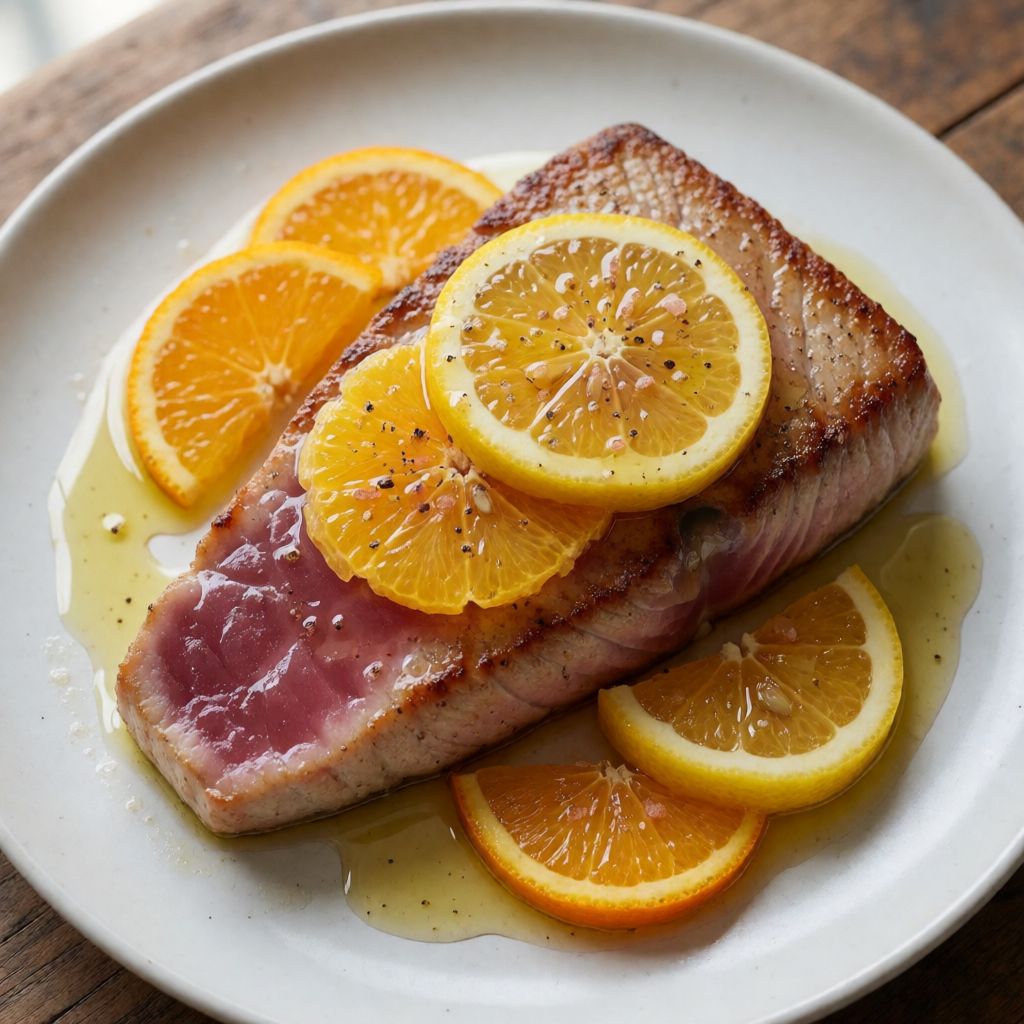
 AI photo
Tuna Fillet with Citrus
Pan-seared tuna fillet finished with orange and lemon juice, zest and Taggiasca olives.
Labels are worked out automatically from the ingredients and can be wrong. Check the packaging if it matters to you.
Ingredients
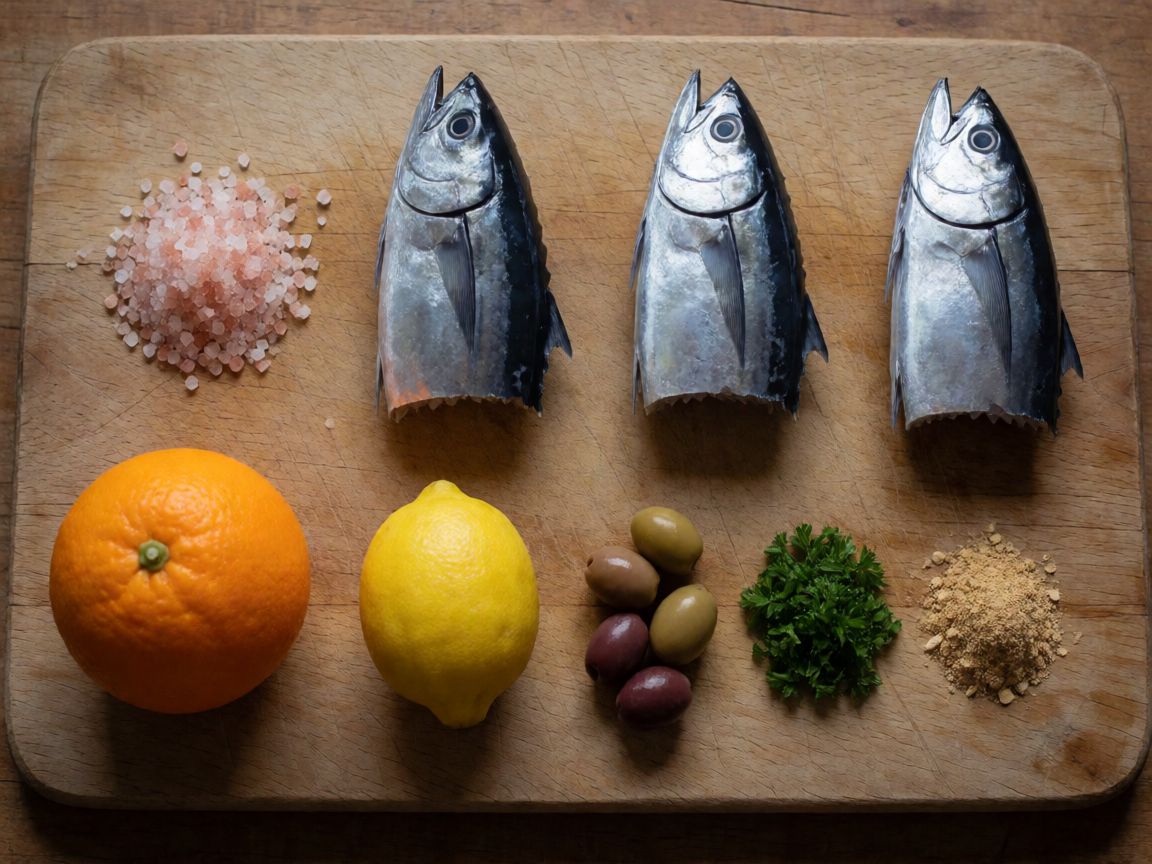
- 4 pcs Tuna Fillet
- Olive Oil to taste
- Himalayan Pink Salt to taste
- White Pepper to taste
- 1 pcs Orange
- 1 pcs Lemon
- Taggiasca Olives to taste
- Parsley to taste
- Ground Ginger to taste









Steps
Squeeze the juice from the orange and lemon, then grate the zest, avoiding the white pith.
5 minBrush the tuna fillets with olive oil using a pastry brush.
2 minHeat a non-stick frying pan and sear the tuna fillets for a few minutes on each side.
6 minSeason with salt, ground ginger and freshly ground white pepper.
1 minPour in the citrus juice, add the zest and cook for a few more minutes. It's ready when the thickest part reaches 63°C.
3 minAdd the Taggiasca olives and stir through the sauce.
1 minServe the tuna drizzled with the sauce, garnished with parsley, alongside a mixed salad.
1 min
This is a fish steak, not a stew — four tuna fillets seared hard on the outside and left pink-to-dusty in the middle, then dressed with a sauce you make from their own pan juices plus orange, lemon, and small salty olives. The logic is simple and old: a fish with almost no connective fat behaves like meat, so you treat it like meat — fast heat, short time, rest the idea of "cooked through" at the door.
What decides whether this works is the sear and the stop. The pan has to be properly hot before the fillet goes in, so the surface sets and browns in the first seconds rather than steaming in its own moisture — that's the crust, and it's also what keeps the fillet from sticking and tearing when you turn it. Then you watch the middle: push past 63°C at the thickest point and the proteins that were holding juice let it go, and you get the dry, mealy centre people associate with "well-done tuna" and don't actually want. The 63°C the recipe gives you is a lower bound, not a target to blow past — the colour change from ruby to a duller pink is your real signal, the thermometer just confirms it.
Some say tuna has to be cooked through and white, the way cod or haddock is, because that's what "cooked fish" looks like on a British plate. No — because tuna isn't flaky white fish, it's a swimming muscle built in long continuous fibres with very little fat running through it, and it dries out the moment you push it past medium. Compare it to your Sunday joint: a shoulder of lamb forgives an extra twenty minutes in the oven, tuna does not forgive an extra two.
Tuna fillet: buy it in steaks, not cut from a frozen block if you can help it — look for deep, even colour with no greying at the edges, which is the first sign it's started to oxidise and lose its texture. Thickness changes your timing, not your target: a thicker steak needs longer to reach the same 63°C at its centre, so judge by that colour change and the give under a fork, never by the clock alone.
Olive oil, for brushing: the criterion here is an oil that can sit in a hot pan for a few minutes without smoking and without fighting the citrus and olives for attention. Extra virgin is fine in the small amount a brush puts down — you're not deep-frying in it. If you want a cleaner, quieter oil underneath so the citrus sauce is the only voice, use a light, unscented vegetable oil instead; you lose a little roundness but gain nothing is shouting over the orange.
Himalayan pink salt: it is salt, with a trace of minerals that give it colour and a story, not a different seasoning power. Any fine sea salt or table salt does the identical job of pulling moisture to the surface and seasoning the crust — the pink one earns its price from marketing, not from chemistry.
White pepper instead of black: it's made from the same berry, just stripped of its skin and fermented in water before drying, which gives it a sharper, more floral heat and none of the dark flecks black pepper would leave in a pale citrus sauce. If you only have black pepper, use it — the dish won't collapse, it'll just look a little more rustic.
Orange and lemon: squeeze first, zest after, and keep the zest off the white pith underneath — that pith carries the bitter compounds that will undo the brightness you're going for. A light hand with a fine grater or zester does this in seconds; scraping too deep is the usual mistake, not using too little zest.
Taggiasca olives: small, Ligurian, cured gently so they stay soft and mild rather than sharp — the opposite of the big green stuffing olives sold for cocktail sticks. The substitution criterion is small size and soft, mellow flesh rather than brine-forward bite; a small Kalamata, pitted and used sparingly, is the nearest stand-in most British supermarkets will give you. Add them at the end, only to warm through — simmer them hard in the sauce and they turn rubbery and give up what makes them pleasant.
Ground ginger: an odd guest at a Mediterranean table, but it does real work — its warmth cuts through the oiliness of the tuna the same way the citrus does, from a different angle. Most UK kitchens already have a jar of it for baking; here it finally earns its keep outside a cake tin.
Parsley: in at the very end, uncooked, for the smell more than the taste — heat kills its brightness fast, so it's a garnish, not an ingredient you cook with.
On a domestic hob: a thin pressed-steel pan won't hold the heat a fillet needs for a proper sear — it cools the moment the cold fish touches it, and you end up stewing rather than browning. Give the pan real time to heat before the fish goes in, and don't crowd four fillets into a pan built for two; patience here isn't a virtue, it's the only thing standing between you and tuna that tastes boiled.