
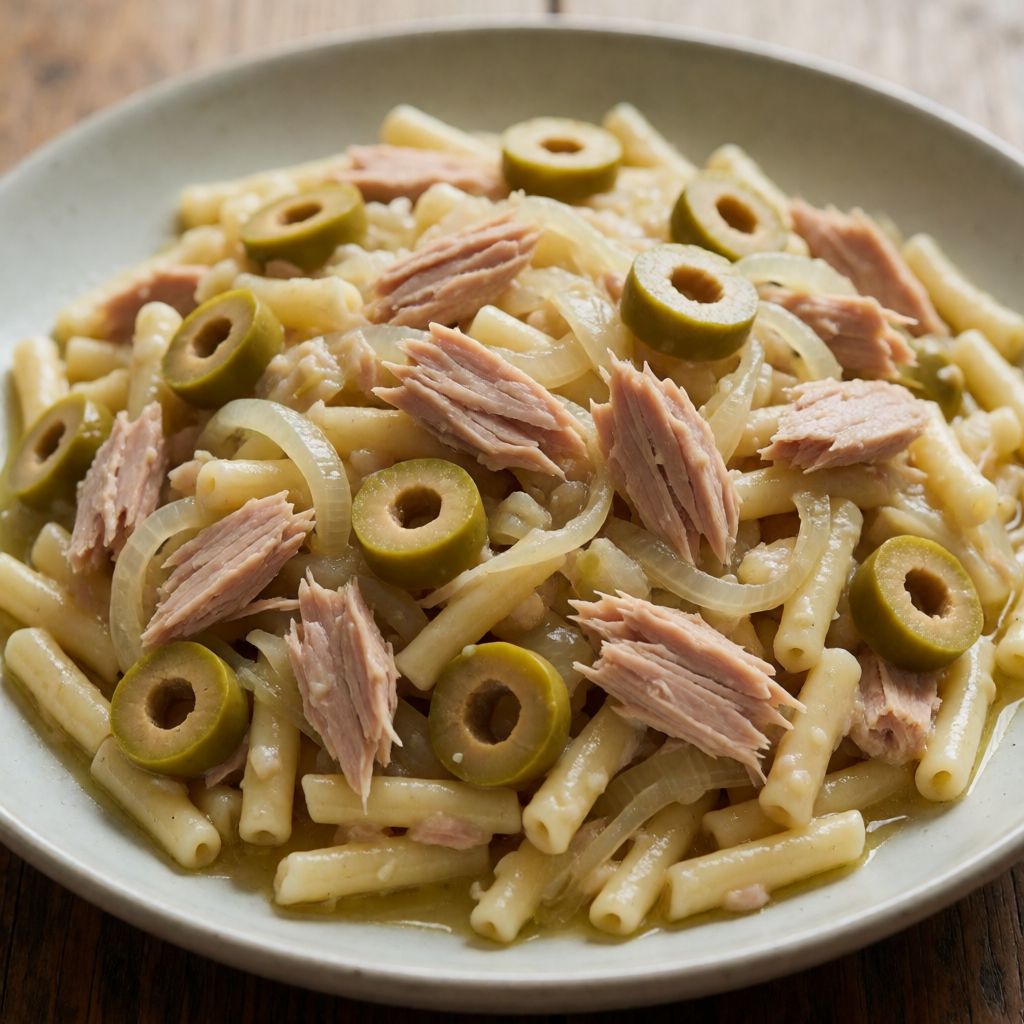
 AI photo
Pasta with Tuna and Green Olives
A quick pasta dish with tuna, green olives, onion and ground ginger.
Labels are worked out automatically from the ingredients and can be wrong. Check the packaging if it matters to you.
Ingredients
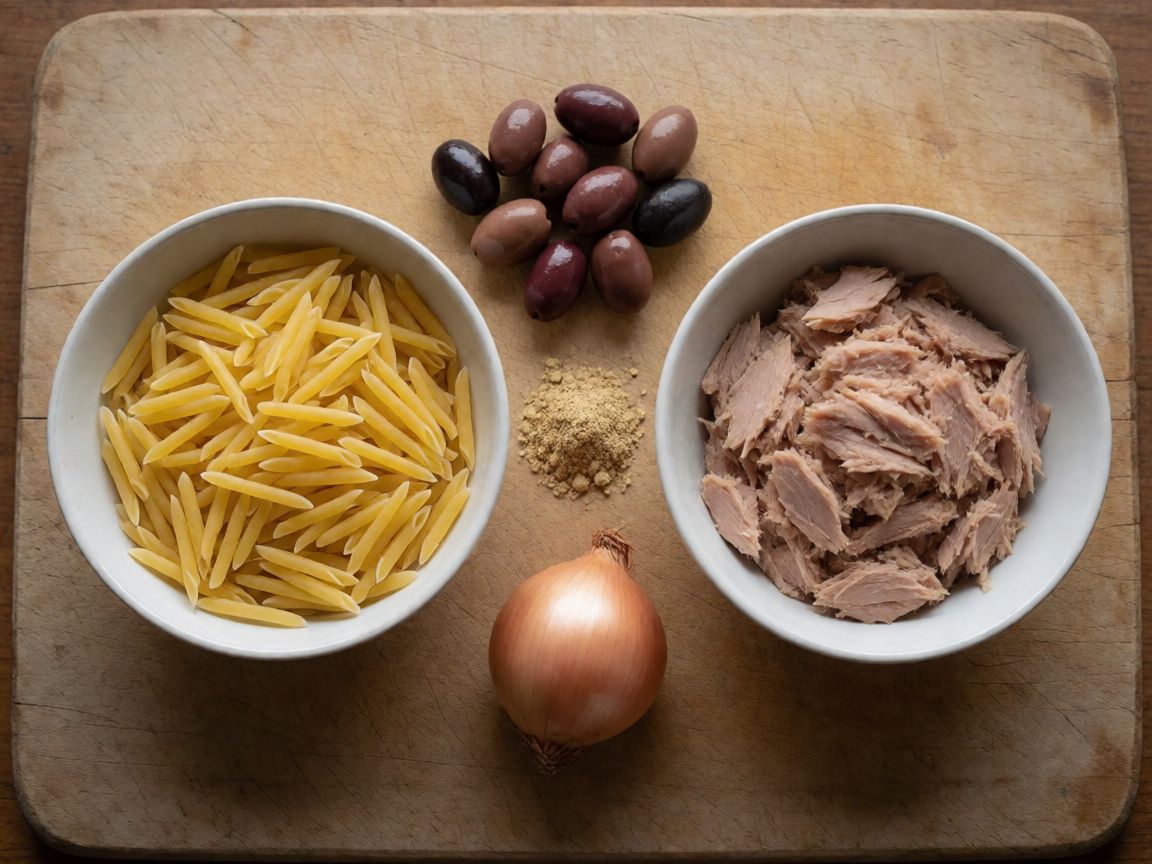
- 360 g Short pasta
- 200 g Tuna in oil
- 120 g Pitted green olives
- 1 pcs Onion
- 2 tsp Ground ginger
- Olive oil to taste
- Salt to taste
- Black pepper to taste







Steps
Peel and finely chop a small onion. Pour a few tablespoons of olive oil into a pan, add the chopped onion and cook over medium heat for a few minutes until soft and golden.
5 minThoroughly drain the tuna in oil and mash it with a fork. Add it to the pan with the onion, stir and season with two teaspoons of ground ginger.
2 minContinue cooking over low heat, adding a few spoonfuls of hot water if needed.
5 minSlice the pitted green olives into rounds, add them to the tuna and stir again.
2 minFill a large pot with plenty of water and season with salt once it comes to the boil.
10 minAdd the short pasta and cook until al dente according to the packet instructions.
10 minAs soon as the pasta is cooked, drain it and add it hot to the sauce.
1 minQuickly toss everything together in the pan for a few minutes so the pasta absorbs the flavours, then finish with a pinch of ground black pepper to taste.
3 min
This is a tin-and-jar pasta — the kind you make on a Tuesday when the roast was Sunday's business and you want something warm without planning a shop. Onion, tin of tuna, a jar of olives, a tin of ground ginger from the back of the spice drawer. Nothing here needs a kazan or a market run; it needs a wide pan and twenty-five minutes of attention.
What decides whether it works is not the list but two moments. First: the onion has to go soft and turn the colour of pale honey, not brown — that's the sugar in it just starting to show, not caramelising hard. Push past that point and the onion turns bitter and the whole dish tastes of ash underneath. Second: the tuna must never fry. It's already cooked, sitting in oil in its tin — all it needs is to warm through and loosen with a little water into something that can coat pasta, not a browned, rubbery crumble sitting on top of it.
The ginger is the surprise here, and it earns its place: oily tinned fish, left alone, tastes flat and a bit metallic. A warm, slightly citrus heat like ground ginger cuts straight through that fattiness the way lemon or chilli would in an Italian version — it's doing the same job by a different route. The olives, sliced into rounds rather than left whole, aren't decoration either: cut them and the brine inside gets to the sauce, not just to whoever bites into a whole one.
The onion: one small one is enough for four people, finely chopped so it melts rather than stays as separate crisp pieces. Its job is to build the base flavour the tuna and olives then sit on top of — without it the dish tastes like straight tinned fish with pasta thrown in. Any onion works; a milder one (shallot, or the white part of a leek) if you want it to disappear into the background rather than announce itself.
Tuna in oil, drained thoroughly — and that word "thoroughly" matters more than it looks. The oil in the tin is usually a cheap, often flavourless sunflower oil put there to keep the fish moist in storage, not to cook with. Left in, it thins the sauce and dilutes the olive oil you're about to add for taste. Drain it hard, press it out with the fork before you mash, and build the fat you actually want to taste — your own olive oil — from scratch in the pan. If you only have tuna in water, it's not a disaster: it's leaner and drier, so add an extra spoon of oil when it goes in, since there's no reserve of fat in the fish itself to carry flavour.
Ginger, ground, two teaspoons: this is not a pinch-of-spice garnish, it's structural. Mashed oily tuna, warmed through, has a flat, slightly metallic taste on its own — ginger's warmth and faint citrus edge lift it the way a squeeze of lemon or a chopped chilli would in a Mediterranean tuna pasta. If you only have fresh ginger, grate a smaller amount — fresh is wetter and sharper, ground is rounder and more diffuse through the sauce, so adjust by taste rather than by swapping gram for gram.
Green olives, pitted, sliced into rounds: buy the ones sold loose or jarred in brine rather than the small tinned ones packed in oil-and-stone, which tend to be softer and blander. Slicing them isn't fussy plating — a whole olive keeps its brine locked inside and just rolls around the plate; cut rounds let the salt and acid actually reach the sauce. If green olives aren't to hand, black ones will do a version of the same job, though they're softer and sweeter rather than sharp — not quite the same bite, but not a wrong dish either.
Olive oil here just needs to be any oil with no strong character of its own so it carries the onion and tuna rather than competing with them — a plain, unassuming olive oil is fine; a flavourless vegetable oil would also work, you'd just lose a little of the roundness olive oil brings.
On the pasta itself: some say you should add a splash of oil to the pasta water to stop it sticking. Don't — the oil floats on top, coats the strands as they come out, and then your sauce slides straight off them instead of gripping. What actually stops pasta sticking is enough water in a big enough pot, and stirring once it goes in. Salt the water once it's properly boiling, not before — it saves you waiting on a salted pot to come back to the boil, and the pasta seasons from the inside as it cooks, swelling with that salted water rather than being salted only on the surface afterwards. Drain it but don't rinse it: the starchy film clinging to it is exactly what lets the tuna sauce hold on once the two meet in the pan, rather than sitting next to each other on the plate. And the pepper goes in right at the end, off the heat or nearly off it — ground pepper's aroma is volatile; cooked in from the start it just turns flat and a little bitter, cooked in at the end it still smells like pepper.