
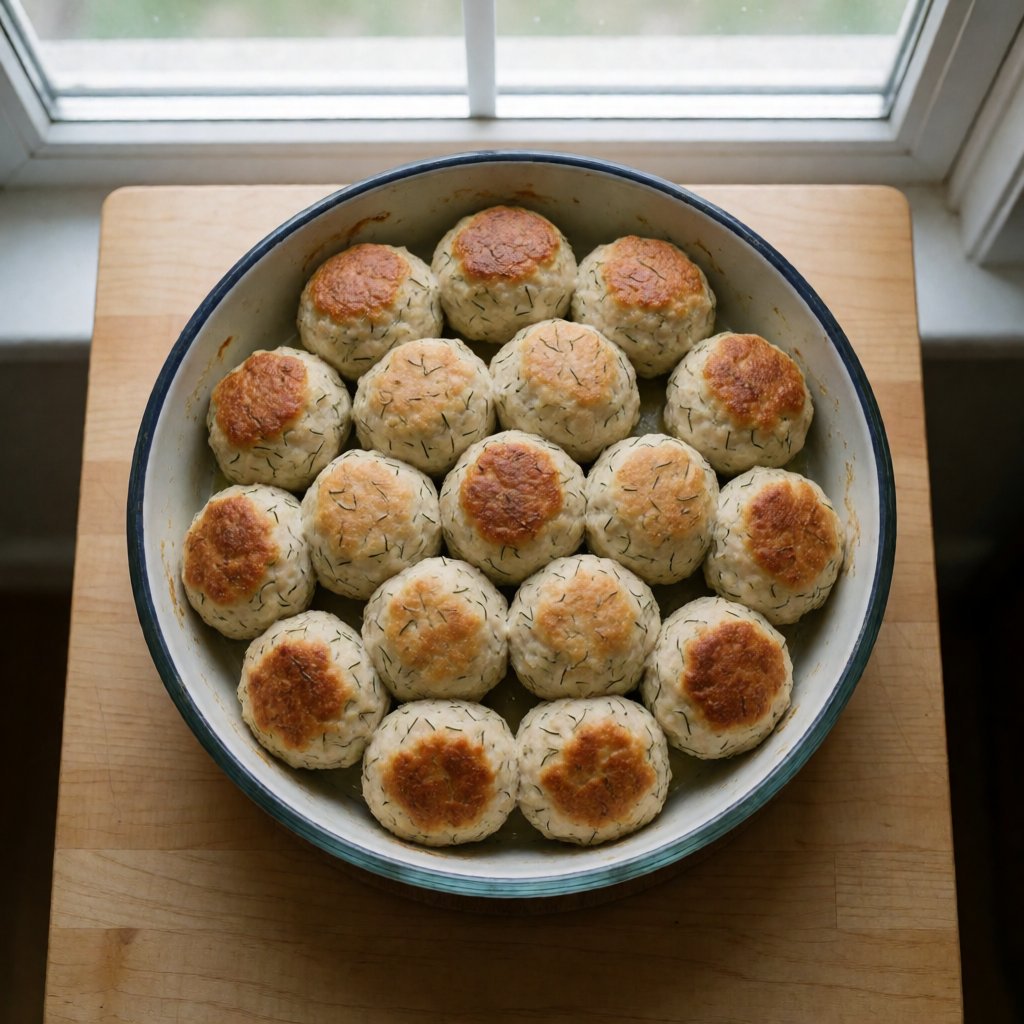
 AI photo
Turkey Meatballs
Juicy baked turkey meatballs, simple and quick to make for a weeknight dinner.
Labels are worked out automatically from the ingredients and can be wrong. Check the packaging if it matters to you.
Ingredients
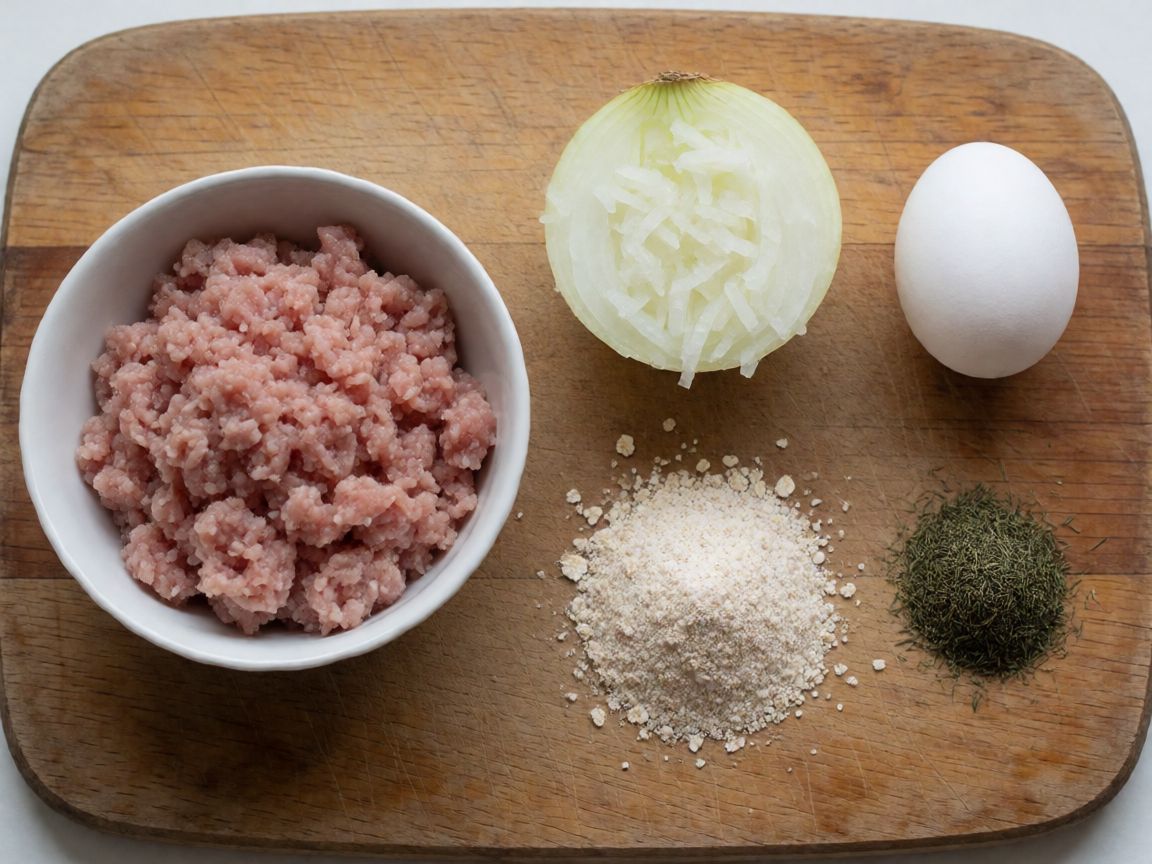
- 400 g turkey mince
- 0.5 pcs onion finely grated
- 1 pcs egg
- 30 g porridge oats fine
- 1 pinch salt to taste
- 1 pinch black pepper to taste
- 1 pinch dried dill to taste
- 1 tsp sunflower oil for greasing the dish







Steps
Mix everything together and shape into balls about 4 cm wide (around 10 pieces).
Place the balls in a greased baking dish with a rim.
Put the dish in an oven preheated to 200°C and bake for 25 minutes, until the centre reaches 74°C.
25 minTake the dish out of the oven.
These aren't the fried, sauce-braised kind of meatball — no pan, no gravy doing the rescue work of hiding a dry centre. They go into the oven plain, on heat alone, which means the whole mechanism of the recipe is built around one problem: turkey mince, breast or thigh, carries almost no fat of its own. Beef or pork mince forgives a few extra minutes because the fat inside it bastes the meat as it melts. Turkey has nothing like that, so egg and oats aren't filler here — they're standing in for the fat that isn't there, soaking up moisture and holding it inside the ball instead of letting it run out into the dish.
What decides whether this works isn't the 25 minutes on the timer. It's whether the mix is wet and bound enough to hold its shape rather than flatten into a puck, and whether you pull the tray out at the right internal state rather than trusting the clock alone. 200°C and 25 minutes is a floor, not a verdict — a domestic oven runs hotter at the back near the fan than at the front, and a dish on the top shelf cooks differently to one lower down. The only honest check is a thermometer pushed into the fattest meatball: 74°C at the centre, done, whatever the timer says.
Some say you can tell meat's cooked by cutting it open and looking at the colour. Not with poultry, and not reliably — turkey can stay faintly pink well past a safe core temperature, and it can also look pale and done on the outside while the middle's still cool. Colour lies in both directions here; a thermometer doesn't.
Turkey mince itself varies more than the bag tells you. Breast mince is leaner and will dry out faster; thigh mince, if your shop sells it separately, carries a touch more fat and forgives you slightly. If turkey isn't in the shop, chicken mince behaves the same way for the same reason — both are lean, both need this recipe's binder trick. Pork or beef mince, by contrast, would barely need the safety net at all, because they bring their own fat along.
The onion goes in grated, not diced, and that's not fussiness. A quarter onion chopped into little cubes wouldn't fully cook through in 25 minutes — you'd meet a raw, crunchy bit inside an otherwise cooked meatball. Grated, it lets go of its moisture straight into the mixture and more or less disappears into the structure, cooking with the meat instead of sitting apart from it.
Egg and oats do the same job from two different directions. The egg's protein firms up as it heats and helps hold the shape. The oats swell — fine oats drink the moisture the mince and onion release, and keep it inside the ball rather than letting it pool in the dish. Any starchy binder that swells on contact with liquid will do this work: breadcrumbs, semolina, even a spoon of cooked rice. It isn't the grain that matters, it's the drinking. Worth giving the mixed bowl a minute before you start rolling — the oats need a moment to take up moisture before they can hold anything together, and rushing this is how you end up with meatballs that crack as they bake.
Salt isn't only there for flavour. It dissolves into the moisture in the mix and pulls a protein called myosin out of the meat fibres; that protein goes tacky and glues the mixture together — which is exactly why a well-salted mix holds its shape in the oven and an under-salted one crumbles on the fork. Season it properly, not nervously.
Dried dill is quiet work, not loud — turkey has little flavour of its own to compete with, so a soft, grassy herb sits alongside it rather than fighting it. Any mild dried herb with no heavy oil of its own does the same job — parsley, a touch of thyme. Leave rosemary for meat with more character to spare.
The oil has exactly one task: stopping the meatballs sticking to the dish. So the criterion is any oil with no smell of its own — sunflower, rapeseed, plain vegetable oil. Keep anything with a strong personality, like olive oil, for a dish where you actually want to taste it. Four hundred grams makes around ten meatballs, enough for two people with a proper appetite — about five each, which is a fair Sunday-night plateful once you've added something green on the side.
·