
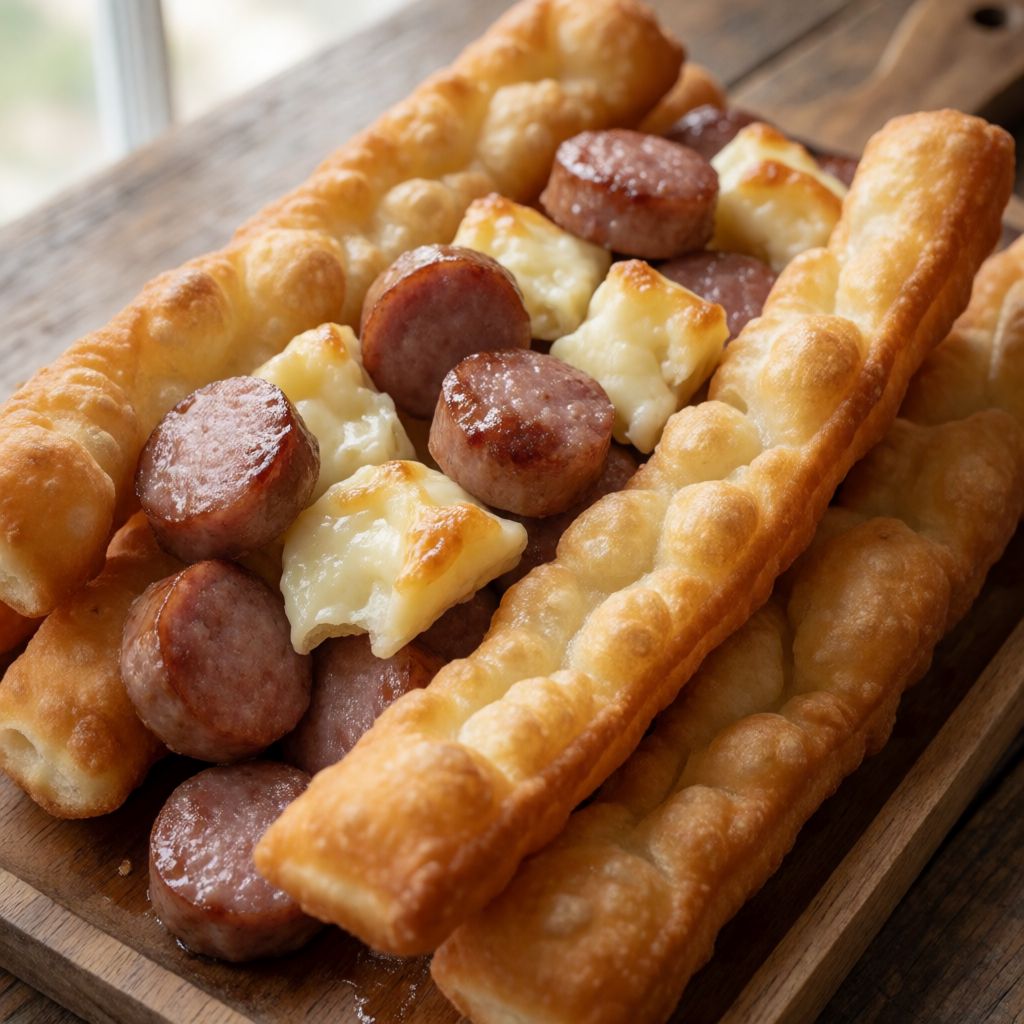
 AI photo
Tuscan Zonzelle – Fried Dough Strips with Sausages and Cheeses
Tuscan fried dough strips, puffed up golden and served hot with sausages and cheese.
Labels are worked out automatically from the ingredients and can be wrong. Check the packaging if it matters to you.
Ingredients






Steps
Pour the flour into a large bowl, add the warm water, dissolve the yeast and sugar in it, and mix quickly with a fork.
Add the olive oil and salt, and knead well until all the flour is worked into the dough.
Transfer the dough to a work surface and knead with your hands until smooth, then put it back into the bowl.
Cover with cling film and leave to rise until doubled in size.
60 minUsing a dough scraper, cut strips from the dough at least 15 cm long and 1 cm thick, and flatten them slightly with your fingers.
Fry the strips in plenty of hot oil, 2-3 pieces at a time, turning often, until puffed and golden.
Place the cooked zonzelle on paper towels and serve hot with sausages and cheeses.
Zonzelle is just fried bread, but fried in a way that makes it blow up like a little pillow — a strip of yeasted dough that goes into hot oil flat and comes out fat, golden, with a hollow airy middle. It is market food, fair food: cheap dough stretched next to the sausages and cheese that cost real money, so the plate looks generous without the bill matching. Nothing fancy is happening here, and that's the point.
What decides whether it works is two things, and they both happen before the oil ever gets hot. First, the dough has to double — properly, visibly, not "it's been an hour so it must be ready". That rise isn't decoration, it's where the gluten builds a stretchy net and the yeast fills it with gas. Second, the oil has to be hot enough that the moment dough touches it, the surface seals shut and the gas and steam inside have nowhere to go but out — which means up, which means puff. If either of those is missing — dough that hasn't climbed, or oil that's lazy — you don't get a pillow, you get a pancake that drank oil.
There's a decent English cousin to borrow the logic from: Yorkshire pudding puffs the same way, fierce heat flashing moisture into steam faster than the batter can stay flat. Zonzelle does it with yeast gas instead of raw steam alone, but the principle — trap gas, hit it with heat, watch it expand before it has time to collapse — is the same mechanism wearing a different coat.
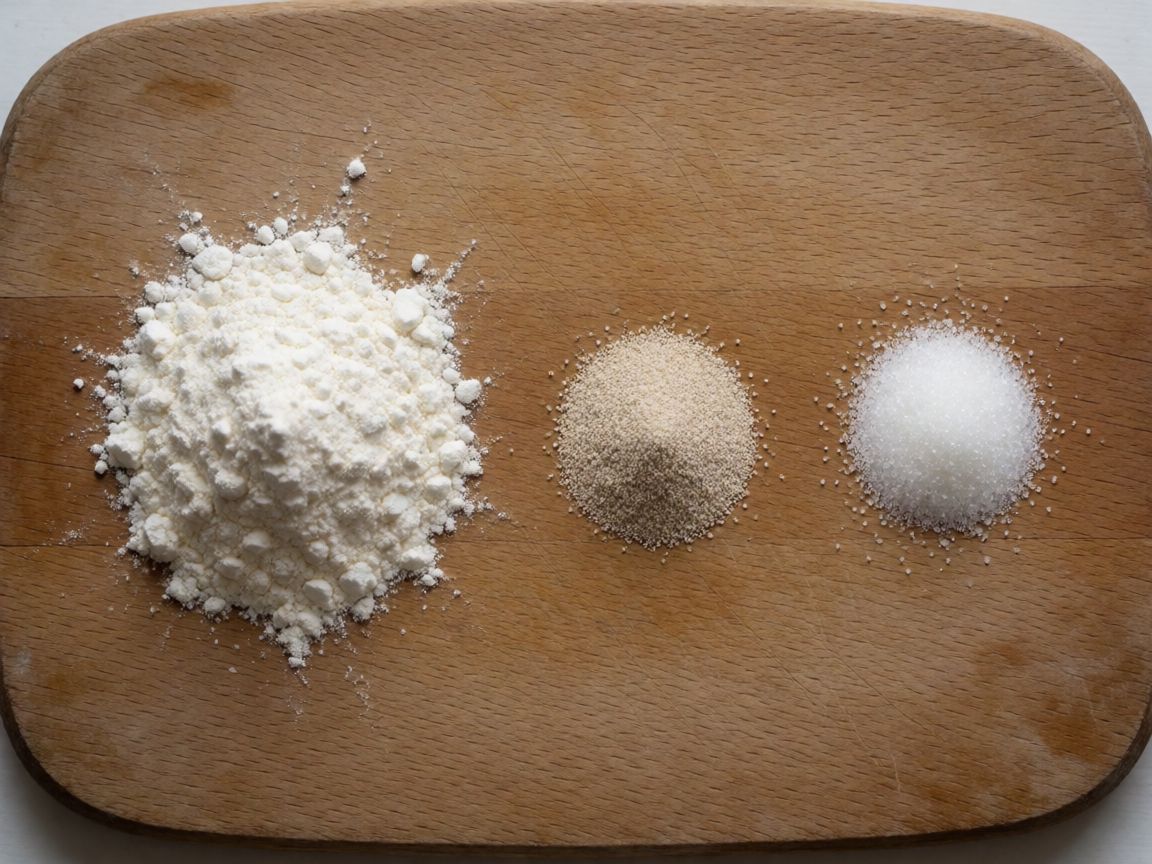
Flour is the scaffolding, nothing more exotic. Plain flour works; if you've got bread flour with a bit more gluten strength, it'll hold the gas a touch better and puff a bit higher, but plain is what Tuscan kitchens actually used because that's what was in the sack. Don't reach for something low-protein like cake flour — the net won't hold, and the dough will tear rather than stretch when it tries to expand in the oil.
The water is "warm", and that word matters more than it looks. Warm means comfortable against your wrist, like bathwater you'd actually get into — not hot. Yeast is a living thing you're waking up, not sterilising; past a certain heat (nothing you'd want to put your hand in) it just dies, and no amount of extra time will bring dead yeast back to life. If you're using dried yeast instead of fresh, use roughly a third of the weight — fresh yeast is mostly water, dried is concentrated, so 20g fresh is in the region of 7g dried.
The pinch of sugar isn't there to sweeten anything — it's yeast's first meal, the quickest sugar it can grab before it starts breaking down the starches in the flour itself. Skip it and the dough still rises, just slower off the start line. The olive oil in the dough is for tenderness and a faint flavour underneath the fry — any neutral oil would do the structural job, but olive oil is cheap in Tuscany and gives a little of itself back, so it earns its place. Salt does the obvious flavour work and also tightens the gluten slightly, which is useful here since that gluten is what has to survive being stretched thin and then blasted with heat.
For frying, "vegetable oil, to taste" really means: any oil with no smell or character of its own, because you want to taste the dough and whatever sausage and cheese you've put next to it, not the oil. Sunflower or rapeseed oil, both easy to find in a British supermarket, do the job without announcing themselves. Don't use your good olive oil here — not because it's wrong, but because it's wasted: you'd be frying away money for a flavour that fries off anyway, and that's the kind of economics that would make a Tuscan grandmother wince.
Cutting the strips with a scraper rather than a knife isn't fussiness — a scraper gives you a clean, even thickness along the whole length, and even thickness is what stops you getting a strip that's charred at the thin end and raw dough at the thick end by the time it's golden all over. In a home kitchen without a proper fryer, use a wide pan with oil deep enough to come at least halfway up the strips, and turn them — that's exactly why the recipe says "turning often": a domestic hob and a wide pan don't give you the all-over submersion a real fryer basket does, so the turning is doing the fryer's job for it. A plate lined with paper towels after frying matters for the same reason the oil temperature matters: a strip that puffed properly sheds most of its oil on contact with the paper; a strip that didn't puff just keeps weeping oil, which is the dough telling you, after the fact, that the oil wasn't hot enough.
And give the first rise its full hour, or longer if your kitchen's cool — patience here isn't politeness, it's the one ingredient with no substitute. Rush the dough and you can fix nothing later with hotter oil; you'll just burn the outside trying to force a lift that was never loaded in to begin with.