
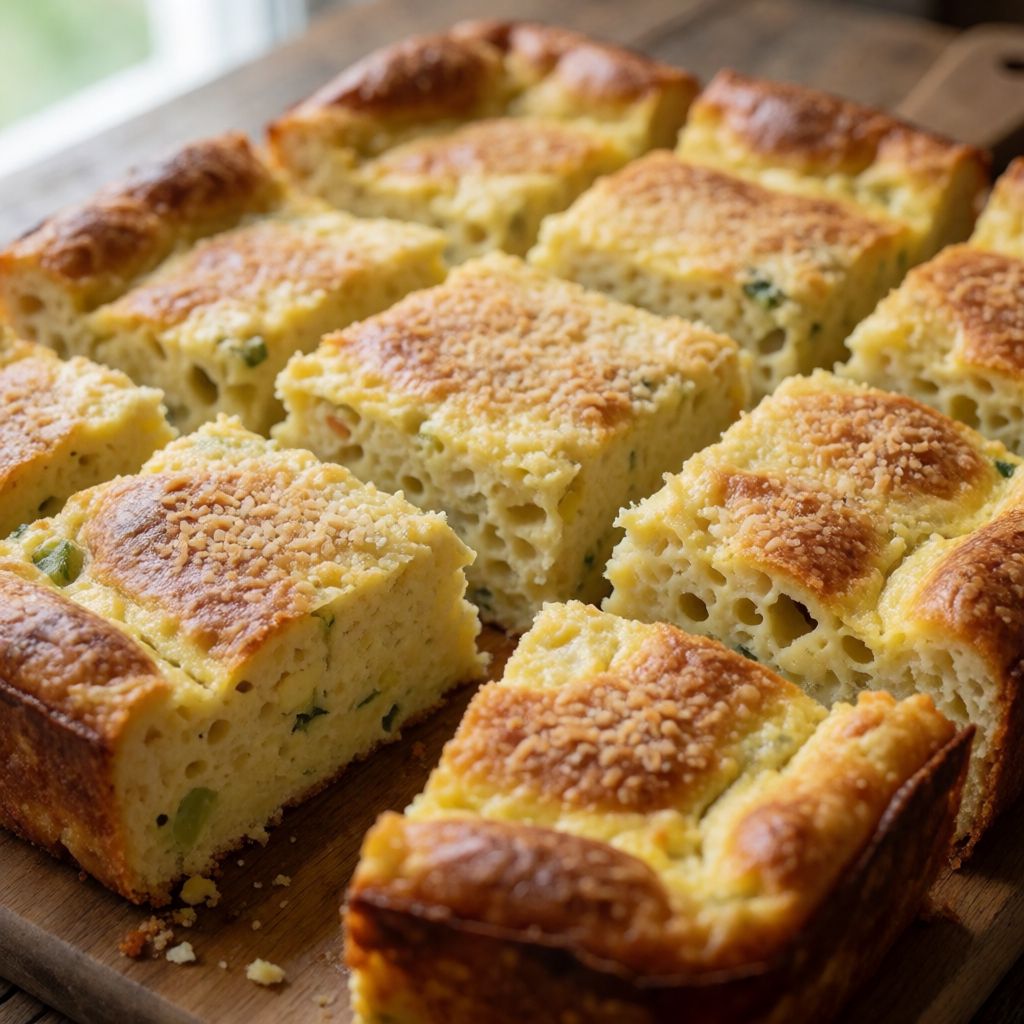
 AI photo
Gluten-Free Vegetable Bake — Just 10 Minutes' Prep
A quick savoury vegetable bake, needing just 10 minutes' prep before it bakes — handy for a busy weeknight.
Labels are worked out automatically from the ingredients and can be wrong. Check the packaging if it matters to you.
Ingredients
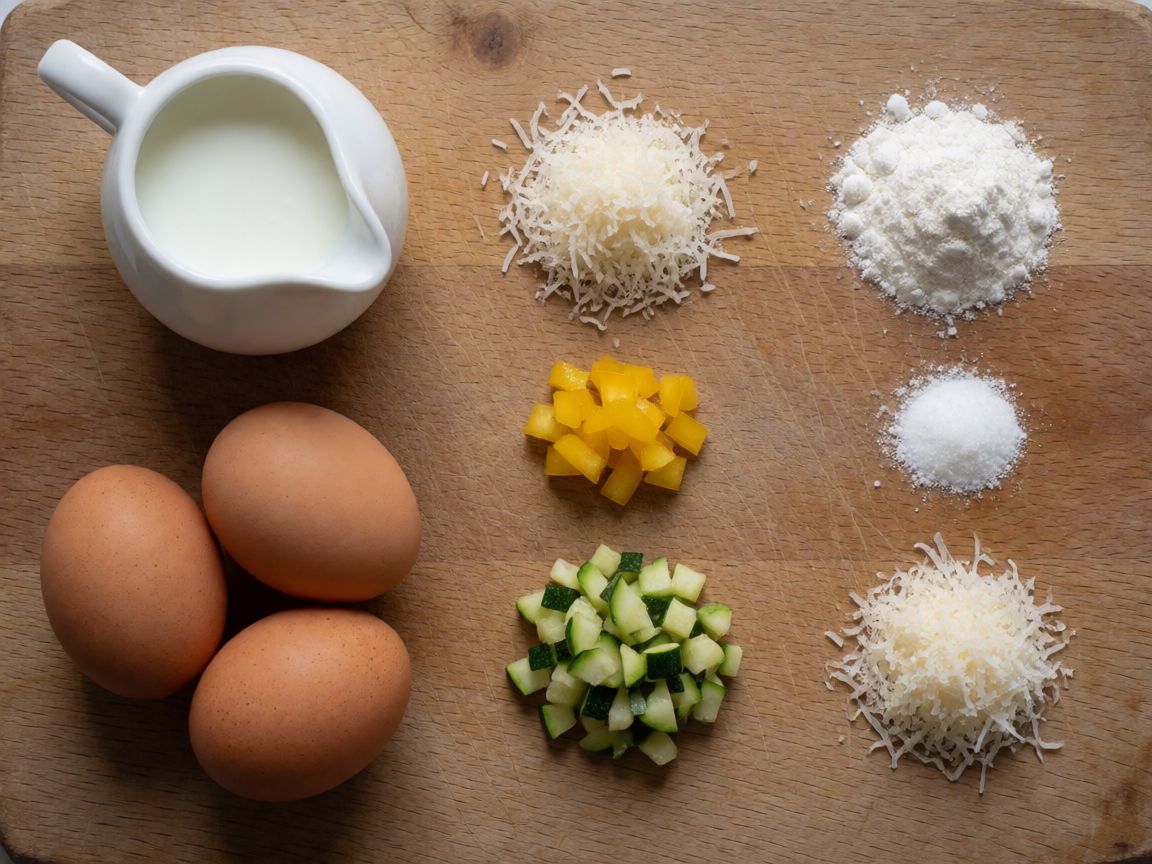
- 3 pcs Eggs
- 80 g Olive oil
- 100 ml Milk
- 60 g Parmesan grated
- 200 g Rice flour
- 15 g Baking powder
- Salt to taste
- Black pepper to taste
- 280 g Bell pepper
- 70 g Courgette
- 100 g Asiago











Steps
Whisk the eggs with a mixer for a few minutes, then add the olive oil, milk, salt, black pepper and grated Parmesan.
Sift in the rice flour and baking powder and mix.
Wash and cut the courgette and bell pepper into small cubes, and fold them raw into the batter.
Add the Asiago, cut into cubes, and mix through.
Pour the batter into a ring tin greased with oil and dusted with rice flour.
Bake in a fan oven preheated to 180°C for about 40 minutes.
40 minCheck it is done with a wooden skewer — it should come out dry.
This isn't a cake pretending to be savoury — it's a quiche that gave up on pastry. The structure comes entirely from eggs setting and rice flour thickening the batter, with baking powder doing the lifting that gluten would normally do by trapping gas in elastic strands. Rice flour has no gluten, so there's nothing to overmix and nothing to toughen — but there's also nothing holding air on its own, which is why the eggs get whisked first, on their own, before anything else goes in. That whisking isn't decoration. It's beating air into the eggs so the bake has some lift before the baking powder even starts working.
What decides whether this works is moisture control, not flavour. Courgette and raw bell pepper go in uncooked, and they will release water as they bake — that's fine, rice flour batters cope with wetter mixes than wheat ones because there's no gluten network to go gluey. But cut the vegetables too large and they'll stay wet and underdone in the middle while the batter round them is set; cut them to a small, even dice and they cook through in the same 40 minutes as everything else.
The tin matters more than people think. A ring tin (a tube pan, essentially a bundt without the fancy grooves) isn't there for looks — it's there so heat reaches the centre from both the outside and the middle hole, because a solid block this wet would otherwise set at the edges long before the middle firms up. In a normal UK kitchen without one, a shallow, wide dish is the honest substitute: shallow because depth is the enemy here, not width.
Doneness isn't a clock reading. The skewer test is the real instruction here — dry means the egg proteins have fully coagulated and there's no raw batter left to cling to the wood. Forty minutes is where to start checking, not where to stop; ovens vary, and a wider or shallower dish than a classic ring tin will often get there sooner because the batter is thinner through its depth.
The eggs are the actual binder of this whole thing — not the flour. Whisked first and well, they trap air that the baking powder then expands with heat; skip the proper whisking and you get a flatter, denser result even though nothing else changed. Use the freshest eggs you can, because older eggs whip thinner and hold less air — not a disaster here, just a flatter outcome.
Olive oil keeps the crumb moist and carries flavour, but its job is structural too: fat coats flour particles and slows water absorption, which in a gluten-free batter helps keep things tender rather than gummy. Any oil with no strong smell of its own works — sunflower, a light rapeseed oil — but swap in something assertive like a peppery extra virgin and it'll fight the Parmesan rather than support it.
Rice flour is chosen for being naturally gluten-free and reliably starchy, giving structure without elasticity — which is exactly what you want when there's no gluten web to overdevelop by stirring too hard. A pre-mixed gluten-free flour blend will usually substitute one-for-one, since most are built to behave like this; plain wheat flour would also work mechanically but defeats the point of the dish.
Parmesan goes into the batter itself for salt and umami depth; Asiago is cubed and folded in separately so it stays as pockets of melted cheese rather than disappearing into the mix — that's a texture decision, not a flavour one. If Asiago isn't to hand, any semi-firm cheese that melts without turning oily — a mild Cheddar, a young Gouda — does the same job; just taste for salt afterwards, since cheeses vary a lot there.
The courgette and pepper go in raw and diced small for the reason already given: small pieces cook through in the batter's own bake time, large ones don't. Courgette especially carries a lot of water, so if a specimen feels unusually heavy and wet, pat the diced pieces dry on paper towel first — not because the recipe demands it, but because it's cheap insurance against a soggy centre. This isn't a dish that needs patience in the active sense — there's no dough to rest, no sauce to reduce — but it does need patience at the oven door: resist opening it early, since a sudden temperature drop on a wet batter slows the set exactly where it's most fragile, in the middle.