
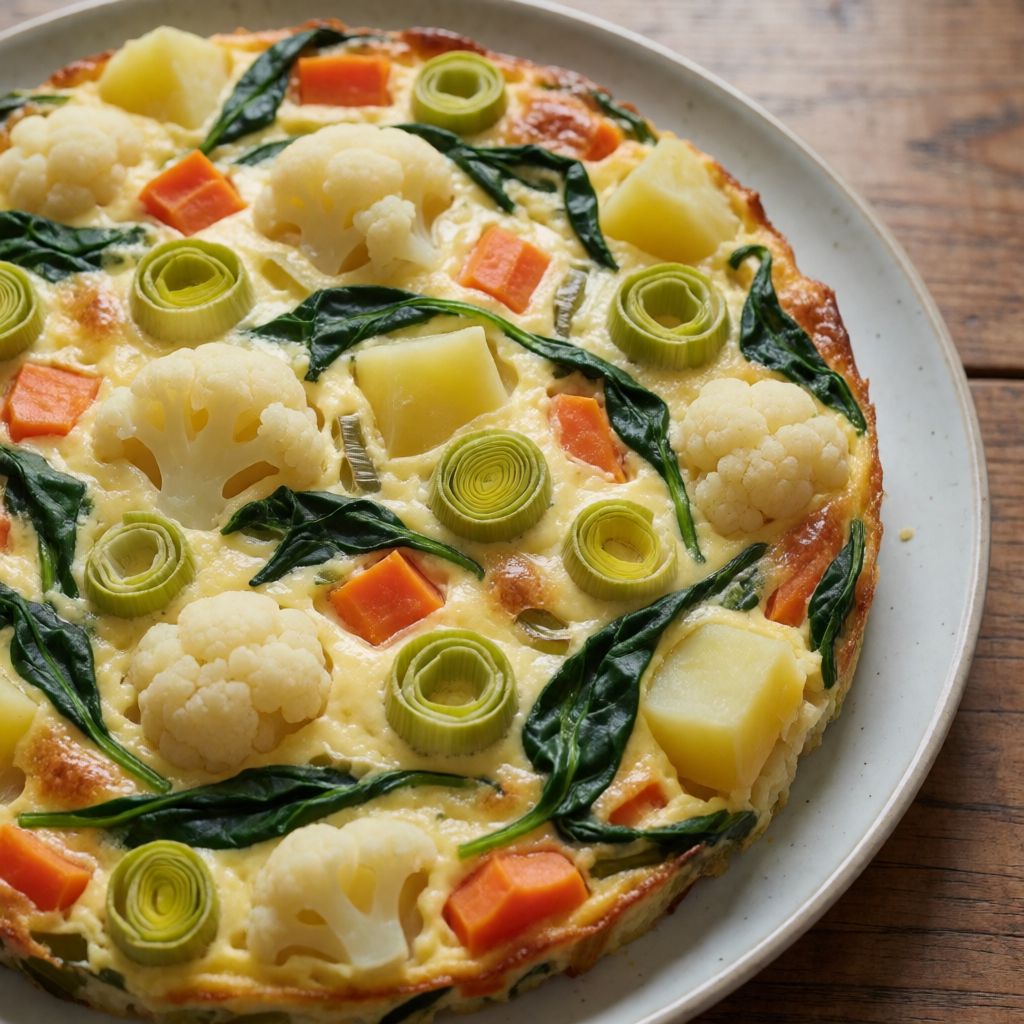
 AI photo
Vegetable Bake
A simple vegetable bake with leek, potato, cauliflower, carrot and spinach, bound with eggs and cheese.
Labels are worked out automatically from the ingredients and can be wrong. Check the packaging if it matters to you.
Ingredients
- 2 pcs Leek
- 4 pcs Potato
- 1 pcs Cauliflower
- 4 pcs Carrot
- 200 g Spinach frozen
- 3 pcs Eggs
- 50 g Parmesan
- 200 ml Breadcrumbs dried
- 200 g Mozzarella fresh
- 1 tbsp Butter for greasing the baking dish
- 50 ml Breadcrumbs dried, for sprinkling
- Salt
- Black Pepper fresh











Steps
Prepare all the vegetables and chop them very finely.
Put the vegetables in a pot, cover with water and add a little salt.
Cook for 8 minutes.
8 minDrain the water and blend the vegetables together with the eggs and Parmesan.
Add the breadcrumbs and half the mozzarella, and blend again until combined.
Set aside the other half of the mozzarella for the topping.
Grease a baking dish with butter, spread the vegetable mixture in it, sprinkle with 50 ml breadcrumbs and slice the remaining mozzarella over the top.
Bake in a preheated oven at 180°C, fan setting, for 30 minutes.
30 min
This is a vegetable terrine dressed up as a bake — a casserole in the French sense, where a heap of boiled, blended vegetables is bound with egg and cheese so it sets into slices instead of collapsing into soup. What decides whether it works isn't the oven, it's what happens before the oven: how fine you chop, how well you drain, and whether the mixture is thick enough to hold a shape when you cut into it.
Some say vegetables for a bake like this need to be "cooked through" in the full sense — soft all the way, falling apart. No, because you're going to blend them anyway, and overcooking just means more water locked into soft cell walls, water that has nowhere to go but out into your mix later, turning it to soup. Eight minutes is a lower bound, not a target: you want the carrot to bend, not snap, and the cauliflower to give to a fork without dissolving. Chopping finely first matters more than cooking longer — small pieces cook evenly and quickly, so you're not waiting on a stubborn potato chunk while everything else turns to mush.
On ingredients, start with the leek. It's doing what onion normally does — sweetness and base flavour — but leek cooks into something softer and doesn't dominate the way raw onion can, which matters in a dish where every vegetable needs to meld into one mass rather than announce itself. No leek in the house, use a milder onion, just chop it finer, since onion holds its structure more stubbornly than leek even after boiling.
Potato and carrot are your bulk and your binder-helpers by nature: potato breaks down starchy and thick when blended, which is exactly the body you want instead of a watery purée, and carrot gives sweetness and a bit of fibre that keeps the mix from going to baby-food smoothness. Cauliflower is the vegetable most people think of as the dish's identity, but it's really just volume and a mild base — courgette or broccoli would behave similarly if that's what's in the fridge, since the cooking and blending method does the real work, not the specific vegetable.
Parmesan: any hard, aged, low-moisture cheese works on the same logic — it's chosen because it's dry, salty, and doesn't melt into a puddle, not because it's uniquely "right". Pecorino or an aged Gouda would do the same job of tightening the mix and adding savour without more liquid. Mozzarella, by contrast, is chosen for moisture and melt — fresh mozzarella specifically, because the drier, shredded "pizza" kind won't give you the same soft give inside and the same browned skin outside. If you can only get the dry shredded sort, it'll still work, just expect less gooey-soft reward in the middle layer.
Breadcrumbs appear twice and for two different reasons, and that's worth separating out, because otherwise it looks like a repeated ingredient rather than two jobs. The 200ml mixed into the vegetable mass is structural — it's drying out your mix so it bakes into slices, not sauce. The 50ml on top, before the mozzarella, is for texture only — a thin crust that gives contrast against the soft cheese and vegetable underneath, the kind of bite you'd get on a good gratin. Dried breadcrumbs are specified because fresh ones carry their own moisture, undermining the first job especially.
On your own hob and oven: a domestic fan oven at 180°C cooks more evenly than a conventional one because the fan keeps hot air moving round the dish rather than letting the top brown faster than the inside sets, so if you only have a non-fan oven, go a touch higher, around 190-200°C, to get a similar effect in a similar time, and watch rather than trust the clock — the top should be gold-brown and the cheese collapsed into itself, not blistered black. Thirty minutes is again a floor, not a verdict: push a knife in and if it comes out wet with mix, not just melted cheese, give it longer.
Patience here isn't really in the baking — it's in the draining and the chopping, the unglamorous bit before the oven even gets switched on. Rush the draining of the boiled vegetables and you carry water straight into the blend, and no amount of extra breadcrumbs quite forgives that later. Rush the chopping and you get uneven texture in the final slice — some parts silky, some parts chunky — which isn't wrong exactly, but it isn't the dish either. Slow down there, and the oven part genuinely takes care of itself.