
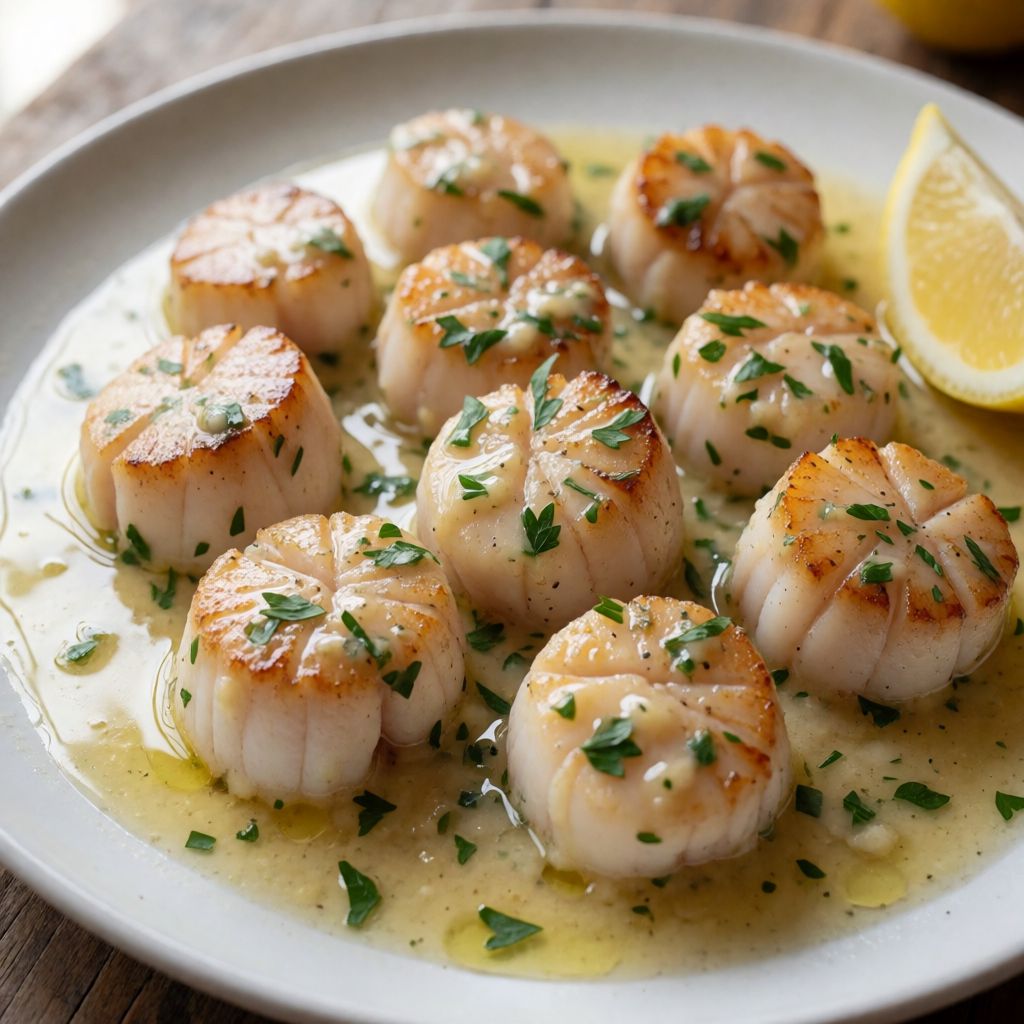
 AI photo
Venetian-Style Scallops
Pan-seared scallops with garlic, parsley, white wine and lemon, served in their shells Venetian style.
Labels are worked out automatically from the ingredients and can be wrong. Check the packaging if it matters to you.
Ingredients
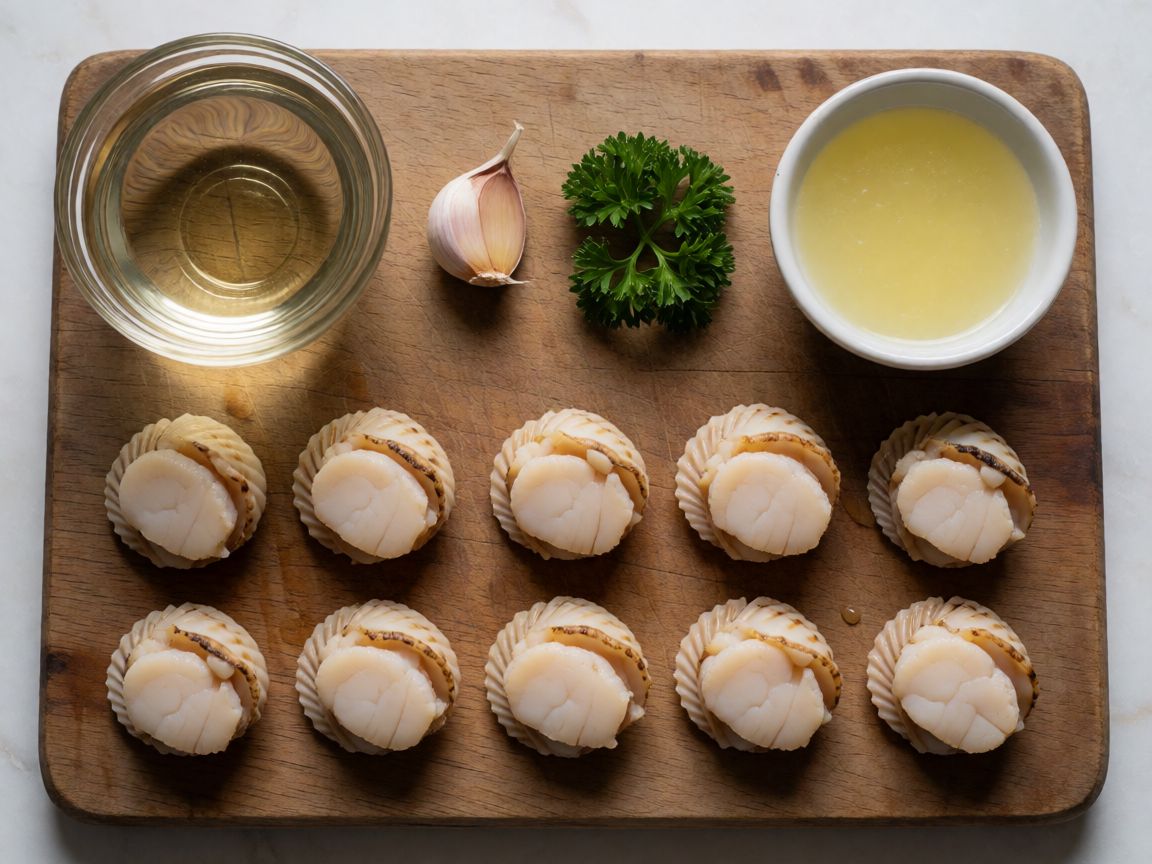
- 12 pcs Scallops
- 8 tbsp White wine
- 1 clove Garlic
- Parsley to taste
- Lemon juice to taste
- Olive oil to taste
- Salt to taste
- Black pepper to taste







Steps
Thoroughly clean and rinse the shells under running water. Open them with a knife and remove the scallops from their shells.
Rinse the shells and place them in a warm oven ready for serving. Rinse the scallops as well.
Peel and finely chop the garlic clove, and chop a bunch of parsley.
Take a wide frying pan and pour in the garlic and parsley mixture with the olive oil.
Add the scallops and sear them for about 2 minutes on each side, basting with the white wine.
2 minDrizzle the scallops with fresh lemon juice and season with salt and black pepper.
Take the shells out of the oven and place three scallops in each one.
Pour over the juices from cooking, garnish with parsley and serve.
This is a bar-food of the Venetian lagoon dressed up for a table: scallops seared fast in their own shell, deglazed with wine, finished with lemon and garlic-parsley oil. Nothing slow about it — the whole cooking happens in less time than it takes the kettle to boil for the tea you'll have after.
What decides success is heat control and timing, because scallop muscle is almost pure protein with none of the connective tissue that forgives a chicken thigh its extra minutes. Push too hard or too long and the moisture squeezes out, the scallop shrinks to a pale hard coin and turns rubbery — you've broken a muscle, not undercooked a fish. The whole method exists to stop exactly that.
The pan needs to be hot enough that a drop of wine sizzles and disappears almost at once, but not so hot that the garlic in the oil blackens before the scallops go in — burnt garlic turns bitter, and there's no rescuing the dish after that. Doneness isn't a clock reading: watch the edge of the scallop turn from translucent pearl to opaque white, flip once that line has crept about halfway up the side, and trust the centre to keep cooking gently once it's off the heat.
Myth worth breaking here: people assume shellfish, like any seafood, needs thorough cooking through to be safe. No — with fresh, properly sourced scallops the risk sits in freshness, not doneness; that's exactly why in other cuisines they're eaten raw. The quick sear here is about texture, not hygiene.
Twelve scallops for six people sounds thin next to a Sunday roast portion, but this is a starter meant to clear the palate, not fill the plate — two scallops a head, three to a shell, is a trattoria habit, not a law you're breaking by doing fewer.
Scallops: buy them fresh, in shell if you can get them, because a shell that's shut tight tells you the scallop was alive right up to opening, and because you need the shells for serving anyway. Supermarket chiller or frozen bag scallops are fine too — just thaw them fully and pat them properly dry before they meet the pan. Wet scallops don't sear, they steam, and a steamed scallop turns grey and never gets the browned edge the whole dish is built around.
No shells to hand? Any small heatproof dish holding roughly three scallops and a spoonful of sauce will do — a ramekin, a small ovenproof bowl, even a soup spoon for a single bite. The shell is a serving vessel here, not a flavour.
Garlic: one clove is enough, because its job is to perfume the oil, not dominate the dish. Chop it fine so it cooks evenly and quickly — a whole clove in big pieces burns on the outside while staying raw and sharp inside, and that unevenness is where most garlic-bitterness complaints actually start.
White wine, around half a cup across the pan: pick something dry with no sweetness — oak or sugar will fight the lemon. If the only wine in the house is one you wouldn't drink on its own, don't cook with it either; a splash of dry vermouth, or more lemon juice loosened with a little water, does the same job, because the wine here is deglazing the pan and adding acid, not building deep flavour.
Olive oil: any oil with no smell of its own that tolerates brief high heat will work, but olive oil's faint bitterness actually balances the natural sweetness of scallop meat. Sunflower or another neutral oil is a fair substitute if that's what's in the cupboard — you just lose that small counterweight.
Lemon juice and parsley go in at the very end, off the heat, not before — added raw they keep their lift, where cooked in they'd flatten. And the oven-warmed shells aren't cooking anything: they're holding heat, because a scallop is small and cools within a minute of leaving the pan. The shell does for the scallop what a warmed dinner plate does for a roast, just shaped differently.