
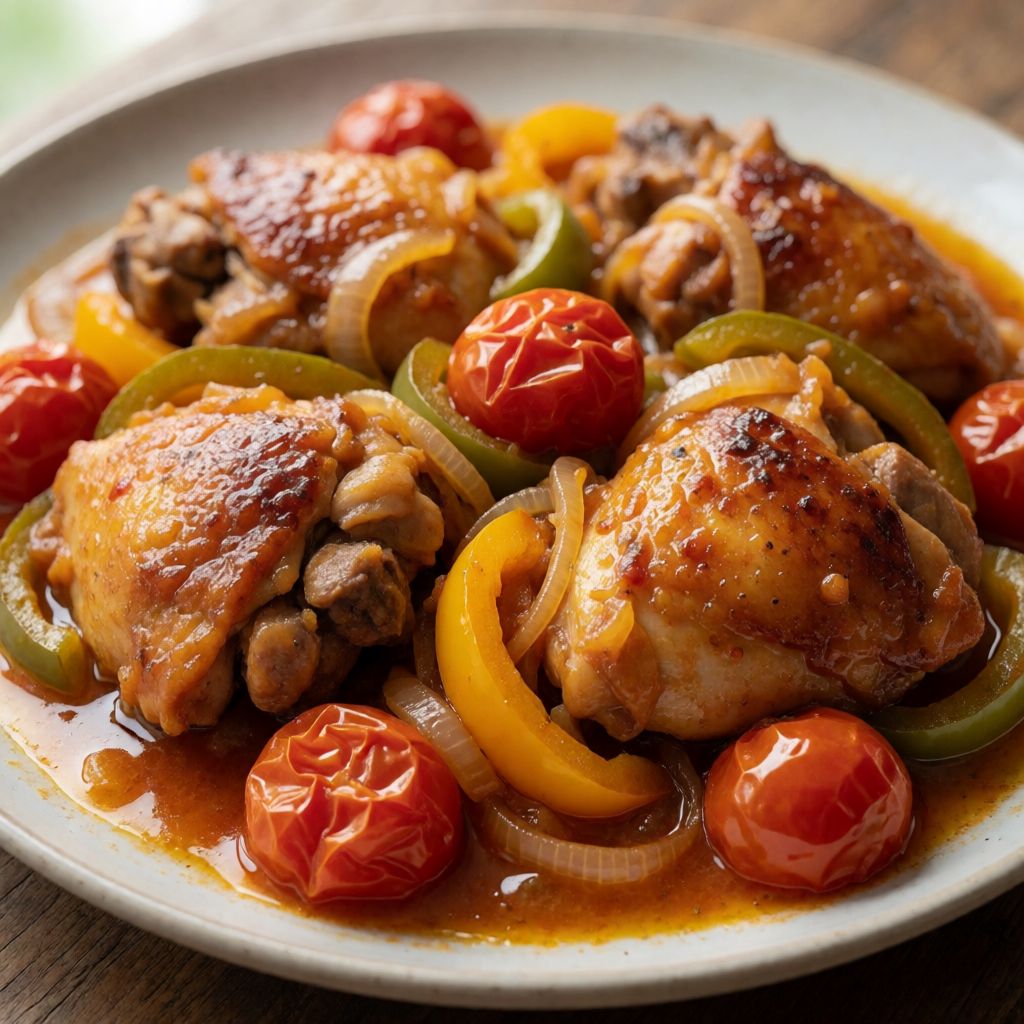
 AI photo
Peasant-style Chicken
A hearty one-pan chicken and vegetable stew, cooked peasant-style with peppers, aubergine and cherry tomatoes.
Ingredients
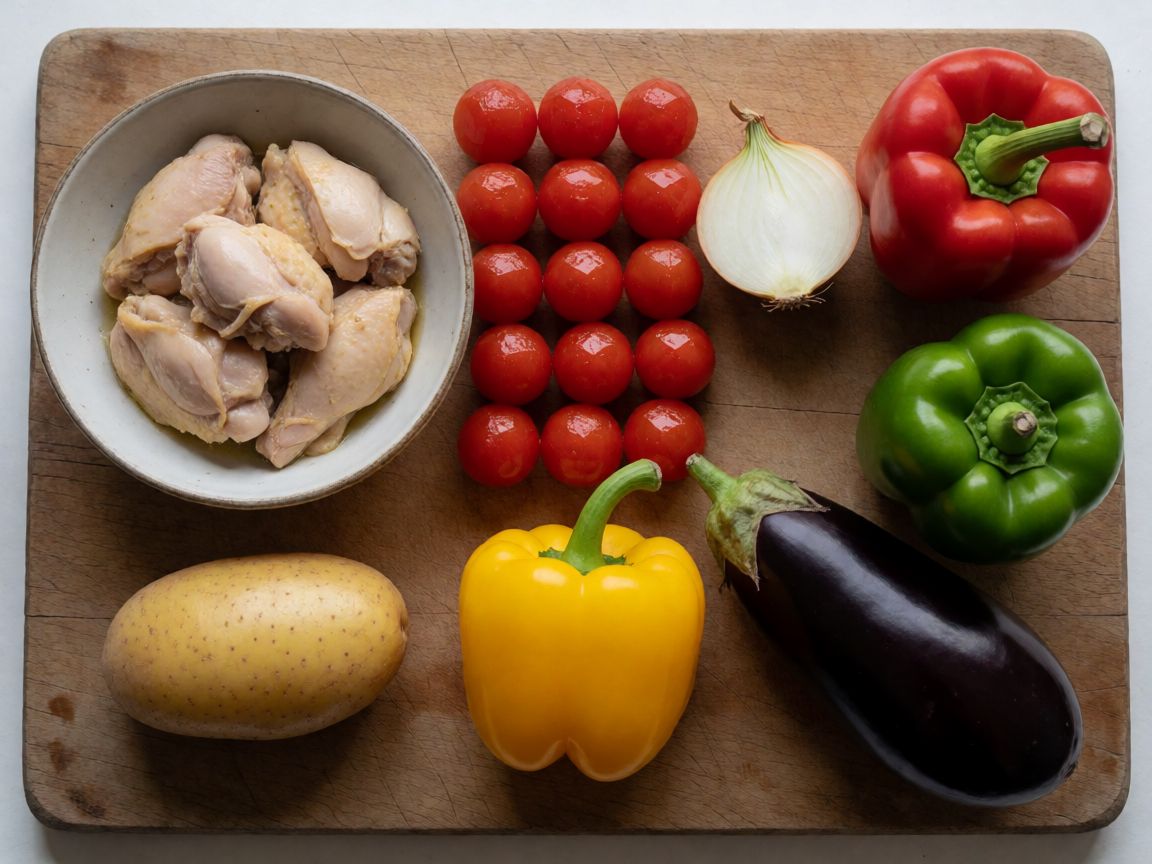
- 450 g Whole chicken cut into pieces
- 15 pcs Pachino cherry tomatoes
- 250 ml Olive oil
- 0.5 pcs Onion halved
- 1 pcs Red pepper
- 1 pcs Green pepper
- 1 pcs Yellow pepper
- 1 pcs Aubergine
- 1 pcs Potato
- Rosemary to taste
- Salt to taste






Steps
Heat the olive oil in a deep frying pan.
Add the diced potato, onion and chicken. Fry over medium heat until golden brown.
Add the sliced red, green and yellow peppers and cook until the vegetables are soft.
Add the cherry tomatoes, rosemary and salt. Cook until done — the internal temperature should reach 74°C.
Mix everything together and serve immediately.
This is a one-pan, no-stock, no-wine dish — chicken and whatever the vegetable patch gave that week, fried together in a generous pool of oil until everything's done at roughly the same moment. The Italians would call it pollo alla contadina — farmer's wife's chicken — because that's exactly the economics of it: one modest bird, stretched with potato, peppers, aubergine and tomato until it reads on the plate as a proper meal for people, not scraps for one.
What decides whether it works is the order things go in, and that order follows water content and density, not habit. Potato, onion and chicken go in first because they're dense and need the longest run at the heat — potato to break down its starch, chicken to render its skin and cook through near the bone. Peppers follow because they're mostly water and collapse in minutes; dump them in at the start and you'll steam the chicken instead of browning it. Tomatoes go last because you want them to burst, not stew down into a sauce — a minute too long and Pachino tomatoes lose the one thing they're bred for, which is holding their shape under heat.
The chicken itself — bought whole and jointed, bone and skin left on — isn't incidental. Bone slows the cook at the centre and gives you a longer window before the meat dries out; skin is the fat that renders into the oil and seasons everything frying alongside it. The one honest problem with a whole bird cut into pieces is that breast and thigh don't cook at the same rate — breast is lean and quick, thigh is fattier and forgiving. Some recipes pretend this isn't true. It is: if you're being exact, let the leg and thigh pieces go in a beat before the breast. If you're not being exact, that's fine too — this is peasant food, not a tasting menu, and a slightly firmer breast next to a softer thigh has never ruined anyone's dinner.
250ml of oil for 450g of chicken looks like a lot, and it is, but it's not there for crunch — this isn't a deep fry. It's the medium that carries heat evenly around a pan that's otherwise crowded with chunks of different sizes, basting the lot as it goes. The reason this dish can afford to be generous with oil while a lot of English home cooking is stingy with fat is straightforwardly economic: where olive trees were the family's one asset, oil was free once pressed and poured without counting, the way butter never was where it meant keeping cattle and pasture. If you've no olive oil, look for a fat that can sit at steady heat for half an hour without smoking and that actually tastes of something — a light olive oil blend will do; a flavourless seed oil will carry the heat but give nothing back to the vegetables.
Potato and onion are the stretch — the bit that turns one small chicken into a meal for two with something left on the plate. They need the long first stage because raw potato doesn't become tender, it becomes tender slowly; test it with a knife tip at the edge of a cube, not by cutting one open and tasting, which tells you about the middle of that one piece and nothing about the rest.
The three colours of pepper are mostly for the eye, not for a meaningful flavour difference between them — if your fridge only has two colours, or one, the dish doesn't suffer. What matters is when they go in: once the chicken and potato already have some colour, not before, because peppers are mostly water and will drop the pan's temperature and start everyone steaming instead of browning.
The recipe lists aubergine but doesn't actually tell you where it goes in the steps — that's worth flagging rather than guessing past. Aubergine behaves like a sponge for both oil and water: thrown in with the chicken at the start, it turns to mush before the bird's cooked through; left until the tomatoes go in, it stays raw and faintly bitter in the middle. It belongs with the peppers, cut small, and it's worth a splash more oil at that point specifically for it, because it will soak up what's there and you don't want it starved and chewy.
Pachino cherry tomatoes are a specific thing, not a generic cherry tomato — grown in a particular stretch of Sicily, bred thick-skinned and sweet enough to survive heat without turning to water. That's the criterion if you're substituting, not the shape: a small, dense tomato that holds together when it's hot, rather than one that's mostly juice. Vine cherry tomatoes from any decent greengrocer or supermarket will do the job. A watery salad tomato won't — it'll thin the oil and tip the whole pan from frying into stewing, which is a different dish with a different texture. Rosemary and salt come in at the very end, with the tomatoes, for two separate reasons: rosemary's oil turns bitter if it sits in hot fat from the start, and salting the chicken early draws moisture to the surface right when you need that surface dry to brown — season at the finish, not the beginning, and the browning stage will actually work.